The Speed Merchant: Analyzing Ryan Niblett’s Pivotal Role and Path to Increased Offensive Involvement for Texas
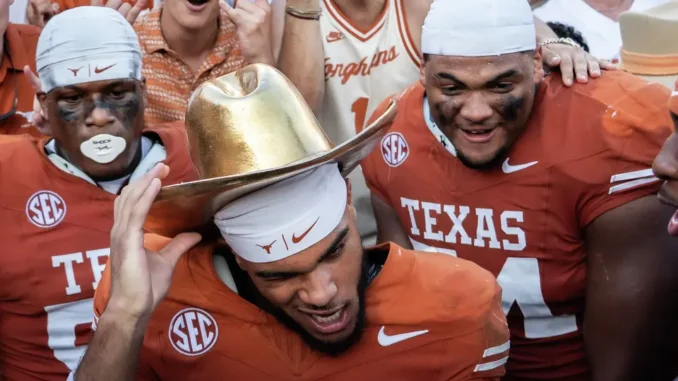
In the history of the Texas Longhorns football program, few single plays have carried the weight and consequence of Ryan Niblett’s moment. While he may not have the prolific statistics of his counterparts, his electrifying 100-yard kickoff return for a touchdown against the Houston Cougars was more than just seven points; it was a season-saving defibrillator shock that pulled the Longhorns back from the brink of a catastrophic upset. That play, which immediately followed a game-tying touchdown by Houston, preserved a crucial win, maintained their College Football Playoff aspirations, and ultimately kept them on track for a conference championship.
Now, the question is obvious and pressing: if a player possesses the game-breaking speed and situational clutch factor to save a season, why isn’t he utilized more frequently on offense? The answer lies in a complex matrix involving the Texas receiver depth chart, the specific role of the “Z” receiver, and the strategic opportunities that Niblett’s skillset unlocks.
The Defining Moment: Season-Saving Play
To fully understand the call for increased offensive involvement, one must first appreciate the magnitude of the play that defines his season.
The Context of the Catastrophe
The game against Houston was a struggle, marked by offensive stagnation and defensive lapses. Houston had just mounted a fierce comeback, tying the game late in the fourth quarter. The momentum had swung violently toward the Cougars, fueled by a raucous crowd. A stop, a fumble, or even a slow return would have allowed Houston to maintain the psychological advantage. The air was thick with the feeling of an impending upset—the kind of loss that historically derails national title hopes.
The Immediate Impact
When Niblett caught the ensuing kickoff, he didn’t just run; he exploded. His vision, acceleration, and ability to hit top speed immediately were on full display as he raced untouched into the endzone. The score didn’t just break the tie; it shattered Houston’s spirit. It was the ultimate, immediate counter-punch, transforming a potential four-overtime grind into a quick, decisive blow. That play was the difference between a high-stakes, pressure-cooker drive to try and win the game, and a sudden, demoralizing loss for the opponent.
This singular moment showcased Niblett’s most valuable, and often underutilized, attribute: elite, game-changing speed. In a modern spread offense, that kind of burst is the ultimate weapon, capable of turning routine plays into huge gains and warping defensive geometry.
The Wide Receiver Logjam: Why Niblett Has Been Limited
The primary constraint on Niblett’s playing time is not a lack of talent or speed, but simply the extraordinary depth of the Texas wide receiver room.
The Hierarchy of Talent
Texas, under coach Steve Sarkisian, has consistently featured one of the deepest receiving corps in the nation. The starting roles are typically cemented by proven, high-volume pass-catchers who excel in different facets of the game:
- The X-Receiver (The Boundary Specialist): Typically a bigger, possession-style receiver who is excellent in contested catch situations and runs precise routes. This spot demands consistency and reliability.
- The Slot Receiver (The Chain Mover): The primary target for quick throws, screen passes, and crossing routes, demanding exceptional quickness and toughness over the middle.
- The Z-Receiver (The Field Stretcher): This is the role where Niblett fits best—the player positioned opposite the X, whose primary function is to run vertical routes, stretch the field, and force safeties to play deep.
Niblett has been behind established veterans and high-ceiling transfers at the Z-receiver and slot positions. In Sarkisian’s offense, earning snaps requires not just talent, but mastery of the entire route tree and impeccable timing with the quarterback, something veterans often hold over younger players.
Consistency and Route Running
While Niblett’s speed is elite, consistent offensive involvement demands more than just straight-line burst. Wide receivers need to execute complex route concepts, adjust to defensive coverages, and consistently win one-on-one battles at the line of scrimmage.
For a young receiver, the transition from special teams playmaker to offensive weapon often hinges on developing the nuances of the position: setting up defenders, making sharp cuts, and catching contested passes. Coaches often prioritize the proven route runner, even if they possess slightly less speed, because consistency and trust are paramount in critical offensive situations. Niblett’s path to increased snaps relies on proving he can execute the full gamut of Sarkisian’s demanding passing attack with precision.
The Case for Increased Offensive Integration
Given his demonstrated playmaking ability, the argument for getting Niblett more touches is strategically compelling. His speed is a force multiplier that can elevate the entire offense, even without high-volume targets.
1. The Threat of the Vertical Game (Z-Receiver)
Niblett’s most natural fit is as the deep threat. By simply lining him up at the Z-receiver position, he forces the opposing defense to change its entire approach.
- Safety Over-The-Top: A defense facing Niblett cannot afford to leave a safety playing shallow or focused solely on the run game. He requires a dedicated safety to play deep, removing one defender from run support and creating single coverage for the X-receiver (boundary side). This is the definition of “taking the top off the defense.”
- Clear Out Routes: Even if Niblett isn’t the target, running vertical routes clears out space underneath for players like the tight end or the slot receiver to operate. His routes become offensive decoys that create high-percentage throws for others.
2. Jet Sweep and Manufactured Touches (The Deebo Role)
Sarkisian’s offense is fundamentally built around tempo and exploiting space. This makes Niblett an ideal candidate for “manufactured touches,” plays designed specifically to put the ball in his hands quickly and in space, leveraging his initial burst.
- Jet Sweeps/End Arounds: These plays leverage Niblett’s speed horizontally. A simple jet sweep threat forces the defensive end to hesitate and the linebackers to scrape wide, often creating running lanes inside for the primary running back. Even two or three such touches per game can dramatically alter how a defense plays the edges.
- Screen Games: Quick tunnel screens or slip screens allow Niblett to catch the ball with blocking already set up, using his speed to turn a five-yard pass into a twenty-yard gain. This minimizes the need for complex route running while maximizing his biggest asset.
3. Exploiting the Slot (Mismatch Creator)
While he may be primarily a Z-receiver, using Niblett occasionally in the slot can create devastating mismatches, particularly against teams that utilize slower linebackers or nickelbacks in coverage.
- Wheel Routes/Fades: Running vertical routes out of the slot against a linebacker or safety often results in a footrace, a battle that Niblett is almost guaranteed to win.
- Rub Routes/Picks: His speed makes him lethal coming across the formation on pick plays or shallow crossing routes, where he can gain separation in traffic and accelerate away from pursuit.
Sarkisian’s Strategic Dilemma: Efficiency vs. Electicism
For a coach like Steve Sarkisian, who prides himself on offensive efficiency and precision, the question isn’t if Niblett can be effective, but how much risk is involved in integrating him.
The Balance of Special Teams Value
Niblett’s value as an elite kick returner is undeniable. Coaches often weigh the risk of injury when expanding a player’s offensive role. If Niblett becomes a 30-snap-per-game offensive player, is his availability for the critical kick return role jeopardized? This is a coaching calculus: the guaranteed explosive play is often the special teams return, while the offensive involvement carries a higher risk of injury and a lower guarantee of a game-changing play on any given snap.
The Development Arc
The Longhorns’ philosophy often involves bringing young playmakers along steadily. By dominating special teams, Niblett has created a floor of value for himself while he continues to polish his receiving craft. The next logical step in his development is an incremental increase in offensive snaps.
A wise strategy would be to implement a “Package of Plays” designed specifically for him. This avoids the requirement of him mastering the entire playbook instantly, while still allowing the offense to leverage his speed. This package might include:
- Three Jet Sweeps/End Arounds.
- Two Designed Deep Shots.
- One Quick Screen.
This provides five to six high-leverage touches per game without overloading his responsibilities or jeopardizing the rhythm of the starting unit.
Looking Ahead: The Star Potential
Ryan Niblett isn’t just a useful player; he has the traits of a star in the making. His ability to instantly change the dynamic of a game is a rare commodity, and in a competitive conference, the ability to create something out of nothing is priceless.
The narrative of his season is currently focused on the single special teams play. For Texas to take the next step and remain among the nation’s elite, Niblett must evolve from a special teams hero into a consistent offensive weapon.
The mandate for the coaching staff is to find ways to get the ball into his hands, even if it means designing specific plays that simplify his reads and maximize his unique talent. The defense that fears his speed on special teams should be forced to respect it on every down of offense. If the Longhorns successfully tap into that offensive potential, the season-saving kick return against Houston will be remembered not as his career peak, but as the moment that Ryan Niblett earned his spot as a focal point of the Texas offense. His involvement in the passing attack is the next crucial step in maximizing the Longhorns’ offensive ceiling.
Leave a Reply