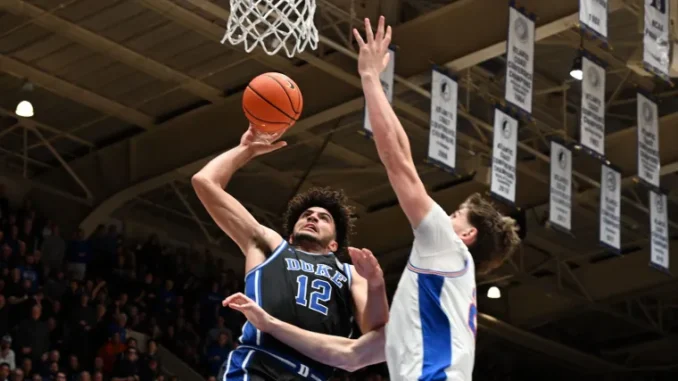
The Shift to Defense: Duke Leads The ACC’s Resurgence Through Elite Efficiency
The Atlantic Coast Conference (ACC) is experiencing a much-anticipated basketball resurgence, and while the narrative often centers on the star power of its new recruits and the return of a competitive balance, the underlying, statistically dominant trend is being set by the Duke Blue Devils’ elite, suffocating defense.
Through the first month of the 2025-2026 season, Duke is not merely winning; they are leading the ACC—and the nation—in a critical, non-traditional metric: Defensive Efficiency (DRtg). This shift to a dominant defensive identity, prioritizing stops and stifling opponent shooting, is the key trend Duke is setting, and it is mirroring the broader improvement of the entire conference.
The Defining Trend: Defensive Efficiency
The most significant statistic illuminating Duke’s early-season dominance is their Defensive Efficiency Rating (DRtg), which measures the number of points an opponent scores per 100 possessions.
| Statistic | Duke’s Rank (National) | Duke’s Rank (ACC) | Value |
| Defensive Efficiency (KenPom) | 1st | 1st | $\approx 85.4$ |
| Field Goal Percentage Defense | 1st | 1st | $34.1\%$ |
| Scoring Defense (Points Allowed) | 4th | 1st | $59.6 \text{ PPG}$ |
This combination of statistics shows that Duke is forcing opponents into incredibly difficult shots, limiting their scoring opportunities, and playing at a pace that maximizes defensive possessions.
1. The Pace Paradox: Controlling the Tempo
Under head coach Jon Scheyer, Duke’s offense is playing at a quicker pace this season than in previous years, but their defense is forcing opponents to slow down.
-
Duke Offensive Possession Length: $\approx 14.6$ seconds (13th quickest nationally)
-
Opponent Defensive Possession Length: $\approx 19.1$ seconds (5th highest nationally)
This gap demonstrates Duke’s ability to be explosive when they have the ball, but disciplined and lockdown when they don’t, forcing opponents to use nearly 5 extra seconds per possession. This differential is an exhausting trend for ACC opponents and is a signature of Scheyer’s philosophy to create favorable defensive matchups through controlled chaos.
2. The Field Goal Percentage Lockdown
Leading the nation in opponent field goal percentage defense ($34.1\%$) is the clearest sign that Duke is winning battles in the paint and on the perimeter. This is a testament to the versatility of their roster construction.
-
Frontcourt Anchors: The addition of experienced, defensive-minded transfer Maliq Brown (a former ACC All-Defensive Team member) and the continued development of sophomore center Patrick Ngongba II (6’11”) provide a deep, disruptive interior presence that funnels offenses away from the rim.
-
Perimeter Length: The length of young stars like Cameron Boozer (6’9″) and Isaiah Evans (6’6″) allows them to recover quickly and challenge perimeter shots, maintaining defensive gaps with their wingspans.
The Broader ACC Resurgence
Duke’s trend toward defensive excellence is particularly significant because it reflects a crucial change in the ACC as a whole. After a couple of seasons where the conference was statistically down, 2025-2026 is seeing a widespread return to strength.
-
Conference Quality: At the start of December, the ACC has nine teams ranked in the top 100 of the KenPom rankings, nearly double the five teams that finished in the top 100 last season.
-
Increased Competition: This means Duke is facing a significantly more challenging regular-season schedule. The increased competition and strength of schedule (Duke’s is currently ranked 89th, but will rise dramatically in conference play) will ultimately better prepare them for the rigors of March Madness.
The trend Duke is setting is less about scoring explosions (though they are efficient, ranked 5th in adjusted offensive efficiency) and more about dominating the margin of error. Their +27.2 scoring margin (the largest in the ACC) is built on the foundation of a relentless, top-ranked defense, which is what truly separates them from the rest of the league.
The Supporting Cast: Duke’s Roster Building Trend
Coach Scheyer’s roster construction highlights a trend that underpins the defensive success: combining elite youth with defensive-minded veterans.
| Player | Class | Role | Key Defensive Contribution |
| Cameron Boozer | Freshman | Star Forward | Elite size and athleticism, high defensive ceiling. |
| Maliq Brown | Senior (Transfer) | Defensive Specialist | ACC All-Defense caliber, leads the team in deflections (avg. 6.5 per game). |
| Patrick Ngongba II | Sophomore | Center | Post defense, rim protection, and rebounding. |
This strategy ensures that the inevitable learning curve of the five-star freshmen does not break the team’s floor. The defensive tenacity of transfers like Brown, who logged 12 deflections in a single game earlier this season, sets the tone and provides veteran leadership that freshmen-led teams often lack.
By prioritizing defensive efficiency and winning possession battles, the Duke Blue Devils are not just leading the ACC; they are actively dictating the terms of engagement for the entire conference, proving that in this resurgent ACC season, the road to the top runs through defense.
Leave a Reply