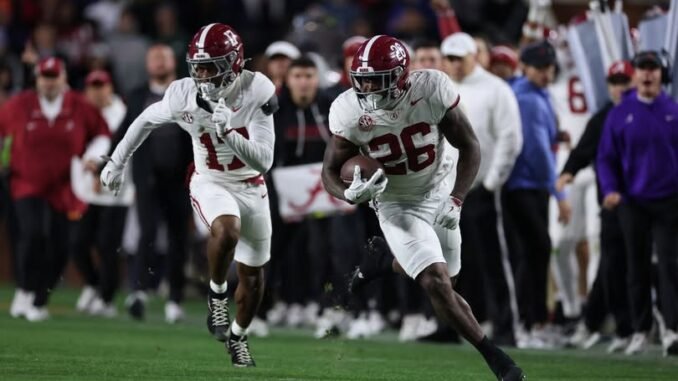
The Return of the Tide: Why Kalen DeBoer’s Confidence in Key Starters’ Health is the Decisive Factor Against Oklahoma in the CFP First Round
The Unveiling of the Blueprint
The transition to the 12-team College Football Playoff (CFP) era introduces a new and unforgiving reality: winning the national championship now demands the sustained health and depth required to win four consecutive elimination games. For the Alabama Crimson Tide, navigating the initial hurdle—a high-stakes first-round clash against the Oklahoma Sooners—requires maximum firepower. Head Coach Kalen DeBoer’s recent statement, expressing confidence that multiple key starters will be back and healthy for the playoff opener, is perhaps the most significant strategic development heading into the tournament.
DeBoer’s declaration is not mere coach-speak; it is a vital bulletin that shifts the balance of power, mitigates the physical toll of the preceding SEC season, and provides an immediate psychological boost. The return of key, established players—likely focusing on the offensive line, defensive front, and crucial secondary personnel—addresses the primary vulnerability any team carries into an expanded tournament: attrition. Against a formidable, high-powered offense like Oklahoma’s, Alabama needs to be at its physical peak. This analysis delves into the monumental strategic and psychological implications of DeBoer’s health update, arguing that the availability of these starters is the single most critical factor that tips the scales in Alabama’s favor for the first round, transforming them from a walking-wounded SEC survivor into a legitimate threat to compete deep into the bracket.
The New Reality: Attrition and the 12-Team Grind
The shift from the four-team format to the 12-team bracket fundamentally changes the economics of college football health. In the previous format, teams had ample time to rest and recuperate before a single, pivotal semifinal game. Now, a team like Alabama, which did not secure a first-round bye, faces a rigorous, four-game tournament structure—a physical commitment comparable to a full NFL playoff run.
In this environment, the availability of key starters is not a bonus; it is a prerequisite for survival. The first-round game, often viewed as a “tune-up,” is actually a high-risk elimination contest against a highly motivated opponent, such as an Oklahoma team eager to prove its return to the elite stage.
The SEC schedule, culminating in the physical demands of the conference championship, inevitably leaves teams battered. Alabama, known for its physical style, typically enters the postseason with critical depth depleted and key starters playing through pain. DeBoer’s focus on returning players signals a deliberate and successful management of those late-season injuries. This means the depth chart will be bolstered, allowing the team to rotate more effectively and prevent the accumulated fatigue that leads to disastrous mistakes in the fourth quarter. The ability to deploy full strength in Week 1 of the playoff is a competitive advantage that cannot be overstated.
Strategic Health: Targeting Matchups Against Oklahoma
DeBoer’s optimism about returning starters carries specific strategic weight when viewed through the lens of the matchup against Oklahoma. The Sooners’ strength lies in their offensive balance, featuring an efficient passing game and a dynamic running attack. Full health for the Tide is required in the trenches to neutralize these threats.
1. The Offensive Line Stabilization
The offensive line is often the most physically battered unit late in the season. The return of a key starting lineman (whether a tackle or guard) provides immediate and profound stability. Against Oklahoma’s opportunistic defense, a fully healthy offensive line allows Alabama to:
-
Protect the Passer: Ensure the quarterback has clean pockets and time to execute downfield throws, preventing the relentless pressure that generates turnovers.
-
Establish the Run: A healthy front allows Alabama to consistently gain yardage on the ground, control the clock, and dictate the tempo of the game, neutralizing Oklahoma’s desire for a fast-paced shootout.
An offensive line operating at full strength elevates the entire Tide offense from good to elite, which is necessary to overcome Oklahoma’s scoring potential.
2. Defensive Front Reinforcement (Edge and Interior)
The defensive line and edge rushers are absolutely critical against a team like Oklahoma, which relies on strong line play to launch its attack. DeBoer’s confidence suggests the return of crucial defensive tackle or an elite edge rusher. This changes the defensive math completely:
-
Four-Man Pressure: The return of a high-end pass rusher ensures Alabama can generate consistent pressure on the Oklahoma quarterback with just four down linemen. This allows the back seven to dedicate resources to coverage, a non-negotiable strategy against a deep passing offense.
-
Run Containment: The interior defensive line needs rotational health to stop the Sooners’ power running game. A fresh, healthy rotation prevents Oklahoma from dictating the tempo and wearing down the Tide defense over four quarters.
3. Secondary Depth and Versatility
The secondary is often the first unit to suffer injuries due to the nature of covering modern spread offenses. The return of a starting cornerback or safety provides not just quality, but crucial depth. This allows Alabama to use complex defensive packages and switching schemes, which are essential for confusing a well-coached Oklahoma attack. A single weak link in the secondary is an open invitation for a Sooners receiver to exploit a mismatch.
The Mental Edge: Momentum, Trust, and Confidence
Beyond the physical advantages, DeBoer’s announcement is a powerful psychological tool that generates momentum and trust within the locker room and among the fanbase.
Erasing the Fatigue Narrative
After the physical and mental intensity of the SEC schedule, the narrative often shifts to which teams are “limping” into the playoff. A public statement confirming key health returns transforms Alabama’s story from “survivors of the SEC grind” to “reloaded and ready.” This positive narrative immediately elevates the morale of the team and shifts the psychological burden onto the opponent. The Sooners now must prepare for the best, most physically dominant version of the Crimson Tide, rather than the depleted version seen in late November.
Trust in the Process
For a first-year coach like Kalen DeBoer, successfully managing the health and morale of the team through a grueling first season in the SEC demonstrates high-level competency and earns the trust of his players and the recruiting base. It shows the players that the program’s support staff (trainers, strength coaches) are elite, and that the coaching staff prioritized rest and recovery correctly, ensuring the ultimate goal remains attainable. This builds essential confidence in DeBoer’s overall program management.
Long-Term Implications: Recruiting and Program Stability
The health status of the team for the first round against Oklahoma also sends a critical message to the broader college football landscape, impacting future recruiting and program stability.
The Recruiting Message
Elite high school recruits and high-value transfers watch these playoff games closely. They are looking for evidence that a program can both compete at the highest level and protect its players. The ability of Alabama to recover and field a full-strength team for the playoff—after the most physically demanding conference schedule in the nation—sends a powerful message: “We can develop you, we can win with you, and we will manage your health effectively.” This is a huge recruiting advantage, especially in the competitive transfer portal era where players are prioritizing program management and medical care.
Playoff Momentum and Longevity
The margin for error in the 12-team CFP is zero. Any team carrying significant injuries into the first round is highly unlikely to survive four games. The successful recuperation of the key starters for the Oklahoma game is the first, crucial step toward sustainable playoff longevity. A win here with a healthy squad gives them a fighting chance in the subsequent rounds, whereas an injured team would likely falter quickly. DeBoer is building a team designed for endurance, and the Oklahoma game is the first test of that model.
Conclusion: Tipping the Scales in Tuscaloosa
Kalen DeBoer’s confirmation regarding the return of key starters for the CFP first round against Oklahoma is the single most defining strategic update of Alabama’s postseason preparation. In the new 12-team playoff, competitive advantage is defined by health and depth, and DeBoer is signaling that the Crimson Tide will enter the tournament at their absolute physical peak.
This renewed strength fundamentally alters the dynamic of the Oklahoma matchup, allowing Alabama to deploy its elite defensive schemes at full capacity and stabilize an offensive line crucial for controlling the game’s tempo. The psychological lift—transforming the narrative from wounded survivor to reloaded contender—is equally invaluable. By successfully managing the attrition of the SEC and fielding a healthy team for the first round, Kalen DeBoer has significantly tipped the scales in Alabama’s favor, paving the way for a deeper run in the expanded College Football Playoff.
Leave a Reply