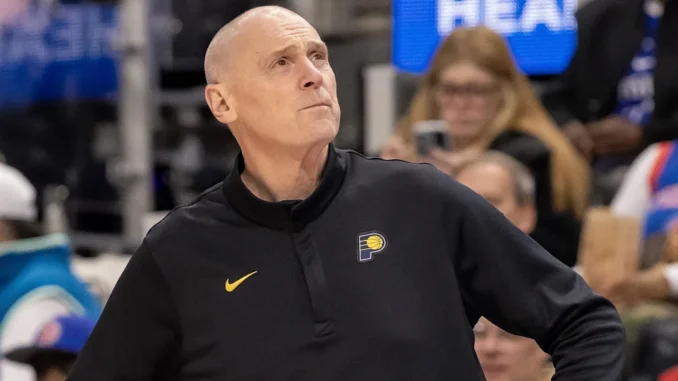
Rick Carlisle Closes in on Coaching Milestone After Decades of Positive Impact
In the high-stakes world of the National Basketball Association, where fortunes can shift on a single possession and legacies are forged in the crucible of playoff battles, few figures embody resilience and quiet excellence quite like Rick Carlisle. As of December 11, 2025, the Indiana Pacers head coach stands at the precipice of history, his career ledger reading 999-878 in regular-season victories. One more win—perhaps as soon as Friday night’s matchup against the Philadelphia 76ers—will etch his name into the annals of NBA lore as the 11th coach to surpass 1,000 wins. It’s a milestone that underscores not just his tactical acumen but the profound, often understated impact he’s had across five decades in the league. From the frozen courts of upstate New York to the bright lights of the NBA Finals, Carlisle’s journey is a testament to evolution, loyalty, and an unyielding commitment to the game’s integrity.
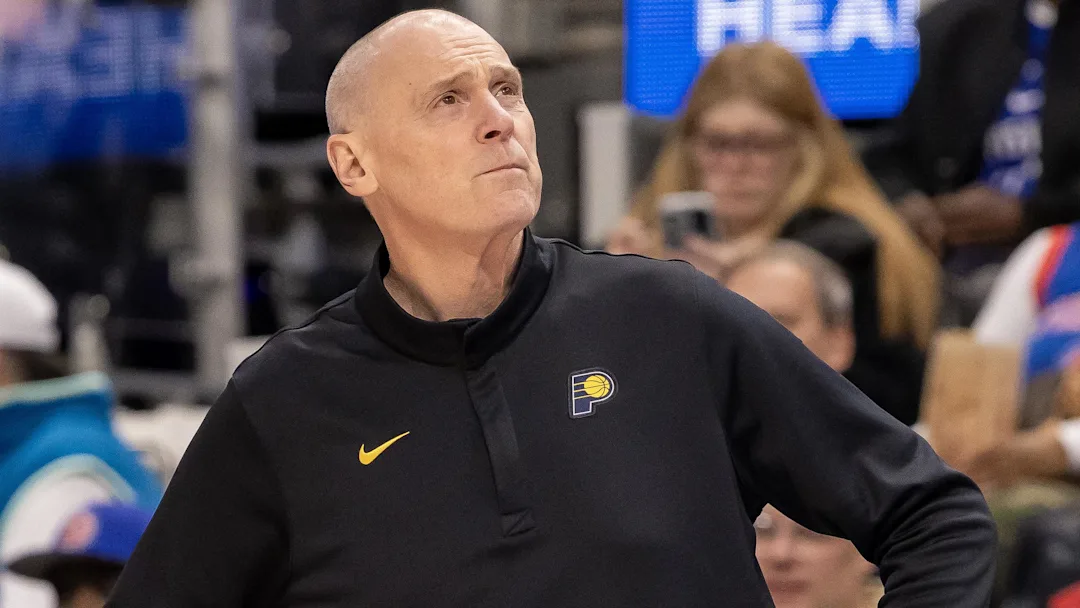
Born on October 27, 1959, in Ogdensburg, New York, Rick Preston Carlisle grew up in a region where basketball was more than a pastime—it was a portal to possibility. The small towns of Lisbon and Ogdensburg, separated by a mere eight-minute drive, were worlds away from the glamour of Madison Square Garden. Yet, young Rick would make that trek repeatedly, drawn to the grainy broadcasts of NBA games on television. It was there, in the glow of those black-and-white screens, that a dream took root. “I think the whole is better than the sum of the parts,” Carlisle would later reflect on his coaching philosophy, a mantra that seems almost prophetic given his own path.
Carlisle’s playing career was one of grit and precision, mirroring the coach he would become. At the University of Maine, he honed his skills as a sharpshooting guard, earning All-Yankee Conference honors. Transferring to the University of Virginia, he captained the Cavaliers to the 1981 Final Four, a run that showcased his leadership under pressure. Drafted 36th overall by the Boston Celtics in 1981, Carlisle stepped into a dynasty led by Larry Bird, Kevin McHale, and Robert Parish. His rookie season was unremarkable statistically—2.7 points per game—but unforgettable in context. He was part of the 1984 and 1986 championship squads, contributing in limited minutes during the Finals, where he went 3-for-3 from the field in the 1986 series against the Houston Rockets.
Injuries curtailed his playing days after stints with the New York Knicks and a brief CBA detour with the Albany Patroons. By 1989, at age 30, Carlisle pivoted to coaching, joining Bill Fitch’s staff with the New Jersey Nets. It was a baptism by fire: Fitch, a no-nonsense tactician, demanded preparation and poise. Under Fitch and later Chuck Daly—the architect of the “Dream Team”—Carlisle learned the art of player development and the nuances of defensive schemes. “Those early years were about absorbing,” Carlisle once said. “You watch, you listen, and you realize basketball is 90% people.” Those lessons would ripple through his career, shaping a coach who prioritizes relationships over rigid playbooks.
Carlisle’s ascent as an assistant was steady and unflashy. Three seasons with the Portland Trail Blazers under P.J. Carlesimo (1994-1997) exposed him to West Coast pace-and-space offenses, a harbinger of the league’s future. But it was his return to Indiana in 1997, as Larry Bird’s right-hand man with the Pacers, that ignited his trajectory. Bird, his former Celtics teammate, saw in Carlisle a kindred spirit: analytical yet intuitive, tough but fair. Together, they orchestrated two of the franchise’s finest hours. In 1997-98, the Pacers pushed Michael Jordan’s Chicago Bulls to seven games in the Eastern Conference Finals, a near-upset of the dynasty that cemented Carlisle’s reputation as a defensive savant. The following year, Indiana reached the NBA Finals for the first time, falling to Shaquille O’Neal and Kobe Bryant’s Lakers in six games. Bird lobbied fiercely for Carlisle to succeed him, but team president Donnie Walsh opted for Isiah Thomas. It was a snub that stung, but one that fueled Carlisle’s resolve.
Undeterred, Carlisle landed his first head coaching gig with the Detroit Pistons in 2001. What followed was a masterclass in transformation. Inheriting a 32-win squad, he flipped the script in Year 1, guiding them to 50 victories and the Eastern Conference Finals. Ben Wallace blossomed into a Defensive Player of the Year force under Carlisle’s schemes, while Chauncey Billups emerged as a steady hand at point guard. The 2002-03 season brought another 50 wins and the NBA Coach of the Year award, Carlisle’s first major accolade. “Rick turned us from pretenders to contenders,” Wallace later recalled. “He didn’t just coach X’s and O’s; he coached us to believe.” Yet, after a 54-win campaign, internal tensions—exacerbated by the infamous “Malice at the Palace” brawl in 2004—led to his departure after the 2002-03 season. Carlisle left Detroit with a .579 winning percentage, but the scars of that chaotic era lingered.
His homecoming to Indiana in 2003 was poetic. Replacing Thomas, Carlisle inherited a roster brimming with talent: Ron Artest, Jermaine O’Neal, and a young Reggie Miller in his twilight. The 2003-04 Pacers shattered franchise records with a 61-21 mark, the NBA’s best regular-season tally that year. They dispatched the Boston Celtics and Miami Heat in the playoffs before bowing to the Pistons in the Conference Finals. Carlisle coached the Eastern Conference All-Stars that February, a nod to his rising star. But the 2004-05 season unraveled amid Artest’s suspension and off-court turmoil, culminating in another Eastern Finals loss. By 2007, after four straight playoff appearances and a 181-147 record, Carlisle stepped away, citing burnout. “Indiana will always be special,” he said at the time. “It’s where I learned to coach.”
The wilderness years tested Carlisle’s mettle. A brief, unsuccessful broadcast stint gave way to his 2008 hiring by the Dallas Mavericks, a franchise desperate for stability after Avery Johnson’s midseason firing. Paired with owner Mark Cuban and general manager Donnie Nelson (son of longtime coach Don Nelson), Carlisle inherited Dirk Nowitzki, Jason Kidd, and a supporting cast in flux. Early returns were middling—a 50-32 record in 2008-09—but Carlisle’s adaptability shone. He clashed initially with Kidd over control, echoing past point guard tensions, but evolved into a principles-based system that empowered players.
The 2011 playoffs became Carlisle’s magnum opus. Seeded eighth in the West, the Mavericks defied odds: sweeping the two-time defending champion Lakers, toppling the Oklahoma City Thunder in five, and dismantling the Heat’s Big Three in six games for Dallas’s first—and only—NBA title to date. Nowitzki’s Finals MVP cemented the narrative, but Carlisle’s fingerprints were everywhere: meticulous scouting, fearless rotations, and a defensive clamp that held LeBron James to 17.8 points per game. “Rick’s the reason we believed,” Nowitzki said post-championship. “He made us a family.” Over 13 seasons in Dallas, Carlisle amassed 555 wins, nine playoff berths, and a .537 winning percentage, all while pioneering the league’s three-point revolution—his teams sank nearly 18,000 triples, outpacing even Doc Rivers’ squads.
Beyond the wins, Carlisle’s Dallas tenure highlighted his off-court influence. As president of the National Basketball Coaches Association (NBCA) since 2005—nearly two decades of service—he’s been a tireless advocate for coaches’ rights, negotiating contracts, mental health support, and equity in the league. “It’s a position nobody wants,” admitted Erik Spoelstra, whose 2011 Finals loss to Carlisle forged his own championship path. “But Rick fights for us all.” Peers like Gregg Popovich and Steve Kerr credit him with modernizing the NBCA into a powerhouse. This advocacy extends to players: in Dallas, he mentored young talents like Luka Dončić (albeit briefly) and emphasized life skills, hosting seminars on financial literacy and media training.
Carlisle’s 2021 return to Indiana was a full-circle moment. The Pacers, mired in mediocrity after Nate McMillan’s exit, needed a steady hand. Carlisle, fresh off a Dallas ouster amid roster retooling, saw untapped potential in a young core featuring Tyrese Haliburton, acquired in a franchise-altering trade just months later. “Tyrese affects the game positively in so many ways,” Carlisle gushed, recognizing a kindred spirit—a cerebral point guard who could execute his read-and-react offense.
The rebuild was deliberate. Carlisle traded veterans like Domantas Sabonis and Malcolm Brogdon for draft capital, selecting Bennedict Mathurin, Jarace Walker, and Andrew Nembhard. Early seasons were lean: 25-57 in 2021-22 and 35-47 in 2022-23, missing the playoffs both years. Critics questioned the pace, but Carlisle preached patience. “We’re building habits that last,” he insisted. By 2023-24, the payoff arrived: 47 wins, a first-round upset over the Milwaukee Bucks, and a Conference Finals berth. Haliburton, once discarded by Sacramento, blossomed into an All-NBA talent under Carlisle’s tutelage, their once-fractious coach-point guard dynamic evolving into symbiosis.
The 2024-25 season was transcendent. With Pascal Siakam bolstering the frontcourt, the Pacers surged to 50 regular-season wins and the No. 2 Eastern seed. They dispatched the Knicks and Celtics in the playoffs before a heartbreaking Game 7 Finals loss to the Oklahoma City Thunder. Haliburton’s Achilles tear in that decisive game—a 112-109 defeat—left scars, but also stories of resilience. “That loss? It made us hungrier,” Carlisle reflected. The 2025-26 campaign has been a reload: Haliburton’s absence has yielded a sub-.500 start, but recent wins over the Bulls and Kings signal momentum. On December 8, Indiana held off Sacramento 116-105, with Siakam, Mathurin, and Nembhard combining for 76 points—a Carlisle masterstroke in star empowerment.
As Carlisle eyes win No. 1,000, tributes pour in. T.J. McConnell recounts house visits during playoff slumps, where Carlisle blended life advice with hoops wisdom. “He just shows up,” McConnell said. “That’s Rick.” Spoelstra calls him a “trendsetter,” noting how Carlisle’s teams consistently outperform talent projections. Even rivals like OKC’s Mark Daigneault rave: “I can’t say enough about the respect I have for him.”
Yet, true to form, Carlisle shuns the spotlight. Post-Kings win, he deflected: “Tough game. Great to win it. More tough games coming.” At 66, with a psychology degree from Virginia gathering dust, he’s as focused as ever—preaching the “right way” amid the league’s three-point deluge he helped pioneer. His impact transcends stats: Hall of Famers like Bird and Nowitzki credit his mentorship; young guns like Haliburton and Mathurin thrive in his system. As NBCA president, he’s elevated the profession, securing benefits that ripple to every sideline.
The milestone isn’t just numbers—it’s a mosaic of lives touched. From Detroit’s blue-collar grit to Dallas’s Cinderella run, Indiana’s rebuild to Finals heartbreak, Carlisle has navigated eras: Jordan’s physicality, Kobe’s flair, Curry’s revolution. He’s won 999 games not by chasing trends, but by building cultures. “The league changes, but people don’t,” he once quipped. As the Pacers prepare for Philly, the basketball world pauses. Win or wait, Rick Carlisle’s legacy—forged in quiet conviction—endures. In a sport of fleeting glory, he’s the constant: evolving, advocating, inspiring. The 1,000th win? Merely the next chapter in a story that’s far from over.
Leave a Reply