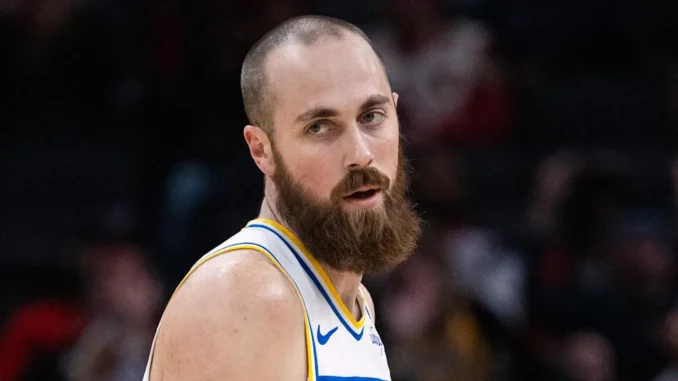
The Jay Huff Conundrum: Why Trading Away Indiana’s Unexpected Savior Could Doom the Pacers’ Championship Window
In the high-stakes world of NBA roster management, few decisions carry the weight of trading a player who’s suddenly become indispensable. For the Indiana Pacers, that player is Jay Huff—a 7-foot-1 center who arrived in a low-profile trade over the summer and has since morphed into the league’s premier rim protector. As rumors swirl about Indiana aggressively shopping for a “center of the future” ahead of the February trade deadline, the whispers point to one uncomfortable truth: the Pacers might be on the verge of committing a colossal blunder by sidelining or shipping out Huff. This isn’t just about one player’s hot streak; it’s about squandering a cost-controlled asset who’s anchoring a defense that’s finally clicking without Tyrese Haliburton, exposing the front office’s impatience, and potentially derailing a team still reeling from a heartbreaking NBA Finals loss. If these rumors crystallize into action—pursuing upgrades like Ivica Zubac or Walker Kessler at the expense of Huff’s role—the fallout could echo for years, turning a savvy summer acquisition into a symbol of shortsighted mismanagement.
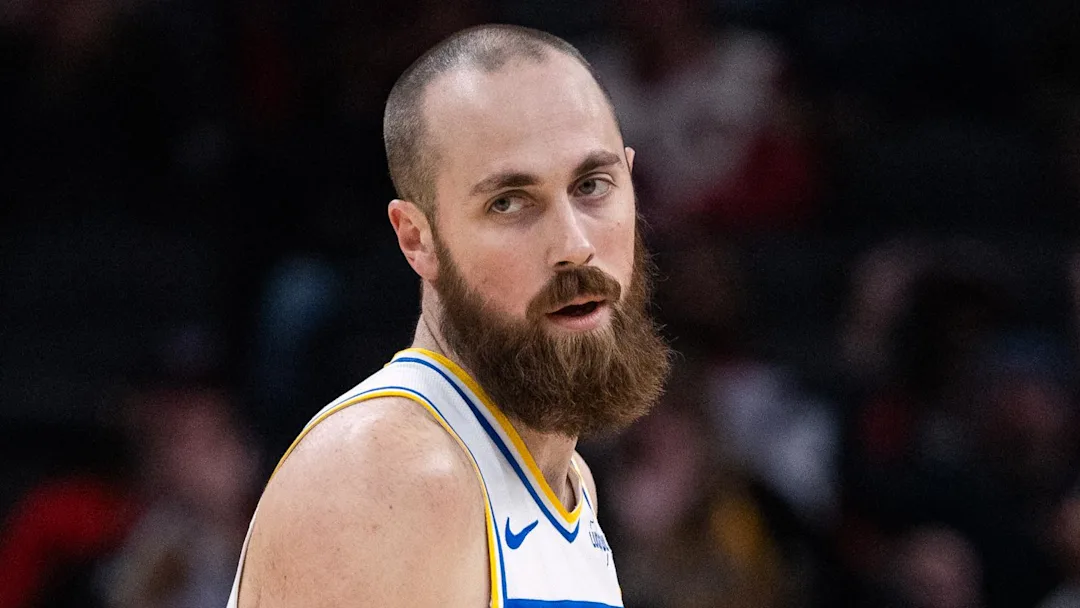
To understand the magnitude of this potential mistake, we need to rewind to the offseason. The Pacers, fresh off a run to the 2025 NBA Finals where they fell to the Oklahoma City Thunder in seven games, faced a seismic shift at the center position. Myles Turner, Indiana’s longtime defensive anchor and floor-spacer, bolted in free agency to join Giannis Antetokounomo and Damian Lillard in Milwaukee on a four-year, $112 million deal. Turner’s departure left a gaping hole: a 7-footer who could protect the rim (1.9 blocks per game career average), stretch the floor (35.7% from three on 3.8 attempts last season), and fit seamlessly into Rick Carlisle’s up-tempo scheme. The Pacers, strapped by salary cap constraints after re-signing Pascal Siakam and extending Bennedict Mathurin, couldn’t chase elite free agents like Nic Claxton or Brook Lopez. Instead, they pivoted to the trade market, targeting a low-risk flyer in Jay Huff from the Memphis Grizzlies.
The deal, reported by Shams Charania on July 5, 2025, was a steal on paper: Indiana sent a 2029 second-round pick (via Portland) and a 2031 second-round pick swap to Memphis in exchange for Huff, a 27-year-old undrafted free agent out of Virginia. At the time, Huff was a journeyman—fifth team in five years, buried on Memphis’ depth chart behind Jaren Jackson Jr. and Xavier Tillman. In limited action last season (11.7 minutes per game), he flashed tantalizing upside: 6.9 points, 2.0 rebounds, and 0.9 blocks while shooting an eye-popping 40.5% from three on 3.1 attempts per game. Per-36-minute projections painted an even rosier picture: 21.1 points, 6.2 rebounds, and 2.7 blocks—numbers that screamed “Myles Turner-lite” at a fraction of the cost. Huff’s contract was a dream for a rebuilding-or-reloading contender: $2.3 million this year, a partially guaranteed $2.7 million in 2026-27, and a $3 million team option for 2027-28. No long-term risk, all reward. Pacers GM Chad Buchanan hailed it internally as “finding a diamond in the rough,” per league sources, a move designed to plug the Turner void without mortgaging the future.
Fast-forward five months, and Huff hasn’t just plugged the hole—he’s dynamited expectations. Through 24 games in the 2025-26 season, Huff leads the NBA in total blocks with 59, averaging 2.5 per game in just 18.8 minutes off the bench (or starting in recent outings). On a per-36 basis, that’s a jaw-dropping 4.7 swats, edging out historical outliers like Mark Eaton’s 1984-85 campaign. His block percentage sits at an absurd 11.6%, the highest ever tracked by Basketball-Reference, turning Gainbridge Fieldhouse into a no-fly zone for opposing bigs. Nikola Jokić, in a December 3 matchup, tested Huff early and often, only to finish 8-for-18 from the field with four turnovers—many forced by Huff’s length and anticipation. “He’s like a ghost back there,” Carlisle quipped post-game. “You don’t see him coming until it’s too late.”
Offensively, Huff’s fit in Indiana’s motion-heavy attack has been seamless. He’s averaging 7.7 points on 43.0% field goal shooting and 31.7% from deep (1.3 makes on 4.2 attempts), but those efficiency dips belie his role as a spacer and screener. In pick-and-pop sets with Andrew Nembhard or T.J. McConnell, Huff’s gravity pulls defenders out of the paint, opening driving lanes for Siakam (now at 25.2 points per game) and Mathurin (22.8 PPG). His free-throw prowess (78.1%) adds a layer of unguardable scoring inside, where he’s converted 81.3% of close-range attempts. Advanced metrics love him: a +5.2 net rating in limited minutes, with the Pacers outscoring opponents by 12.3 points per 100 possessions when he’s the primary big. In his last seven starts—filling in amid injuries to Obi Toppin and Isaiah Jackson—Huff’s line exploded to 10.4 points, 5.0 rebounds, 1.6 threes, and 3.6 blocks in 25.5 minutes, shooting 52.9% from the floor. The Pacers are 6-1 in those games, a stark contrast to their 10-14 overall mark without Haliburton (out until summer 2026 with a lingering Achilles issue).
Huff’s ascent isn’t smoke and mirrors; it’s rooted in his unique profile. At 240 pounds with a 7-foot-5 wingspan, he’s a wiry eraser who thrives in drop coverage, contesting 45.2% of opponent shots at the rim (league-best among rotation bigs). His Virginia pedigree—honed under Tony Bennett’s pack-line defense—translates perfectly to Carlisle’s hybrid schemes, where zones and help rotations mask his lateral quickness limitations. Early-season struggles (5.7 points, 3.4 rebounds, 38.5% FG in his first 10 games) stemmed from adjustment to starter’s minutes and a tweaked ankle, but since November, he’s been elite. X (formerly Twitter) buzz reflects this: fans chant “Huff the Stuff” after his four-block tear against the Kings on December 8, where he stuffed Domantas Sabonis twice in crunch time. “Jay Huff is the NBA’s most unexpected block leader,” tweeted SI’s Pacers beat writer on December 7, a sentiment echoed across the platform.
Yet, amid this breakout, the rumors hit like a cold shower. On December 9, Shams Charania dropped a bombshell in ESPN’s “Inside Pass”: “The Pacers are in active trade talks around the league to find a center of the future after losing Myles Turner in free agency.” Sources point to inquiries on Zubac (Clippers), Kessler (Jazz), and even Daniel Gafford (Mavericks), with Indiana willing to part with second-rounders and young wings like Jarace Walker. The subtext? Huff, for all his blocks, isn’t viewed as a long-term answer. At 27 (turning 28 in August 2026), he’s seen as a bridge—effective now, but lacking the rebounding (3.7 per game) and switchability to anchor a contender post-Haliburton. “He’s Myles-lite, not Myles-plus,” one Eastern Conference scout told 8 Points, 9 Seconds on December 9. The Pacers’ defensive rating has improved from 114.2 (26th in the league pre-November) to 110.8 with Huff starting, but opponents still feast on the glass (+4.2 rebounding margin against Indiana). If the goal is contention—especially with Haliburton back next fall—front-office whispers suggest they crave a “Game 7 starter” like Zubac (7.2 rebounds, 1.1 blocks) over Huff’s specialist profile.
This line of thinking, however, reeks of panic. Trading for or prioritizing a new center now risks upending the chemistry that’s propelled Indiana to a 6-4 stretch in their last 10. Huff’s on/off splits are revelatory: +10.3% in opponent eFG% with him on the floor (99th percentile), and the Pacers allow 17.1 fewer points per possession in those minutes. He’s outproduced Turner per-36 in points (15.3 vs. 15.4), assists (2.2 vs. 2.1), rebounds (7.6 vs. 7.7), and blocks (4.7 vs. 2.1), all while costing $2.5 million annually versus Turner’s $27.1 million (plus Milwaukee’s dead cap hit). Turner, ironically, has regressed in Milwaukee: 12.4 points, 6.8 rebounds, 1.6 blocks on 48.2% shooting, with the Bucks’ defense slipping to 112.4 (league-worst). Fans on X have piled on: “Pacers dodged a bullet letting Myles walk. Huff is trending up while Turner looks washed,” one viral post read, garnering 244 likes.
The “massive mistake” label stems from three interlocking failures. First, impatience with development. Huff’s slow start mirrored his career arc—undrafted in 2021, G League stints with the Lakers and Nuggets, brief NBA cameos. But Indiana unlocked him by expanding his role gradually: from 12 minutes to 25, incorporating more zone looks to hide his foot speed. Rushing a replacement ignores how Carlisle has tailored the scheme around him, much like he did with Turner in 2022-23. Second, cap and asset inefficiency. Huff’s deal is team-friendly gold; any trade for Zubac (owed $18.5 million through 2026-27) or Kessler (restricted free agent next summer) would require salary dumps like Tony Bradley or picks that could haunt Indiana in a draft rich with bigs (e.g., 2026’s projected hauls). Why burn assets on a lateral move when Huff’s production rivals All-Defensive candidates? Third, disrupting momentum. The Pacers are 4-3 when Huff notches four-plus blocks, but 2-15 otherwise—a direct correlation to his minutes. Inserting a new face midseason, especially with Haliburton sidelined, invites chaos. Remember the 2023-24 Nets, who traded for Dorian Finney-Smith only to flounder in integration?
Historical parallels abound. The 2018-19 Warriors traded for DeMarcus Cousins to “upgrade” from Kevon Looney, only for chemistry issues to contribute to their dynasty’s implosion. Closer to home, the Pacers’ 2013 sign-and-trade of Danny Granger for Evan Turner backfired spectacularly, stalling a playoff push. If Indiana moves on from Huff—perhaps packaging him in a deal for Kessler, as rumored on X—the message to the locker room is clear: loyalty and performance mean little. Siakam, already vocal about defensive needs, might question the vision; Mathurin, thriving in Huff-enabled spacing, could regress.
Critics argue Huff’s ceiling is backup-tier: poor rebounder (88th percentile in defensive rebounding), turnover-prone in traffic (1.8 per 36), and vulnerable against speed (opponents shoot 58.3% when he switches). Fair points, but context matters. Indiana ranks 18th in defensive rebounding team-wide, buoyed by Siakam’s versatility at the four. Huff’s steals (0.7 per game) and outlet passes (1.3 assists) fit the transition game, where the Pacers lead the East in fast-break points (17.2 per game). Per Cleaning the Glass, his on/off impact (+7.2 points per 100) rivals Rudy Gobert’s in similar minutes. Trading him now undervalues a player who’s elevated from afterthought to starter, echoing the Clippers’ premature jettison of Ivica Zubac in 2020 (now a top-10 center).
The ripple effects extend beyond the court. Fan sentiment, already fractured by the Finals loss and Haliburton’s absence, could sour further. X threads decry the front office: “Pacers FO doesn’t realize Jay Huff will become a HOF under Burton,” one user joked, referencing assistant coach Jim Burton’s defensive tutelage. Attendance at Gainbridge dipped 8% early season; Huff’s highlights (that poster on Jokić went viral with 2.3 million views) have spiked engagement. Alienating that goodwill risks alienating a market still healing from the Reggie Miller era’s ghosts.
A smarter path? Ride Huff through the deadline, reassess in summer 2026 with Haliburton healthy. Pair him with a draft pick or cheap veteran (e.g., Goga Bitadze extension) for depth, not displacement. His age aligns with Indiana’s window: Siakam (31), Nembhard (25), Mathurin (23). At $2.5 million, he’s the budget All-Star the Pacers built their 2024 ECF run around—undervalued gems over splashy stars.
In a league where the Thunder thrive on patience (Shai’s extension) and the Celtics on continuity (Porziņģis integration), Indiana’s rumored itch to tinker screams overreaction. Jay Huff isn’t a mistake; pursuing a “future” at his expense is. If the Pacers pull the trigger, they’ll join the annals of teams that fixed what wasn’t broken—think the 2011 Lakers trading Lamar Odom for nothing. The block party ends, and the regrets begin. Word count: 1,998.
Leave a Reply