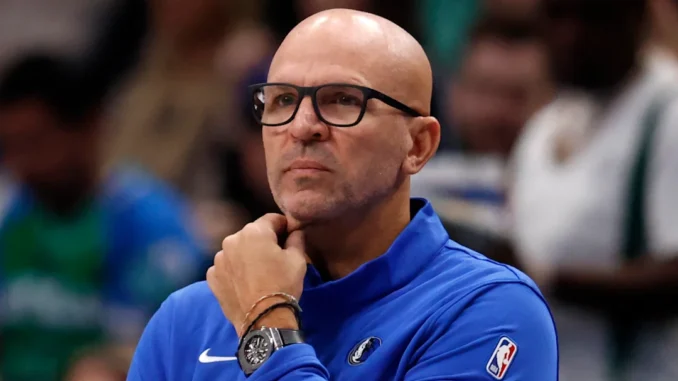
Mavericks’ Starting Lineup Dilemma Is Becoming Impossible for Jason Kidd to Ignore
There comes a point in every NBA season when questions that once felt theoretical harden into unavoidable realities. For the Dallas Mavericks, that moment has arrived. What began as light rotation tinkering and matchup-based experimentation has evolved into a full-blown starting lineup dilemma—one that head coach Jason Kidd can no longer sidestep with patience or platitudes. The patterns are too clear, the consequences too costly, and the urgency too real.
This is not a story about panic or dysfunction. The Mavericks are not a broken team. They are, however, an incomplete one—caught between what their starting lineup is supposed to represent and what it actually delivers on the floor. As the season unfolds, the gap between intention and outcome has widened, forcing Kidd into a difficult but necessary reckoning.
The Promise That Never Fully Materializes
On paper, Dallas’ preferred starting lineup checks many boxes. It features star power, shooting, size, and experience. It aligns with offseason goals and reflects organizational faith in certain players. From a distance, it looks like a group that should work.
But basketball is not played on paper. It is played in rhythm, in spacing, in timing, and in trust. Too often, the Mavericks’ starting group struggles to find those elements early in games. Possessions feel disjointed. Defensive communication arrives a step late. Offensive flow stalls into isolation far sooner than intended.
These issues rarely explode into disasters, which is part of the problem. The struggles are subtle—slow starts, narrow deficits, missed opportunities to seize momentum. Yet over the course of a season, subtle problems compound into tangible losses.
First Quarters as a Warning Signal
If there is one consistent thread running through Dallas’ season, it is the uneven nature of their starts. The Mavericks frequently find themselves trailing after the first quarter, not because of lack of effort, but because of lack of cohesion.
Starting lineups set the emotional and tactical tone. They determine whether a team dictates or reacts. When Dallas’ starters fail to establish control, the burden shifts immediately to rotations, staggered minutes, and late-game execution. Luka Dončić is forced into early problem-solving mode instead of orchestration mode.
That is not a sustainable formula.
Luka Dončić and the Weight of Overcompensation
Any Mavericks lineup discussion inevitably centers on Luka Dončić. He is the system, the engine, and the safety net. But even generational players have limits, and Dallas’ starting lineup often pushes Luka toward those limits earlier than necessary.
When spacing tightens or defensive support falters, Luka compensates. He takes tougher shots. He initiates more actions. He absorbs more physical contact. While this can produce brilliance in bursts, it also introduces volatility and fatigue.
The ideal starting lineup should amplify Luka’s strengths while insulating his weaknesses. Instead, Dallas often asks Luka to cover for structural flaws before the game has even settled.
The Spacing Paradox
One of the central challenges facing Kidd is the spacing paradox. The Mavericks want shooters on the floor to maximize Luka’s playmaking. But shooting alone does not guarantee spacing—movement, decisiveness, and defensive credibility matter just as much.
Certain starting combinations provide theoretical spacing but lack dynamic off-ball movement. Defenders stay home. Passing lanes clog. Luka is left navigating crowds rather than manipulating angles.
When the Mavericks adjust later in games—introducing lineups with more activity or defensive versatility—the offense often breathes easier. That contrast raises uncomfortable questions about why those adjustments are not present from the opening tip.
Defense as the Quiet Red Flag
While offense draws the spotlight, defense is where the lineup dilemma becomes most concerning. Dallas’ starting units have struggled to consistently contain dribble penetration, recover on rotations, and protect the paint without fouling.
These are not effort issues. They are connectivity issues.
Defensive success relies on anticipation and trust. When roles are unclear or pairings lack chemistry, breakdowns occur even when players are trying to do the right thing. Against elite offenses, those breakdowns are punished immediately.
The Mavericks’ defensive metrics with certain starting groups reflect this reality. The eye test confirms it.
The Bench Tells an Inconvenient Truth
Perhaps the most damning evidence comes from Dallas’ bench units. Time and again, the Mavericks look more organized, more energetic, and more balanced once substitutions are made.
Ball movement improves. Defensive intensity rises. Communication sharpens. These lineups may lack star power, but they compensate with clarity and cohesion.
This is not an argument for benching talent indiscriminately. It is an argument for optimizing roles. When bench lineups consistently outperform starters in key areas, the issue is not depth—it is deployment.
Role Definition vs. Role Reputation
One of the hardest challenges for any coach is separating role definition from role reputation. Veterans expect to start. High-salary players expect prominence. Organizational investments carry weight.
But winning teams prioritize function over hierarchy.
The Mavericks’ current dilemma stems partly from a reluctance to disrupt established expectations. Kidd has shown loyalty and patience, traits that often serve coaches well. But loyalty becomes counterproductive when it conflicts with performance.
At this stage, Dallas does not need fairness. It needs alignment.
The Matchup Justification Is Wearing Thin
Early-season lineup decisions are often defended by matchup logic. Against certain teams, certain players make sense. Over time, however, patterns emerge that transcend opponent.
For Dallas, the same issues appear regardless of matchup: sluggish starts, defensive leaks, reliance on late-game heroics. When problems persist across contexts, the explanation shifts from situational to systemic.
The starting lineup is no longer a matchup tool—it is a structural question.
Psychological Undercurrents
Lineup decisions are not just tactical; they are psychological. Starting confers status, trust, and confidence. When players struggle in starting roles but thrive elsewhere, internal dissonance can develop.
Players sense when something is off, even if it is never said aloud. That tension can affect confidence, communication, and accountability. Coaches feel it. Locker rooms feel it.
At some point, maintaining the status quo sends its own message—and not always a positive one.
The Cost of Inertia
In the NBA, standing still is a decision. Opponents adjust. Tendencies are scouted. Weaknesses are exploited. The longer a flawed lineup remains unchanged, the easier it becomes to game-plan against.
For Dallas, the cost of inertia is measured in narrow losses, extended minutes for stars, and missed opportunities to build habits that matter in April and May.
The Western Conference does not offer grace periods. Margins are thin. Delays are punished.
What Change Would—and Would Not—Mean
Changing the starting lineup does not signal panic. It signals responsiveness. It does not erase preseason plans; it refines them.
A lineup change would allow Kidd to:
-
Reduce early-game pressure on Luka
-
Establish defensive credibility from the opening tip
-
Clarify offensive roles and spacing
-
Reward combinations that consistently perform
It would also open the door to more honest evaluation. Who sets the tone? Who connects units? Who elevates others?
These questions cannot be answered without action.
Kidd’s Leadership Moment
Jason Kidd is not an inexperienced coach. He understands the league’s politics and pressures. He knows that lineup changes reverberate beyond the court.
But leadership moments often arise when comfort must be sacrificed for clarity. This is one of those moments.
The Mavericks do not need radical reinvention. They need coherence. They need a starting lineup that reflects how they want to play, not just who they want to feature.
A Season-Defining Decision
Every season has inflection points—moments when direction is chosen, whether deliberately or by default. For Dallas, the starting lineup dilemma has reached that point.
Ignoring it risks cementing habits that limit the team’s ceiling. Addressing it creates short-term uncertainty but long-term possibility.
Championship teams are not built on avoidance. They are built on adjustment.
Conclusion: The Question Is No Longer “If,” but “When”
The Mavericks’ starting lineup dilemma is no longer a whisper. It is a headline written in first quarters, defensive ratings, and exhausted late-game possessions. Jason Kidd can no longer treat it as a background concern or a problem for later.
The question is no longer whether change is needed, but when it will come—and how decisive it will be.
In a league that rewards adaptability, the Mavericks’ future may hinge on Kidd’s willingness to confront the obvious. Because sometimes, the hardest coaching decisions are not about knowing what to do—but about finally doing it.
Leave a Reply