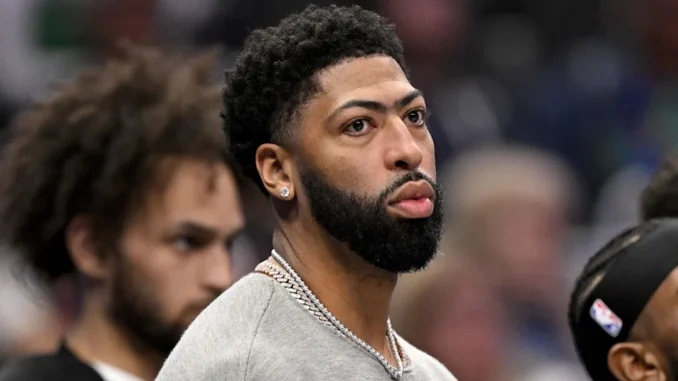
Mavericks’ Perfect Anthony Davis Trade Return Is Slipping Away
In the NBA, timing is everything. Championships are often decided not just by who a team acquires, but when they make the move—and just as critically, when they fail to. For the Dallas Mavericks, the idea of an Anthony Davis trade return once lived in the realm of tantalizing possibility. It represented a chance to pair Luka Dončić with a superstar defender, a rim-protecting finisher, and a proven playoff force at the peak of his powers. It was the kind of swing that could redefine a franchise’s ceiling overnight.
That window, however, is narrowing. Not necessarily because Anthony Davis is no longer great—he remains one of the most impactful two-way big men in basketball—but because the conditions that once made Dallas an ideal trade partner are slowly eroding. Assets depreciate. Contracts age. Leverage shifts. And in a league that moves relentlessly forward, hesitation has a way of turning opportunity into regret.
The Mavericks are now confronting a familiar NBA reality: the perfect trade return does not wait forever.
Why Anthony Davis Was the Ideal Target
Anthony Davis has long embodied exactly what Dallas lacks at its highest level. He is a defensive anchor who erases mistakes, a versatile big who can switch across positions, and an offensive weapon who thrives without monopolizing the ball. Next to Luka Dončić, Davis’ strengths would be amplified rather than diluted.
Luka demands defensive attention and dictates offensive tempo. Davis thrives as a finisher, screener, and secondary creator. Luka bends defenses; Davis punishes them. Luka orchestrates; Davis stabilizes. The theoretical fit has always been seamless.
Beyond fit, Davis represents credibility. He is a champion, a playoff-tested star who understands the demands of deep postseason runs. For a Mavericks team still searching for consistent two-way identity, that experience carries immense value.
At one point, Dallas appeared positioned to at least enter the conversation. They had movable contracts, intriguing young pieces, and future draft considerations that—packaged correctly—could have sparked serious dialogue.
That moment is fading.
The Asset Erosion Problem
Trade windows rarely slam shut in dramatic fashion. They close quietly, one depreciating asset at a time.
For Dallas, the challenge is not a single missing piece, but cumulative erosion. Draft picks lose allure as protections stack up or as timelines extend further into the future. Young players plateau or become role-specific rather than star-adjacent. Contracts that once facilitated matching salary become either too long, too short, or too expensive.
The league notices these things. Front offices track trajectories ruthlessly. What once looked like a competitive offer can, within a season, feel outdated.
Anthony Davis is not the type of player teams trade casually. If the Lakers—or any franchise in possession of a player of his caliber—decide to move him, they will command premium value. That value is not static. It rises and falls relative to what the market can offer.
Right now, Dallas’ relative position in that market is slipping.
Competition Is Getting Stronger, Not Weaker
One of the most underappreciated aspects of blockbuster trades is competition. The Mavericks are not negotiating in a vacuum. Every other contender—or aspiring contender—with assets is monitoring the same situations.
As more teams stockpile picks, develop young talent, and maintain financial flexibility, the bar rises. Offers that once would have been compelling become merely adequate.
Dallas faces an especially difficult landscape because several rival teams can offer what the Mavericks cannot: a combination of high-upside young players, unencumbered draft capital, and immediate roster flexibility. In that environment, Dallas must either overpay or accept being outbid.
Neither option is ideal.
Anthony Davis’ Timeline vs. Dallas’ Urgency
Anthony Davis is still elite, but he is not ageless. His value is tied to availability, physical dominance, and the ability to anchor defense deep into playoff runs. Every season matters.
Dallas’ urgency is immediate. Luka Dončić is already performing at an MVP level. His prime is not theoretical—it is happening now. The Mavericks cannot afford to align their championship window with a vague future.
This creates a narrow overlap: Dallas needs a star who fits Luka now, not in three years. Davis fits that description today. But as seasons pass, the calculus changes. Age, mileage, and contract dynamics all influence perceived value.
If Dallas hesitates too long, the question shifts from “Can we get Anthony Davis?” to “Should we still want Anthony Davis at that cost?”
That is not where you want to be.
The Leverage Problem
Leverage is the silent driver of all trades. Teams with leverage extract value. Teams without it settle or walk away.
Dallas’ leverage is limited by its roster construction. Luka is untouchable. Beyond that, the Mavericks lack a clear blue-chip prospect who can headline a blockbuster. They rely instead on depth, role players, and future considerations.
That can work in smaller deals. In superstar trades, it often falls short.
Meanwhile, teams holding elite players typically wait for desperation to surface. They wait for a team to feel the pressure of wasted seasons, of mounting expectations, of internal dissatisfaction. The longer Dallas waits, the more they risk becoming the team negotiating from urgency rather than strength.
The Cost of Over-Optimization
There is a temptation in front offices to wait for the “perfect” deal—one that preserves flexibility, minimizes risk, and maximizes upside. In theory, this is prudent. In practice, it can be paralyzing.
The Mavericks have, at times, leaned toward over-optimization. They seek value. They protect future optionality. They avoid moves that feel lopsided on paper.
But superstar trades are rarely balanced. They are bets. They require conviction.
The risk now is that Dallas waits so long for the perfect version of an Anthony Davis trade that the acceptable version disappears.
Luka’s Prime Does Not Pause
Every season that passes without meaningful roster elevation places more responsibility on Luka Dončić. He scores more. He creates more. He absorbs more physical and mental strain.
Superstars notice this. They may not voice it publicly, but they feel it. Championships are not won by patience alone. They are won by ambition matched with execution.
Failing to capitalize on moments when elite talent is potentially available sends a message—intentional or not—about priorities.
The Mavericks must be careful not to let caution be mistaken for complacency.
The Shifting Definition of “Perfect”
What made an Anthony Davis trade perfect for Dallas was never just the player. It was the context: manageable cost, ideal fit, and timely execution.
As the context shifts, so does the definition of perfect.
The cost is rising. The competition is increasing. The timeline is tightening. At some point, the Mavericks must decide whether they are chasing a concept or pursuing a reality.
There is a danger in falling in love with the idea of a trade rather than its feasibility.
The Alternative Paths Are Not Equal
Some may argue that Dallas can simply pivot—wait for another star, another opportunity. In theory, that is true. In practice, stars with Davis’ profile rarely become available.
Two-way superstars who do not require the ball, anchor defense, and complement heliocentric offenses are exceedingly rare. Most stars need the ball to be effective. Pairing them with Luka introduces diminishing returns.
Anthony Davis is different. That difference is why the window matters.
Assuming an equivalent opportunity will present itself later is a gamble—and not a particularly safe one.
The Emotional Cost of Inaction
Beyond tactics and assets lies something harder to quantify: belief.
Players sense ambition. They sense when a front office is willing to push its chips in. They also sense when opportunities slip away.
For a Mavericks locker room built around a generational talent, inaction carries emotional weight. It shapes confidence, expectations, and internal accountability.
Championship cultures are proactive. They do not wait for clarity; they create it.
The Window Is Narrowing, Not Closed
It is important to be precise: the window has not slammed shut. Dallas could still re-enter the conversation under the right conditions. But the margin for error is shrinking.
Every season that passes without decisive movement narrows the path. What once required courage may soon require sacrifice. What once felt bold may soon feel desperate.
That is the cost of delay.
Conclusion: Opportunity Rarely Knocks Twice in the Same Way
The Mavericks’ potential Anthony Davis trade was never guaranteed. It was always conditional, dependent on timing, leverage, and willingness.
But it was real. And it represented a rare alignment of fit, need, and ambition.
That alignment is slipping—not because Dallas did something catastrophically wrong, but because the league does not wait. Assets depreciate. Contexts change. Windows close quietly.
The question now is not whether Anthony Davis is still worth pursuing, but whether Dallas still has the means—and the nerve—to pursue him before the perfect version of that trade becomes a memory.
In the NBA, hesitation is rarely neutral. It chooses a direction whether you intend it to or not.
For the Mavericks, the clock is not ticking loudly. But it is ticking all the same.
Leave a Reply