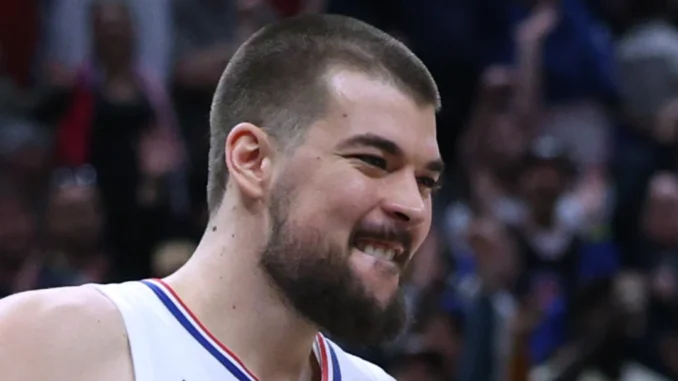
Ivica Zubac’s Quiet Message on a Loud Speaker: Why the Clippers Must Finally Listen
On January 3, 2026, the Boston Celtics dismantled the LA Clippers 146-115 at the Intuit Dome, snapping a six-game winning streak that had breathed life into a once-dismal season. Jaylen Brown torched the Clippers for 50 points in just 35 minutes, feasting on layups and dunks with minimal resistance. The game marked Ivica Zubac’s return from a Grade 2 ankle sprain that sidelined him for five games. But here’s the twist: Zubac, the team’s longtime starting center, came off the bench. And in that subtle decision—combined with the team’s stark performance shift—lies a “quiet message” delivered on the NBA’s loudest stage, one that Clippers management can no longer ignore.
The phrase “quiet message on loud speaker” captures the irony perfectly. Zubac didn’t rant in the locker room or demand touches in post-game interviews. He simply played 21 minutes off the bench, posting a muted 4 points, 7 rebounds, and 1 assist on inefficient shooting. Meanwhile, the Clippers’ defense collapsed in the paint, allowing easy buckets that highlighted Zubac’s limitations. Yet the real message wasn’t in his stat line—it was in the context: the Clippers were abysmal with Zubac healthy early in the season (around 6-21 before his injury), surged to a perfect 5-0 without him, and reverted to vulnerability upon his limited return. Through actions rather than words, Zubac’s presence (and the team’s response to it) broadcast a harsh reality: the current roster construction around him may have reached its ceiling, and perhaps its expiration.
This isn’t about blaming Zubac. The 28-year-old Croatian has been a model of consistency and growth for the Clippers since arriving in a 2019 trade from the Lakers. He’s the longest-tenured player on the roster, a reliable anchor who earned All-Defensive Second Team honors last season while finishing as runner-up for Most Improved Player. In 2024-25, he posted career highs across the board, leading the league in rebounds at times and anchoring one of the better defenses in basketball. His post game became a weapon, his rim protection elite, and his playmaking improved markedly. Zubac embodies the quiet professionalism that has endeared him to fans—he’s never been the loudest voice, but his work ethic and on-court impact spoke volumes.
Yet, as the 2025-26 season unfolds, cracks have appeared. Zubac’s traditional big-man style—dominant in the paint but limited in spacing and switchability—clashes with modern NBA demands. He doesn’t stretch the floor (attempting few threes), struggles against smaller lineups in space, and his offensive game, while efficient inside, has plateaued or even regressed slightly under heavier defensive attention. Early this season, before the ankle injury sustained against the Lakers on December 20, Zubac averaged a solid 15.6 points and 11.1 rebounds. But the team floundered, hampered by poor spacing and defensive lapses that his drop coverage sometimes exacerbated against elite pick-and-roll attacks.
Then came the streak without him. Backup Brook Lopez, the veteran sniper acquired in the offseason, stepped into the starting role alongside emerging rookie Yanic Konan Niederhäuser. Lopez’s floor-spacing (career 3-point threat) opened driving lanes for James Harden and Kawhi Leonard, while the team’s overall pace quickened. The Clippers shot over 41% from deep during the streak, opponents bricked from outside, and the paint opened up offensively without clogging defensively. Wins came convincingly, by double digits, reviving hope after a 6-21 start.
Zubac’s swift return—ahead of the initial three-week timeline—spoke to his dedication. He “attacked his rehab,” as reports noted, and volunteered to come off the bench to preserve the hot lineup. Coach Tyronn Lue praised the selflessness, calling Zubac a starter in spirit but willing to sacrifice for momentum. It was a classy move, aligning with Zubac’s history: he’s often spoken about being the “loudest cheerleader” on the bench when not playing closing minutes, and he’s emphasized vocal leadership on defense, urging bigs to communicate coverages loudly.
But the Celtics game exposed the flip side. With Zubac reinserted (albeit limited), the defense softened. Brown’s barrage included drive after drive with little contesting at the rim. The “Debbie Downer” vibe, as one analyst put it, returned—the energy dipped, spacing tightened, and the streak ended abruptly. Zubac’s “flat inside game,” lacking the former explosiveness, didn’t mesh seamlessly with the small-ball looks that fueled the wins. His poor spacing forces defenders to sag, clogging lanes for Harden and Leonard.
This performance wasn’t an anomaly; it’s a pattern echoing throughout Zubac’s Clippers tenure. The team has repeatedly hit walls in playoffs or key stretches when opponents exploit his lack of perimeter mobility. Elite teams like the Celtics, with versatile wings and dynamic attacks, punish drop bigs. Jaylen Brown’s 50-spot was a loudspeaker announcement: without adaptation, Zubac’s strengths become liabilities against the league’s best.
So, what is the “quiet message” Zubac instilled? Through his return, bench role, and the game’s outcome, he’s indirectly highlighted the need for change. Not because he’s washed—he’s still in his prime, on a team-friendly deal (part of his recent extension), and a trade asset coveted by contenders like the Pacers, Celtics (ironically), or Warriors. But for the Clippers, clinging to the status quo risks stagnation. President Lawrence Frank faces a contradiction: Zubac’s value is high (prime age, skills, contract), yet integrating him fully hampers the spacing and versatility that unlocked recent success.
Trading Zubac isn’t ingratitude; it’s pragmatism. His market is robust—teams needing a traditional anchor would pay handsomely in picks and young talent. Returns could address spacing (a stretch big or shooter) or depth, accelerating a retool around Harden, Leonard, and emerging pieces. Keeping him risks luxury tax issues and roster inflexibility, especially if the early-season struggles foreshadow playoff vulnerabilities.
Zubac himself has embodied quiet leadership. In past interviews, he’s stressed communication: “Bigs gotta be the loudest in the gym, calling coverages.” He’s worked on vocalness, mentored youth at camps, and accepted roles selflessly. His “message” here is unspoken but resonant: the team thrives differently now. By accepting the bench, he preserved harmony short-term but illuminated long-term questions.
Clippers fans adore Zubac—the gentle giant who’s grown from trade throw-in to cornerstone. He’s made history (consecutive double-doubles, dominant outings), drawn praise from peers like Nikola Jokic and Zach Randolph, and represented reliability in an injury-plagued franchise. But love doesn’t mean permanence. The NBA is business, and this loss screamed a truth: evolution is necessary.
As the trade deadline looms, Frank must “chime in”—listen to the message amplified by that Celtics blowout. Zubac’s quiet acceptance broadcast on the league’s stage urges action. Trade him while his value peaks, recoup assets, and pivot toward a more modern fit. Or risk more loud losses echoing the same refrain.
Zubac will contribute wherever he plays—his professionalism ensures it. But for the Clippers to truly contend, they must heed this inadvertent wake-up call. The quiet message is clear: change is coming, willingly or not.
In a league of superstars and soundbites, Zubac’s influence remains understated yet profound. His career arc—from overlooked draft pick to All-Defensive stalwart—inspires, but arcs bend. The Clippers’ next chapter may write without him at center stage. If they listen now, the future could be louder—in victories—than any speaker.
Leave a Reply