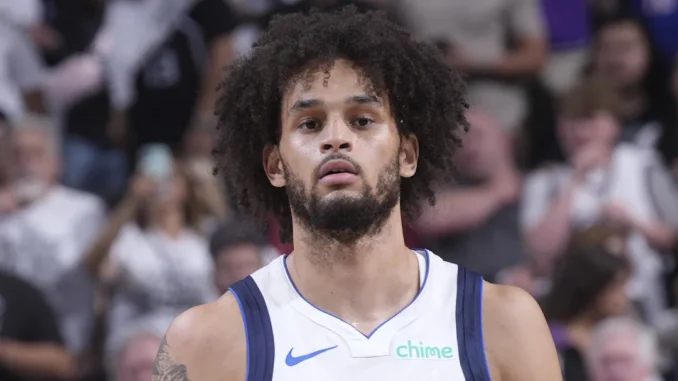
Brutal Dereck Lively II Injury Traps Mavericks in Dangerous Trade Corner
The Dallas Mavericks’ season, already teetering on the edge of despair, took a devastating plunge on December 10, 2025, when the team announced that promising young center Dereck Lively II would undergo season-ending surgery on his right foot. At just 21 years old, Lively has been a beacon of potential since the Mavericks traded up to select him 12th overall in the 2023 NBA Draft, swapping picks with the Oklahoma City Thunder in a move that symbolized the franchise’s commitment to building a rim-protecting future around Luka Dončić. But in a cruel twist of fate, recurring injuries have transformed that promise into a precarious liability, forcing Dallas into a high-stakes trade deadline calculus that could either salvage their championship aspirations or accelerate a full-scale rebuild.
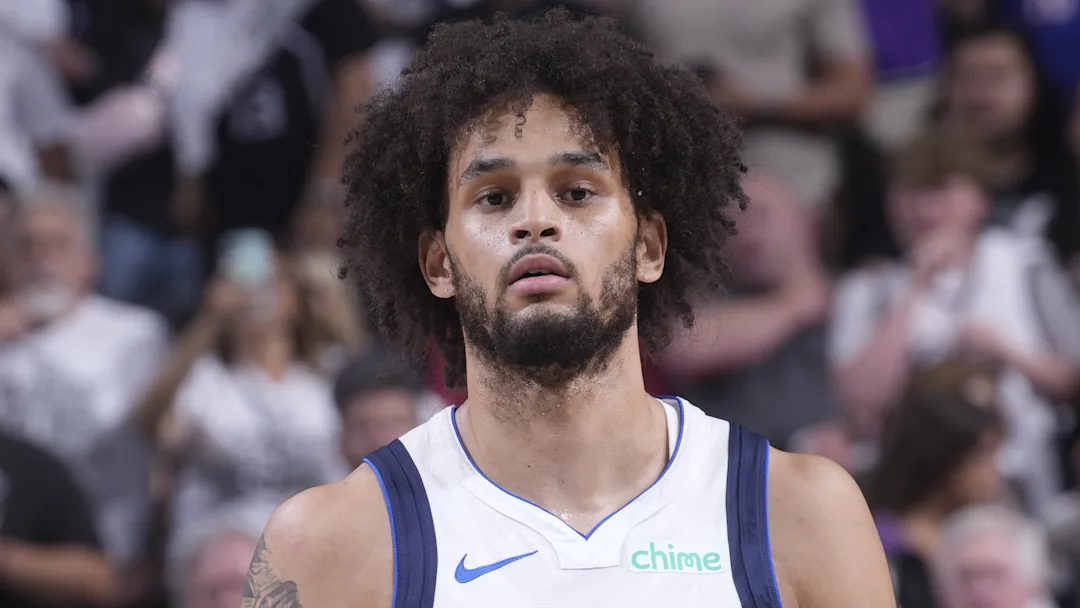
This isn’t just another nagging setback for a team plagued by injuries—Kyrie Irving’s lingering knee surgery recovery, Dante Exum’s knee issues, and now Lively’s third foot procedure in a calendar year. It’s a brutal gut punch that exposes the fragility of Dallas’ frontcourt depth and thrusts the Mavericks into a “dangerous trade corner,” where every move risks alienating fans, depleting assets, or doubling down on a roster that’s currently 9-16 and scraping for a play-in spot in the unforgiving Western Conference. With the NBA trade deadline looming on February 6, 2026, general manager Nico Harrison faces a dilemma: Do they buy reinforcements to chase a miracle playoff run, sell off veterans like Anthony Davis and Daniel Gafford to stockpile picks, or stand pat and pray for health? The answer, as we’ll explore, is far from simple, and Lively’s absence amplifies the peril at every turn.
Lively’s Rapid Rise and Recurrent Fall
To understand the magnitude of this blow, one must rewind to Lively’s meteoric entry into the league. Drafted out of Duke, where he averaged 5.2 points, 5.0 rebounds, and 1.2 blocks as a freshman, Lively was raw but tantalizing—a 7-foot-1 athletic freak with the mobility to switch onto guards and the finishing touch to thrive in pick-and-roll sets. The Mavericks, fresh off a playoff miss in 2023, saw him as the ideal complement to Dončić’s heliocentric offense. In his rookie season (2023-24), Lively appeared in 55 games, starting 32, and posted 9.2 points, 7.8 rebounds, and 1.4 blocks per game on 72.9% shooting. His impact was outsized: Dallas outscored opponents by 9.1 points per 100 possessions with him on the floor, per Cleaning the Glass metrics. He was the anchor in their surprise run to the 2024 NBA Finals, where his alley-oop dunks and chase-down blocks became memes and morale boosters alike.
But injuries have been Lively’s shadow since Day 1. As a rookie, he missed 27 games with various ailments. Last season (2024-25), a stress fracture in his right ankle sidelined him for 36 straight games from January to March, limiting him to just 43 total appearances across his first two years. He returned for the playoffs, but summer surgery to remove bone spurs in the same foot offered only temporary relief. This year, the 2025-26 campaign, started promisingly: Lively suited up for seven games (four starts) before November 21, averaging a modest 4.3 points, 5.3 rebounds, 1.9 assists, and 1.6 blocks in 16.4 minutes. Yet swelling and soreness returned, forcing him into a walking boot and multiple medical consultations.
The announcement came via the Mavericks’ official X account: “Dereck Lively II will undergo season-ending surgery on his right foot. Lively is expected to make a full recovery and be available for the start of training camp. Get well soon, big fella. The comeback will be better than ever 💙🙏 #MFFL.” ESPN’s Shams Charania corroborated, noting the procedure addresses “lingering discomfort” and is set for London under Dr. James Calder, a specialist in lower-extremity issues. Co-interim GM Matt Riccardi’s statement struck a note of optimism: “Dereck has handled every challenge of this season with professionalism and resilience. While this is a setback, we’re confident in his long-term future.”
Yet beneath the platitudes lies a troubling pattern. Lively has now played in just 98 of 187 possible regular-season games over three years—a 52% availability rate that’s untenable for a cornerstone piece. Foot and ankle injuries have dogged him relentlessly, raising whispers of structural vulnerabilities in his 260-pound frame. As The Athletic’s Christian Clark observed, “Lively’s latest injury means he will have played 43 games in the last two seasons. Next season, he will be entering the final year of his rookie deal.” For a franchise that traded away future Hall of Famer Dončić last offseason in a shocking deal for Anthony Davis and picks—aiming to retool around Davis’ two-way dominance—this injury doesn’t just thin the rotation; it questions Lively’s viability as the “next man up” in Dallas’ post-Luka era.
The Immediate Frontcourt Fallout: Depth on Life Support
With Lively shelved until at least October 2026, the Mavericks’ big-man rotation collapses like a house of cards. Anthony Davis, acquired in the blockbuster Dončić trade, shifts permanently to center—a role he’s thrived in recently, posting 24.7 points, 12.1 rebounds, and 2.3 blocks over Dallas’ last four games since returning from his own calf strain. At 32, AD’s versatility is a godsend, but his injury history (he’s missed 20+ games in five of the last seven seasons) makes over-reliance a gamble. “Davis has started five games at center—a position he’ll likely continue spending most of his time at with Lively out,” noted The Dallas Morning News.
Behind him? Daniel Gafford, the sturdy backup who arrived at the 2024 deadline, is nursing his own right ankle sprain and listed as doubtful for upcoming games. Gafford’s been a revelation—12.1 points, 6.2 rebounds, 1.6 blocks this season—but his three-year, $54.4 million extension starting in 2026-27 ties Dallas’ hands under the new CBA’s apron rules. Dwight Powell, the 34-year-old veteran on a $4 million expiring deal, offers veteran savvy but scant rim protection (0.8 blocks per game career). Moussa Diabaté, a two-way contract holder, is unproven at the NBA level. And with Exum out (knee) and Irving sidelined until mid-January at earliest, the Mavericks lack the guard play to mitigate frontcourt mismatches.
The stats paint a grim picture. Dallas ranks 22nd in defensive rating (116.2) and dead last in offensive rebounding percentage (23.1%) without Lively’s athleticism on the glass. In his seven games, the Mavs’ net rating jumped to +5.2 per 100 possessions; without him, it’s -8.4. Opponents feast in the paint, scoring 52.3 points there per game (league average: 48.1). As coach Jason Kidd lamented post-announcement, “For a 21-year-old, it’s tough. He wants to play. Unfortunately, he can’t play right now… We miss him, but he misses playing.” Kidd’s “next man up” mantra rings hollow when the “next men” are Powell and a prayer.
This vacuum doesn’t just hurt on the court; it ripples through roster construction. Dallas holds a full 15 standard contracts, including two-ways like Ryan Nembhard, whom they plan to convert soon—necessitating a waiver release. Lively’s injury qualifies them for a $2.6 million Disabled Player Exception (DPE), worth half his $5.25 million salary, per ESPN’s Bobby Marks. If approved, it allows signing or trading for a player with one year left on their deal—think a buyout veteran like Bismack Biyombo or a waiver claim. But it won’t breach the second apron ($207.8 million projected), and Dallas is already kissing the first apron ($178.1 million). No splashy addition here; just a band-aid for a gaping wound.
The Trade Deadline Dilemma: Buy, Sell, or Burn It Down?
Enter the “dangerous trade corner.” The deadline, set for 2 p.m. CST on February 6, isn’t just a transaction window—it’s a referendum on the Mavericks’ identity. At 9-16, they’re 11th in the West, a half-game from the play-in but miles from contention. The Dončić trade was meant to usher in a “win-now” era with Davis (32), Irving (33), and Klay Thompson (35) as the core, bolstered by youth like Cooper Flagg (rookie sensation at small forward) and Lively. But with Irving’s ACL rehab dragging and Lively’s fragility exposed, whispers of a rebuild have grown into roars.
Pre-injury, Dallas was shopping aggressively. Reports surfaced of overtures for versatile wings like OG Anunoby (expiring with Toronto) or athletic bigs like Robert Williams III (Portland’s unhappy center). Assets abound: Their 2026, 2027, and 2031 first-round picks (via the Dončić deal), plus expiring contracts like Spencer Dinwiddie ($5.7 million) and Quentin Grimes ($4.3 million). Maxi Kleber’s $11 million team option for 2026-27 is movable poison. But Lively’s surgery flips the script, making sellers like Gafford and even Davis more tempting—and riskier.
Option 1: Buy for the Play-In Push. Lean on the DPE to snag a cheap big (e.g., a buyout from Orlando’s Wendell Carter Jr. if waived), then package Dinwiddie, Grimes, and a future second for shooting help like Malik Monk (Sacramento). This preserves the core, betting on Irving’s return (projected January 15) and Davis’ dominance (he’s top-5 in PER at 28.4). Pros: Keeps fan hope alive; Adelson’s deep pockets (post-Cuban sale) signal spending appetite. Cons: Overpays for marginal gains; apron restrictions limit upside. As Mavs Moneyball’s Kirk Henderson noted, “The moves… will shine a light on the Miriam Adelson regime’s appetite for spending over that first cap apron.” With Lively out, this feels like doubling down on a busted flush.
Option 2: Sell the Farm—Rebuild Around Flagg and Picks. Flip Davis back to the Lakers for a haul: Austin Reaves, Max Christie, and three firsts, per mock drafts. Gafford to Memphis for GG Jackson and a protected 2028 pick. Lively? His rookie deal ends in 2026; if recovery falters, he’s a restricted free agent the Mavs might not match. This nets 5-7 firsts over seven years, accelerating a tank for Victor Wembanyama 2.0. Pros: Stockpiles youth (Flagg’s already averaging 14.2 points, 6.1 rebounds); escapes apron hell. Cons: Alienates a fanbase still mourning Dončić; Davis’ no-trade clause (inserted post-trade) could veto. SI.com’s analysis post-injury: “Lively’s injury now means the Mavericks have a lack of depth… it may be considered foolish for them to trade Davis.” Yet, with the West’s parity (top-8 separated by four games), selling could land a top-5 pick.
Option 3: Stand Pat—The Cuban Curse? Minority owner Mark Cuban has publicly dismissed trading Davis: “The team isn’t looking to trade the All-Star big man.” Use the DPE for a vet minimum signee, ride Davis-Gafford minutes, and hope Flagg’s growth (he’s shooting 38.2% from three) sparks a surge. Pros: Avoids rash decisions; tests the “next man up” ethos Kidd preaches. Cons: Risks missing playoffs entirely (Vegas odds: +250 for play-in), eroding trust in Harrison’s front office. X (formerly Twitter) erupted post-announcement: “Dallas rocked as Dereck Lively II seeks multiple opinions on troubling foot injury,” one fan account lamented, capturing the despair.
The corner is dangerous because inaction breeds stagnation, buying squanders futures, and selling torches bridges. Harrison, who orchestrated the Dončić heist, now juggles short-term survival with long-term viability. As ClutchPoints posited, “One has to wonder if the Lively update will impact the Mavericks’ trade plans… Rumors of a rebuild have swirled for months.”
Fan Frenzy and Front Office Finger-Pointing
Dallas fans, a passionate bunch weaned on Dirk Nowitzki’s loyalty, are fracturing. X lit up with heartbreak: The official Mavs post garnered 1,383 likes but 56 quotes questioning the medical staff. “How many foot surgeries is this now? Trade the whole frontcourt,” one user vented. MavericksGameday echoed the sentiment: “How Dereck Lively II’s season-ending injury could impact Mavericks’ trade plans.” Beat writer Ron Harrod Jr. captured Kidd’s frustration in a video clip: “He wants to play. Unfortunately, he can’t.”
Criticism has turned inward. Harrison’s aggressive style—rushing Lively back last season after a practice scare nearly led to an MRI-forced shutdown—draws ire. “Nico had him go thru a practice and almost played… until a doctor stepped in,” one insider recalled on X. Cuban, now a vocal minority owner post-2023 sale to Adelson, defends the youth movement but admits the injury toll: “We’ve needed them because of injuries and they’ve responded.” Adelson’s casino fortune ($35 billion net worth) could fund a splash, but her hands-off approach leaves Harrison exposed.
Potential Partners: Who Hangs Up the Phone?
If Dallas dials, who answers? For a Gafford trade, the Lakers (desperate for bench bigs) or Grizzlies (needing frontcourt muscle) top the list—perhaps Christie and a second for Gafford’s steadiness. Davis? The Knicks, flush with picks post-2024 title, might offer Julius Randle and two firsts, but AD’s $43.2 million salary demands salary filler. Rebuilding teams like the Wizards could absorb expiring deals for picks.
Selling Lively himself? Unlikely mid-contract, but his injury history depresses value. As The Dallas Morning News pondered, “Lively’s season-ending surgery creates questions about his future with Mavericks.” A restricted extension looms in 2026; if he rebounds, he’s a steal at $6-8 million. If not, he’s expendable.
The Long Shadow: Rebuilding or Reloading?
Lively’s surgery isn’t fatal—Dr. Calder’s track record boasts 90% full recoveries for similar procedures—but it casts a long shadow over Dallas’ trajectory. The Mavericks, once Dirk’s domain, now navigate a post-Dončić wilderness where health is the ultimate currency. Harrison must thread the needle: Preserve Davis’ prime without mortgaging Flagg’s upside, leverage the DPE wisely, and avoid the pitfalls that sank the post-Duncan Spurs or post-LeBron Cavs.
In this dangerous corner, the deadline isn’t a finish line—it’s a fork. Buy, and Dallas clings to contention’s ghost. Sell, and they embrace a lottery rebirth. Stand pat, and irrelevance beckons. As the calendar flips toward February, one thing’s certain: Dereck Lively II’s brutal injury has trapped the Mavericks in a no-win scenario, where the only safe bet is that the ride gets rougher. Fans, fasten your seatbelts—the comeback might be epic, but the path there is paved with tough calls and tougher breaks.
Leave a Reply