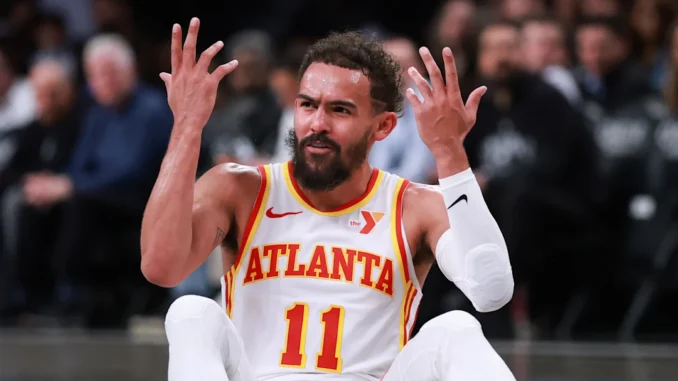
Why a Trae Young Trade to the Milwaukee Bucks Would Be a Nightmare Scenario
As of January 2026, the Milwaukee Bucks find themselves in a precarious position. Coming off a disappointing early playoff exit last season and with Giannis Antetokounmpo entering the prime years where championship windows start to narrow, the front office is understandably desperate to make a splash before the February 5 trade deadline. Recent reports indicate that the Bucks are among the teams monitoring Atlanta Hawks star Trae Young’s trade situation, with ESPN even floating mock trades that would pair Young with Giannis. One such proposal involves sending Bobby Portis, Kyle Kuzma (presumably via a multi-team deal), Gary Harris, and a 2031 first-round pick to Atlanta in exchange for Young.
On the surface, acquiring a four-time All-Star point guard like Young—who averages around 25 points and 11 assists per game—sounds enticing. He could theoretically provide elite playmaking to unlock Giannis’ scoring in pick-and-roll sets and stretch the floor with his deep shooting range. However, this idea has gained traction in media circles as a potential “nightmare” for Milwaukee, and for good reason. Trae Young is fundamentally not what the Bucks need right now. In fact, pursuing him could accelerate the closure of their contention window rather than extend it. Below, I’ll break down the key reasons why this fit is mismatched, drawing on current roster needs, defensive realities, financial implications, and historical parallels.
1. The Bucks’ Core Problems Are Defense and Size, Not Playmaking
The Bucks’ struggles this season stem primarily from defensive deficiencies and a lack of physicality, particularly on the perimeter and in rebounding. Milwaukee ranks in the bottom half of the league in defensive rating, often getting exposed by quick guards and wings who attack mismatches. Their rebounding has been inconsistent without a dominant big alongside Brook Lopez, who is aging and less mobile.
Trae Young exacerbates these issues rather than solving them. He is widely regarded as one of the worst defenders among starting guards in the NBA. Advanced metrics like Defensive Box Plus-Minus (DBPM) and Defensive Win Shares consistently place him near the bottom of the league—often in the negative territory. Opponents target him relentlessly in pick-and-roll coverage, leading to easy buckets or forced rotations that collapse defenses.
Pairing Young with Damian Lillard (another subpar defender) and Giannis would create a backcourt that’s a sieve. Giannis is an elite help defender, but he can’t cover for two guards who struggle to stay in front of opponents. This was evident in past Bucks teams: even with Jrue Holiday (a stellar defender), perimeter defense was a concern; removing that and adding Young would be catastrophic.
Moreover, the Bucks already have sufficient offensive creation. Lillard and Giannis are high-usage players who thrive with the ball. Young’s heliocentric style—where he commands a massive share of possessions—would overlap redundantly. The team needs complementary pieces: long, athletic wings who can guard multiple positions and crash the boards, not another ball-dominant scorer who needs the rock to be effective.
2. Fit with Giannis: Style Clash and Diminishing Returns
Giannis Antetokounmpo has repeatedly emphasized a preference for teammates who fit a two-way mold. In recent interviews, he’s highlighted the need for “dogs” who compete on both ends and make winning plays without needing constant touches. Young, while undeniably skilled offensively, is the antithesis of this in many ways.
Young’s game is built around volume shooting and isolation creation. He’s an incredible passer and shooter, but his efficiency dips in high-pressure situations, and his teams have historically underperformed defensively. The Hawks have never advanced past the Eastern Conference Finals with Young as the lead guard, often bowing out due to defensive collapses.
Imagine Giannis freelancing off-ball while Young runs endless pick-and-rolls. It might generate some highlight lobs, but it would reduce Giannis’ dominance in transition and post-ups—areas where he’s unstoppable. Past superstar duos like this (e.g., Westbrook and Durant post-2016) have shown that forcing ball-dominant guards together can lead to inefficient offense and resentment over touches.
Proponents argue Young could emulate what a prime Chris Paul or Steve Nash did for bigs, but those players were far better defenders and more efficient distributors. Young’s turnover rate is high, and his defensive liabilities would force Giannis into constant help mode, wearing him down over a long season and playoffs.
3. Financial Ramifications: Locking Into a Second Apron Nightmare
Trae Young’s contract is a significant hurdle. He’s earning approximately $46 million this season, with a $49 million player option for 2026-27. Acquiring him would push the Bucks deeper into luxury tax territory, likely triggering second apron restrictions that limit roster flexibility (no aggregating salaries in trades, limited taxpayer mid-level exception, etc.).
The Bucks are already one of the highest-paying teams, with Giannis, Lillard, Lopez, and Khris Middleton commanding massive salaries. Adding Young’s deal without shedding equivalent money would hamstring future moves. Reports suggest Atlanta might even attach draft picks to move Young due to his perceived negative value on the market—yet mock trades still have Milwaukee giving up assets like a distant first-rounder.
This isn’t sustainable. If the trade flops (which is likely given the fit issues), the Bucks could be stuck with an unmovable contract, alienating Giannis and forcing a rebuild sooner than anticipated.
4. Better Alternatives Exist for Milwaukee’s Needs
Instead of chasing Young, the Bucks should target players who address their glaring holes:
- Athletic Wings/Forwards: Names like Michael Porter Jr. (from Denver) or Trey Murphy III (from New Orleans) have been floated in rumors. Both are excellent shooters who can space the floor for Giannis and provide length on defense.
- Defensive-Minded Guards/Bigs: Players like Walker Kessler (Utah) or Nic Claxton (Brooklyn) could bolster rim protection and rebounding. Or, pursuing a versatile wing like Jonathan Kuminga (Golden State) for youth and athleticism.
- Multi-Team Deals for Balance: Involving third teams to acquire role players who fit Doc Rivers’ system—think high-motor defenders with size.
Recent intel shows interest in centers like Ivica Zubac, which aligns better with needs.
5. Public and Expert Sentiment: A Growing Consensus Against the Idea
Fan and analyst reactions on platforms like X (formerly Twitter) and Reddit echo this caution. Many Bucks supporters view a Young trade as “disastrous,” arguing it doesn’t fix turnovers, rebounding, or wing defense. Sites like Behind The Buck Pass have labeled it a “nightmare gaining traction,” warning that Young’s salary and style create more problems than solutions. Even neutral observers note that teams like the Wizards or Clippers might be better fits due to their rebuild timelines or existing personnel.
In contrast, positive buzz around Young-to-Milwaukee often comes from sensational mock trades, but deeper analysis reveals the flaws.
Conclusion: Avoid the Allure of Shiny Objects
The Trae Young trade rumor gaining steam is understandable in a deadline frenzy—desperate teams chase stars. But for the Bucks, it’s a mirage. Young is a talented offensive engine, but slotting him into Milwaukee’s roster would amplify existing weaknesses while introducing new ones. It risks frustrating Giannis, crippling finances, and shortening the championship window.
The Bucks need targeted upgrades: defense, size, and complementarity. Pursuing Young would be a panic move disguised as boldness, potentially turning a contender’s frustration into a full-blown crisis. Stay the course with smart, fit-focused additions, or risk regretting it for years.
Leave a Reply