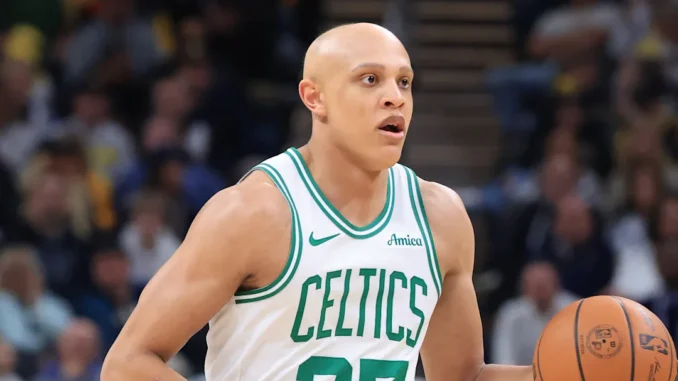
The Obvious Mazzulla Decision That Delivered a Timely Jordan Walsh Reminder to the Celtics
On January 3, 2026, the Boston Celtics closed out a grueling five-game road trip with a commanding 146-115 victory over the LA Clippers at the Intuit Dome. Jaylen Brown dropped a season-high 50 points in a revenge-fueled masterpiece, but another storyline stole some spotlight: third-year wing Jordan Walsh, recently demoted from the starting lineup, erupted off the bench for 13 points, 13 rebounds, 2 assists, and 1 block on hyper-efficient 5-of-7 shooting (including 3-of-4 from three) in nearly 30 minutes.
Walsh’s double-double wasn’t just a feel-good moment—it was the direct result of an “obvious” decision by head coach Joe Mazzulla that served as a wake-up call. After a stretch of underwhelming play and reduced minutes, Mazzulla benched Walsh at halftime of the previous game against Sacramento and then removed him entirely from the starting five against the Clippers, inserting sharpshooter Sam Hauser instead. The move lit a fire under the 21-year-old, reminding everyone—including Walsh himself—of his explosive potential when motivated and hungry.
This sequence of events underscores Mazzulla’s masterful player management in a 2025-26 season defined by depth, youth, and unpredictability. The Celtics, rebuilding on the fly after major roster turnover, have relied on Mazzulla’s willingness to shuffle lineups ruthlessly. What seemed like a demotion was actually a calculated challenge, and Walsh’s response validated it spectacularly. As one Celtics writer put it, Boston got a “reminder” of the version of Walsh that earned him a starting spot in the first place: ferocious on the glass, disruptive defensively, and opportunistic offensively.
Jordan Walsh’s Breakout Season: From Fringe to Fixture
To appreciate the significance of this moment, context is key. Jordan Walsh, the 38th overall pick in the 2023 draft out of Arkansas, spent his first two NBA seasons as a developmental piece. He appeared in garbage time, logged DNPs, and shuttled between Boston and the Maine Celtics in the G League. His athleticism, 6’10” wingspan, and defensive versatility hinted at upside, but offensive polish was lacking—he shot poorly from deep and struggled to create.
Entering 2025-26, expectations remained modest. The Celtics’ roster overhaul left holes at forward, with veterans gone and youth stepping up. Early in the season, Mazzulla experimented: Sam Hauser started the first two games, rookie Hugo González got a look in Game 3, Josh Minott started nine straight, and then Walsh cracked the rotation off the bench.
By mid-November, Walsh forced his way into prominence. His energy plays—hustle rebounds, deflections, transition finishes—became contagious. He guarded elite wings, crashed the glass relentlessly, and surprisingly developed a reliable three-point stroke (hitting 47.3% on the season). On November 12, Mazzulla promoted him to starter, and Walsh thrived: Boston went 15-5 in his 20 consecutive starts, with Walsh averaging solid numbers while providing the “spark” the team needed.
He became a fan favorite—the “Stay Ready” embodiment in a locker room full of them. Alongside core holdovers like Jaylen Brown, Derrick White, and Payton Pritchard, plus additions like Anfernee Simons, Walsh helped the Celtics exceed preseason projections. His defensive intensity set the tone, and his improved shooting (career-high efficiency) added spacing.
The Slump and Mazzulla’s Tough Love
No breakout is linear, however. As December wore on, Walsh hit a wall. Coming off a non-COVID illness that sidelined him for a game, his production dipped. Over his last seven games before the Clippers matchup, he averaged just 4.0 points and 3.4 rebounds in 14.3 minutes. Shots weren’t falling consistently, defensive impact waned slightly, and the team leaned on hotter hands like Hauser, González, and even Luka Garza.
Against the Sacramento Kings on New Year’s Day 2026, the dip became glaring. Walsh started but played only five minutes before Mazzulla pulled him for good at halftime. Hauser exploded for 15 points on 5-of-7 threes, and the bench dominated. The Celtics pulled away for a 120-106 win, but Walsh’s night ended early.
Mazzulla postgame: “It’s nothing he’s doing wrong. It’s just we can go to so many different things.” He emphasized depth and matchups, noting Hauser’s shooting opened the floor and disrupted Sacramento. It wasn’t punishment— it was pragmatism. But for Walsh, it was a message.
The next day, Mazzulla doubled down: Hauser started against the Clippers, bumping Walsh to the bench for the first time since early November. Critics questioned if Walsh’s starting run was over, if the rookie wall had arrived, or if depth would relegate him again.
The Reminder: Walsh’s Explosive Response
Walsh didn’t sulk. He embraced the challenge. “Obviously, I didn’t start tonight after starting for so long,” Walsh said postgame. “And I feel like Joe was challenging me. Yeah, it’s definitely fuel.”
Fuel indeed. From the moment he checked in, Walsh was electric. He hounded James Harden defensively, crashed the offensive glass with venom (six of his 13 rebounds were offensive, leading to 21 second-chance points for Boston), cut relentlessly off-ball, and knocked down open threes. His energy shifted momentum, complementing Brown’s onslaught.
It evoked memories of Walsh’s initial rise: the same ferocity that earned Mazzulla’s trust. As analysts noted, “as soon as he checked in, Walsh was on fire… Everything realigned back into place.” His double-double was his first career one, a statement performance in a blowout.
Mazzulla’s decision looked genius. By benching a slumping starter, he preserved winning lineups while motivating Walsh to reclaim his edge. The coach has built a culture where no role is sacred—starters can sit if benches outperform, and opportunities are earned nightly.
Why This Matters for the Celtics’ Season
This episode highlights broader themes for the 2025-26 Celtics. Without traditional superstars beyond Brown, success hinges on collective buy-in and depth exploitation. Mazzulla’s rotation fluidity—shuttling wings like Walsh, Hauser, González, Minott, and Scheierman—keeps opponents guessing and players engaged.
Walsh’s reminder reinforces his value. At 21, on a rookie deal, he’s a cost-controlled asset with Most Improved Player buzz. His two-way potential fits Mazzulla’s identity: tough, versatile, selfless. The benching wasn’t demotion but development—pushing Walsh to sustain intensity.
For the team, it signals contention viability. The road trip ended strongly, positioning Boston near the East’s top seeds. Brad Stevens may shift from seller to buyer at the deadline, bolstered by contributions like Walsh’s.
Fans and media got the reminder too: Walsh isn’t a fluke. His ceiling remains high, and Mazzulla knows how to unlock it. Challenges breed growth in Boston’s culture.
Looking Ahead: Walsh’s Role and Legacy Potential
Will Walsh reclaim starting duties? Likely yes—his skillset complements the core better than Hauser’s in many matchups. But Mazzulla won’t hesitate to adjust. Flexibility is the strength.
Walsh’s maturity shines: “I’m no stranger to this… I started where I had to always stay ready.” He cited needing to “make my mark” more impactfully.
This saga could define Walsh’s career arc. From overlooked pick to breakout starter to motivated reserve exploding—it’s the Mazzulla way. The “obvious decision” to bench him delivered the reminder everyone needed: Jordan Walsh is here to stay, and when challenged, he answers loudly.
As the Celtics push toward playoffs, expect more such moments. Mazzulla’s bold choices, paired with players like Walsh rising to them, make Boston dangerous. The reminder against the Clippers? Just the latest proof.
Leave a Reply