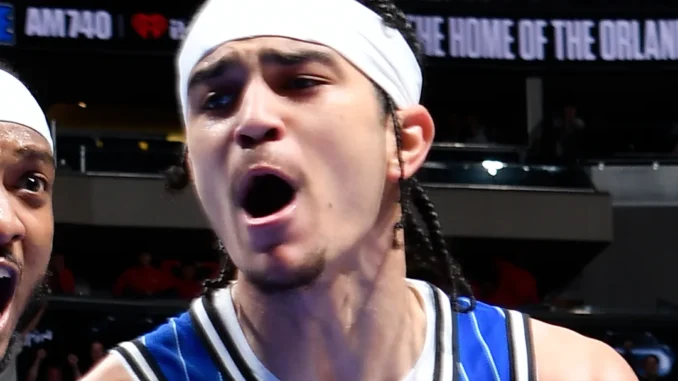
Defensive Injuries Create Vulnerabilities
The Nuggets were without several of their most reliable perimeter defenders and versatile wings heading into the matchup. Aaron Gordon (out with a lingering hamstring strain), Christian Braun (recovering from a shoulder issue), and potentially others from the wing rotation were unavailable or limited. These absences removed critical length, athleticism, and on-ball tenacity that Denver relies on to disrupt drives, contest threes, and rotate effectively.
Without these “defensive aces,” the burden shifted to remaining pieces like Peyton Watson, Bruce Brown, Spencer Jones (a developing two-way forward), and even stars Nikola Jokić and Jamal Murray. Watson and Brown provided solid effort—Watson with timely blocks and Brown with physicality—but the group struggled to contain Orlando’s ball movement and off-ball action. Black, typically the third or fourth option behind stars like Paolo Banchero and Franz Wagner, exploited mismatches relentlessly.
Black attacked downhill against slower closeouts, pulled up confidently from deep when Denver sagged off, and capitalized on late rotations. His 7 made threes tied a career high in volume and efficiency, turning what should have been a manageable Orlando offense (league-average at best) into a high-octane attack. The Magic shot 48% from the field and 41% from three, with Black accounting for a massive chunk of their production.
Black’s Breakout: From Role Player to Nightmare
Anthony Black, selected 6th overall in the 2023 draft, has shown flashes of two-way potential but has largely been a complementary piece in Orlando. Entering the game averaging around 10-12 points per game on modest efficiency, he had never scored more than 25 in an NBA contest prior to this explosion.
On this night, everything clicked. Black’s length (6’7″ with a plus wingspan) allowed him to shoot over smaller Denver guards, while his improved pull-up game and confidence from deep made him nearly unstoppable. He scored 15 in the first half alone, helping Orlando build an early lead, then added 23 more after halftime—including clutch makes down the stretch.
The final dagger came from Desmond Bane (wait—no, reports clarify Bane was not involved; instead, late-game free throws from Orlando’s supporting cast sealed it). Black’s performance kept Orlando competitive throughout, forcing Denver to chase and expend energy on a player they typically wouldn’t prioritize.
Analysts noted this wasn’t just an off-night; it was symptomatic of Denver’s current defensive identity crisis. When primary stoppers are out, the Nuggets lack the depth to switch seamlessly or recover against hot shooters. Black isn’t a star yet—but he looked like one against a shorthanded Denver backcourt.
Jokić and Murray Shoulder the Load—But Fatigue Shows
Despite the defensive lapses, Denver’s offense remained elite, powered by Nikola Jokić (likely near triple-double numbers, consistent with his MVP form) and Jamal Murray (scoring efficiently in the 25-30 range). The duo combined for over 60 points, but the extra offensive burden from missing wings left them gassed on the other end.
Jokić, playing heavy minutes as usual, couldn’t provide the same help defense without risking foul trouble or exhaustion. Murray, tasked with more on-ball responsibilities, struggled to stay in front of quicker guards like Black. The absences of Gordon and Braun meant fewer easy transition stops and fewer bodies to throw at shooters, leading to open looks and momentum swings.
The Nuggets mounted multiple comebacks—trimming double-digit deficits in the fourth quarter—but couldn’t overcome the early damage. A late rally fell short when Orlando’s role players stepped up, including free throws and timely stops.
Broader Implications for Denver’s December Struggles
This loss marked another chapter in what has been a “Defenseless December” for the Nuggets. After starting the season in the top 5 defensively, Denver has fallen sharply amid injuries and workload concerns. The team sits at roughly 22-8 overall (strong record but vulnerable), but recent games show cracks:
- Perimeter defense has regressed without length and athletic wings.
- Help rotations are slower, allowing drives to the rim or open threes.
- Stars carrying heavier loads leads to defensive lapses.
Coach Michael Malone and staff have emphasized effort and scheme adjustments, but the absences are real. Jared Dudley (assistant coach) has spoken about the defense “holding down the fort” until key pieces return, predicting a resurgence once Gordon, Braun, and others are healthy.
Still, games like this raise questions: Can Denver sustain elite defense without its full complement? And how much do injuries expose underlying depth issues?
Orlando’s Perspective: Validation for Black and Depth
For the Magic, Black’s outburst was a breakthrough. It validated their patience with the young guard and showed the value of spacing and ball movement. Orlando’s win kept them afloat in the competitive East, proving they can steal games when stars get help from unexpected sources.
Black’s performance also highlighted a league-wide trend: role players can erupt when matchups favor them, especially against shorthanded contenders.
Looking Ahead for the Nuggets
Denver faces a quick turnaround with upcoming games testing their depth further. The return of injured defenders will be crucial to reclaiming their defensive identity. Until then, nights like Anthony Black’s 38-point explosion serve as stark reminders: even non-stars can torch you when your defensive aces are missing.
The Nuggets remain title contenders with Jokić in MVP form, but December has exposed vulnerabilities that must be addressed before the playoffs. Allowing a career night to a role player isn’t just embarrassing—it’s a warning sign in a loaded Western Conference.
Leave a Reply