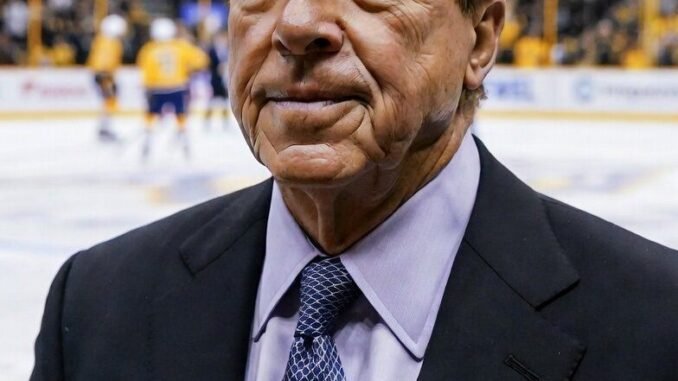
From Football to Hockey: Nick Saban’s New Role with the Nashville Predators
Nick Saban, the legendary college football coach who built one of the most dominant dynasties in sports history, has embarked on an unexpected post-retirement chapter. On December 16, 2025, the Nashville Predators announced that Saban, along with his longtime business partner Joe Agresti, had purchased a minority ownership stake in the NHL franchise through their entity, Dream Sports Ventures LLC. This move marks a fascinating transition for the 74-year-old Saban—from the gridiron sidelines to the ownership box of a professional hockey team. While Saban has emphatically stated he has no intentions of coaching hockey, his involvement promises to infuse the Predators organization with his renowned championship mindset and organizational expertise.
Saban’s retirement from coaching in January 2024 after 17 seasons at the University of Alabama left a void not just in college football but in his own life. With a career record of 297-71-1 and seven national championships (one at LSU and six at Alabama), Saban had been part of a team environment since childhood. “One of the biggest fears that I had in retiring was I’d been a part of a team since I was 9 years old,” Saban admitted during a press conference on December 22, 2025. “And when I retired, I was no longer a part of a team.” Joining the Predators fills that gap, allowing him to remain competitive in the world of sports without returning to the demanding rigors of head coaching.
The partnership began organically. Predators chairman and majority owner Bill Haslam, the former governor of Tennessee who assumed control of the franchise in July 2025, initially approached Saban about a potential WNBA expansion bid for Nashville. Though that venture didn’t materialize, Saban expressed interest in hockey instead. Haslam called it a “no-brainer,” praising Saban as someone who “understands building a championship culture better than almost anybody in sports.” Saban and Agresti, who have been business partners since 2013 and co-own the Dream Motor Group (a chain of luxury car dealerships with locations in Nashville), saw the Predators as an ideal investment. “Being involved in a sports team in Nashville has always been a goal,” Saban said in the team’s announcement.
Saban’s connection to Nashville isn’t new. He owns businesses in the area and has been a Predators fan for years. His interest in hockey traces back to his time as head coach at Michigan State University, where he befriended the school’s hockey coach and began appreciating the sport’s intensity. Growing up in rural West Virginia, Saban had little exposure to ice hockey—”We didn’t have any ice skates and there was nobody playing hockey within 100 miles,” he joked—but attending a Stanley Cup Final game in Nashville sparked his enthusiasm. Even his wife, Terry (affectionately known as Miss Terry), has gotten involved, recently asking about Predators game results, something Saban noted with amusement as a sign of how deeply the team has embedded itself in their household.
What exactly will Saban’s role entail? He has been clear: no coaching on the ice. “I’m no expert in hockey, so don’t look at me like I’m going to make some huge impact coaching around here because that’s not going to happen,” Saban said emphatically. Instead, his contributions will focus on leadership, culture-building, and organizational strategy—areas where his track record is unparalleled. Saban has already begun engaging with the team, speaking to coaches and players during what he called a “minicamp” and meeting multiple times with general manager Barry Trotz. His goal, he says, is to support Trotz and the staff, helping players develop the “psychological disposition and competitive character” needed for success.
Saban’s famous “Process” philosophy—emphasizing daily habits, discipline, and attention to detail over outcome—could translate seamlessly to hockey. “My process has always been about helping people become successful,” he explained. “I want everybody in the organization to have goals and aspirations, to help them define what they had to do to do it, then provide them leadership to help them do it.” Haslam and Trotz are eager for this input, especially as the Predators aim to reclaim their contender status. The team reached the Stanley Cup Final in 2017, losing to the Pittsburgh Penguins in six games, and won the Presidents’ Trophy the following season. However, recent years have been challenging; as of late 2025, Nashville sits near the bottom of the Central Division, fighting for a wildcard spot.
Saban’s experience extends beyond college football. He spent six seasons in the NFL, including as defensive coordinator under Bill Belichick with the Cleveland Browns and as head coach of the Miami Dolphins. These professional stints give him insight into salary caps, player management, and building sustained success—elements directly applicable to the NHL. “What it takes to be successful is really pretty much the same in business as it is in sports, as it is in hockey, as it is in football,” Saban noted, highlighting how organizational principles transcend sports.
For the Predators, adding Saban is more than a publicity boost; it’s a strategic move to foster a winning culture. Trotz, a Stanley Cup-winning coach himself, welcomed Saban’s involvement earlier in 2025 when the coach spoke at the team’s development camp. Prospects and staff raved about his messages on competition and mindset. Now, as an owner, Saban’s voice carries even more weight. He plans to be as involved as Haslam desires, particularly after the college football season ends, freeing up time from his ESPN College GameDay analyst duties.
This cross-sport ownership isn’t unprecedented—celebrities and athletes from other disciplines often invest in teams—but Saban’s pedigree sets him apart. His seven titles make him one of the winningest coaches in history, inducted into the College Football Hall of Fame with numerous awards. Bringing that aura to “Smashville” excites fans and players alike. The Predators’ ownership group, largely composed of local season-ticket holders and residents, gains a high-profile partner committed to community and success.
Saban’s venture also reflects broader trends in sports ownership. With his business acumen—evident in his successful dealership empire—he views the NHL as a smart investment. Hockey is growing in non-traditional markets like Nashville, bolstered by a salary cap that promotes parity. Saban cited these factors when discussing his excitement on appearances like The Pat McAfee Show.
As the Predators push toward the playoffs, Saban’s influence could prove pivotal. He’s not lacing up skates or drawing up plays, but his emphasis on process, leadership, and championship habits might be the intangible edge Nashville needs. “We’d love to build it into a championship,” Saban declared. For a man who has won at the highest levels, helping the Predators hoist the Stanley Cup would be a fitting encore.
In the end, Nick Saban’s shift from football to hockey underscores his enduring competitive spirit. Retirement didn’t mean stepping away from sports; it meant evolving within them. The Nashville Predators, and their fans, are the beneficiaries of this new era for one of sports’ greatest minds.
Leave a Reply