Kane Wommack Reveals How Alabama’s Defense Engineered a Historic Comeback Against Oklahoma
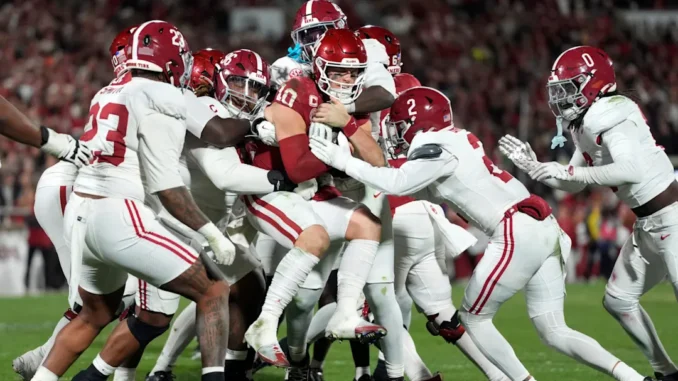
On December 19, 2025, in the first round of the expanded College Football Playoff, No. 9 seed Alabama Crimson Tide faced No. 8 seed Oklahoma Sooners in a rematch at Gaylord Family-Oklahoma Memorial Stadium in Norman. The game was a tale of two halves: Oklahoma exploded early, building a 17-0 lead in the second quarter behind quarterback John Mateer’s dual-threat prowess. But Alabama stormed back with 34 unanswered points at one stretch, ultimately securing a 34-24 victory—the first true road win in College Football Playoff history and tying the largest comeback (17 points) in playoff annals.
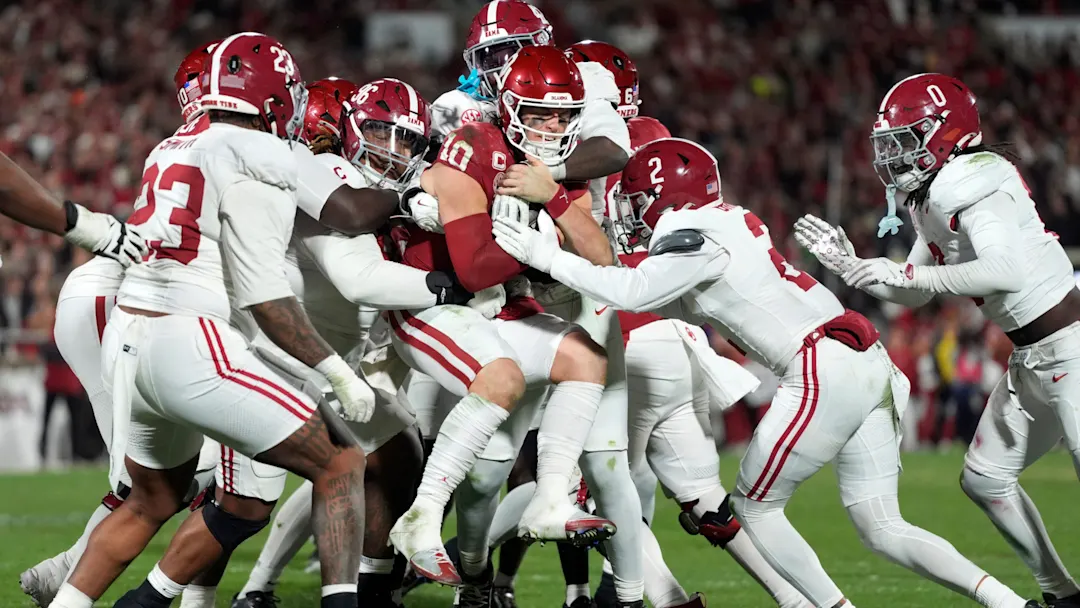
At the heart of this turnaround was Alabama’s defense, coordinated by Kane Wommack. In postgame comments, Wommack detailed the strategic adjustments that slowed Oklahoma’s high-powered offense, particularly emphasizing a shift to man coverage that his defensive backs “were begging” to play. This article delves deep into Wommack’s revelations, the game’s context, the defensive philosophy, key plays, statistical breakdowns, player performances, and broader implications for Alabama’s playoff run.
The Backdrop: A Rematch Loaded with Stakes
This wasn’t just any playoff game—it was a grudge match. Earlier in the 2025 regular season on November 15, Oklahoma upset Alabama 23-21 in Tuscaloosa. The Sooners capitalized on three Alabama turnovers, scoring 17 points off short fields while their defense stifled the Crimson Tide. Alabama’s offense struggled, but the defense held Oklahoma to just 212 total yards and no drive longer than 41 yards. Yet, without forcing a single takeaway, the Tide couldn’t overcome their own mistakes.
Fast-forward to the playoff: Oklahoma entered as the higher seed with home-field advantage, riding a hot streak and featuring transfer quarterback John Mateer (from Washington State) under offensive coordinator Ben Arbuckle. Mateer, a mobile threat with a strong arm, posed problems similar to those Alabama had faced against dual-threat QBs throughout Wommack’s tenure.
Wommack, in his second year as Alabama’s defensive coordinator after a successful head-coaching stint at South Alabama, had transformed the Crimson Tide into one of the nation’s top units. In 2025, Alabama ranked highly in scoring defense (around 17-18 points per game allowed) and turnovers forced. But early in the playoff game, those strengths were tested severely.
The Rough Start: Oklahoma’s Early Dominance
Oklahoma’s offense came out firing, exploiting “wrinkles” in their scheme that Wommack had anticipated but still caught Alabama off guard. Mateer was “dialed in,” as Wommack put it, completing passes and scrambling effectively. The Sooners scored on their first three possessions: a touchdown pass, a rushing score by Mateer, and a field goal, jumping to 17-0.
Statistically, the first half was lopsided for Oklahoma:
- Total yards: Approximately 200+ in the first half alone.
- Mateer: Efficient passing (10-of-15 for 132 yards and a TD early), plus rushing yards and another score.
- Explosive plays: Crossing routes, drag routes, and RPOs gashed Alabama’s zone coverages.
Wommack later reflected: “Well, I think we talked about it before the game, there was going to be wrinkles, there were going to be things that they did. I thought they had a great plan early on. I thought the quarterback played out of his mind in the first half.”
Alabama’s defense, typically aggressive with pressures and swarm tackling (a hallmark of Wommack’s “swarm” philosophy inspired by his time at Indiana and South Alabama), lacked disruption early. No sacks, limited pressures, and zone schemes allowed Oklahoma’s receivers to find soft spots in the middle of the field.
The Turning Point: Adjustments and the Pick-Six
The momentum shifted late in the second quarter. Alabama’s defense forced a punt, but more crucially, cornerback Zabien Brown intercepted Mateer and returned it 50 yards for a touchdown—a pick-six that tied the game and ignited the comeback.
Wommack called it a classic momentum swing: “When you can not only flip the field but then score in that situation, really awesome.”
This play wasn’t luck; it stemmed from initial adjustments. Wommack’s staff began “settling in,” recognizing Oklahoma’s tendencies and pictures. They ramped up pass rush pressure, starting to “affect” Mateer more.
Another key moment: Defensive tackle Tim Keenan III blocked a punt, leading to a field goal that cut the lead to 17-10 before halftime.
The Key Revelation: Defensive Backs “Begging” for Man Coverage
The most quoted insight from Wommack came in explaining the second-half shutdown. Alabama hadn’t played much man coverage all season—preferring zone schemes for better run support against mobile QBs and to disguise looks.
But as the game progressed, Wommack noted a player-driven shift:
“We haven’t played a lot of man coverage this year, but that was what we needed to do to win the game. Our DBs were begging for it. I mean, by the time we got to the second half, they wanted it. That’s what you want. You want kids that are fighters, that want the ball in their court. They want to be challenged. They want to go challenge people.”
This wasn’t top-down; it was organic. Players like Zabien Brown, Domani Jackson, and safeties Bray Hubbard and Keon Sabb expressed confidence in matching up one-on-one against Oklahoma’s receivers. Man coverage allowed Alabama to:
- Seal the edges better against Mateer’s scrambles.
- Eliminate crossing and drag routes that exploited zone gaps.
- Free up blitzers and increase pressure without sacrificing coverage.
Combined with more aggressive fronts, this led to five sacks total (most in the second half) and constant harassment. Mateer ended with 19 rushes for just 15 yards—negative yardage after sacks.
Second-half stats for Oklahoma’s offense tell the story:
- Third quarter: Only 27 yards.
- Fourth quarter: 99 yards, but mostly in garbage time.
- Total second half: 7 points, limited possessions.
Overall, Oklahoma’s yardage plummeted from explosive first-half gains to minimal outputs.
Statistical Breakdown: First Half vs. Second Half
To illustrate the impact:
| Period | Oklahoma Yards | Points Scored | First Downs | Mateer Completion % | Sacks Allowed |
|---|---|---|---|---|---|
| First Half | ~200+ | 17 | High | High (~67%) | 0-1 |
| Second Half | ~126 | 7 | Low | Dropped | 4-5 |
| Total | ~326 | 24 | 18-20 | ~60% | 5 |
Alabama’s defense forced three-and-outs, capitalized on short fields for their offense, and embodied resilience.
Player Spotlights: Fighters Who Stepped Up
Wommack praised the culture: “You don’t win those games without great culture. You’ve got a bunch of fighters, a bunch of punchers. That wasn’t who we were a year ago.”
Key contributors:
- Zabien Brown: Pick-six hero, lockdown in man coverage.
- Deontae Lawson and Bray Hubbard: Linebacker and safety duo noted pre-game by Oklahoma’s OC as the “ones who make it go.” They flew to the ball, cleaning up tackles.
- Yhonzae Pierre: Led with pressures and sacks.
- Tim Keenan III: Punt block showcased effort.
- Secondary as a whole: Confident in man, winning individual battles.
This buy-in reflected offseason work under strength coach Dave Ballou and medical staff, building fourth-quarter resilience.
Wommack’s Philosophy: Adaptation and Culture
Wommack’s “swarm” defense emphasizes multiplicity, rotation for freshness, and aggressive tackling. Against mobile QBs like Mateer, challenges persisted (evident in prior games), but adjustments—mixing man with pressures—proved pivotal.
Pre-game, Wommack emphasized takeaways (Alabama forced none in the regular-season loss). In the playoff, the pick-six and pressures delivered.
His postgame tone: Calm, crediting players. “Our players won this game. They won the game with sheer will.”
Broader Implications: Alabama Advances to the Rose Bowl
With the 34-24 win, Alabama (11-3) advanced to the quarterfinals against No. 1 seed Indiana in the Rose Bowl on January 1, 2026. The comeback validated controversial playoff inclusion (as a three-loss team) and boosted coach Kalen DeBoer’s standing after a rocky stretch.
For Wommack, it reinforced his scheme’s adaptability. Facing Indiana’s Heisman-winning QB Fernando Mendoza, expect similar principles: pressure, coverage flexibility, and player empowerment.
Oklahoma’s season ended at 10-3, winless in five playoff appearances, highlighting second-half collapses.
A Testament to Resilience
Kane Wommack’s revelations underscore modern coaching: Preparation meets in-game adaptation, fueled by player trust. The defensive backs “begging” for man coverage wasn’t bravado—it was confidence born from culture. In a playoff defined by chaos, Alabama’s defense didn’t just slow Oklahoma; it dominated when it mattered most, paving the way for a historic comeback.
This game exemplified why Alabama remains a blue-blood: Fighters who punch back. As Wommack said, “All our kids do is they fight. They punch, and they just keep punching.”
Leave a Reply