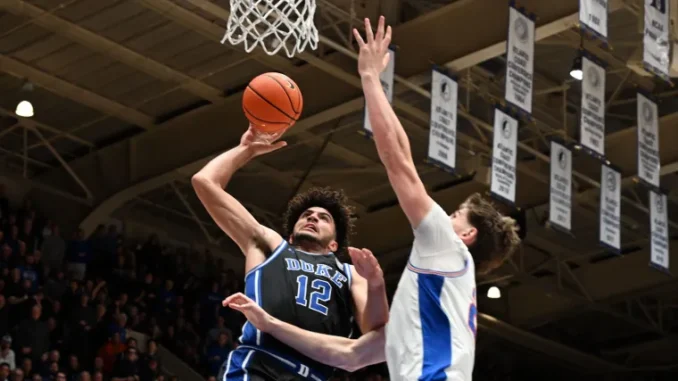
🛡️ Defense-First: Duke Blue Devils Leading the ACC’s Shift to Gritty, Elite Defense
Through the first month of the 2025-2026 college basketball season, the Duke Blue Devils have established themselves as the elite team in the Atlantic Coast Conference (ACC), but not just through their typical offensive firepower. The significant trend Duke is leading and imposing on the league is a defense-first, championship-caliber identity, proving that Head Coach Jon Scheyer has successfully cemented a program culture that prioritizes stifling opponent offense.
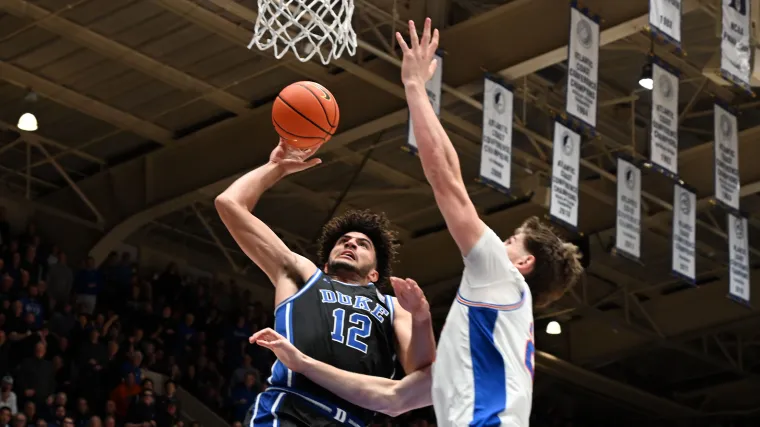
Duke’s 10-0 start (as of December 16, 2025) and its string of marquee non-conference victories over ranked opponents (Texas, Kansas, Arkansas, Florida, Michigan State) are built on a statistical foundation that is setting a new, high bar for defensive intensity across the ACC.
I. The New ACC Trend: Defensive Efficiency as the Mandate
The overarching trend Duke is pioneering is the emphasis on elite Adjusted Defensive Efficiency (ADE), a metric traditionally associated with championship teams and a stark contrast to the run-and-gun offensive style many recent ACC teams have relied upon.
A. Dominance in Key Defensive Metrics
The Blue Devils’ performance has been staggering, ranking among the nation’s best in crucial defensive categories, proving they are built to survive the grind of March:
-
Adjusted Defensive Efficiency (ADE): Duke is currently ranked third in the nation in ADE (per KenPom/ESPN metrics). This statistic measures points allowed per 100 possessions, adjusted for opponent quality. Being this high this early in the season—especially with a roster featuring star freshman Cameron Boozer—indicates a complete buy-in to Scheyer’s defensive scheme.
-
Effective Field Goal Percentage Defense (eFG% Def): Duke ranks first nationally in this metric. This is the single most important component of modern defense, showing that the Blue Devils are preventing opponents from converting shots efficiently, particularly from beyond the arc and inside the perimeter.
-
Two-Point Defense: Duke is second nationally in two-point percentage defense. This highlights the dominance of their frontcourt, anchored by sophomore Patrick Ngongba II (who leads the team in blocks) and freshman phenom Cameron Boozer, shutting down penetration and interior scoring.
This statistical dominance forces every other ACC contender—from Louisville to North Carolina—to recalibrate their own defensive expectations. The message is clear: the path to the 2026 ACC title requires an elite defensive profile, and Duke has established the benchmark.
B. The Anti-ACC Shootout Philosophy
Historically, the ACC has often been characterized by high-scoring, transition-heavy games. Duke’s current strategy is designed to suffocate opponents, winning low-possession, highly physical battles against ranked teams:
-
The Michigan State Game: Duke’s 66-60 road win over No. 7 Michigan State was a defensive masterclass. The score was intentionally kept low, forcing the Spartans to play in the half-court where Duke’s size and disciplined rotations could prevail.
-
The Florida Nail-Biter: The 67-66 victory over No. 15 Florida in the ACC/SEC Challenge was decided on the final defensive possession, emphasizing the team’s grit and late-game defensive execution.
Duke is demonstrating that it can win with defense even when the offense is inconsistent, a hallmark of deep NCAA Tournament runs.
II. The Engines of the Trend: The Elite Frontcourt
The primary driver of Duke’s defensive trend, and the reason they are so difficult to score against, is the formation of the ACC’s most dominant frontcourt.
A. Cameron Boozer’s Dual-Threat Impact
ACC Preseason Rookie of the Year Cameron Boozer has delivered beyond expectation, serving as a dual-threat catalyst for this defensive shift.
-
Defensive Versatility: Boozer, despite being a freshman, has the size and defensive instincts to guard multiple positions. His mobility allows Duke to switch screens without suffering mismatches, a modern defensive necessity that few ACC teams can replicate.
-
Defensive and Offensive Value: Analytics show Boozer leading the entire ACC (and potentially the nation) in per-possession defensive value. His ability to anchor the defense while simultaneously leading the team in scoring (alongside Ngongba) forces opponents to prepare for a defensive juggernaut that also punishes them offensively.
B. Patrick Ngongba II’s Defensive Evolution
Sophomore center Patrick Ngongba II has emerged as the defensive anchor Scheyer needs. Ngongba’s presence, leading the team in blocks per game and pairing seamlessly with Boozer, creates a formidable interior wall that rivals any in college basketball. This dominant combination is forcing the rest of the ACC—from Louisville’s veteran guards to UNC’s talented Caleb Wilson—to seek alternative, often less efficient, scoring methods away from the paint.
III. The ACC’s Response and the Early Pecking Order
Duke’s defensive dominance immediately sets them apart in the league standings and forces competitors to chase a high standard of consistency.
A. The Top Tier: Chasing Duke’s Standard
The first month confirms that the ACC is top-heavy, with Duke and Louisville leading the pack:
| Team | Overall Record | Key Trend | NET Ranking |
| Duke | 10-0 | Elite Defensive Efficiency (Top 3 nationally) | No. 2 |
| Louisville | 9-1 | Offensive Firepower (Elite Guard Play) | No. 9 |
| North Carolina | 9-1 | Star Freshman (Caleb Wilson) Development | No. 26 |
Louisville, also 9-1 and ranked No. 6, relies more heavily on its dynamic guard play. North Carolina, though showing flashes with Caleb Wilson, remains lower in the NET due to a tougher non-conference schedule and is still finding its identity. Duke’s early, perfect record (10-0) against a difficult non-conference schedule provides the conference with the single best resume and the definitive statistical trend (defense) to emulate.
B. Long-Term Implications for ACC Play
As the calendar turns to late December and early January, the trend established by Duke’s defense will define the conference race:
-
The Grind: ACC teams built on high-volume shooting or isolation scoring (like Miami or Wake Forest) will find it incredibly difficult to maintain offensive efficiency against Duke’s suffocating half-court defense.
-
Personnel Challenge: Duke’s roster construction—versatile defenders with size—challenges every opposing coach to find personnel that can score efficiently without turning the ball over.
The Duke Blue Devils are not just winning; they are dictating how winning is achieved in the ACC this season, making elite defense the prerequisite for any team hoping to compete for the conference title.
Leave a Reply