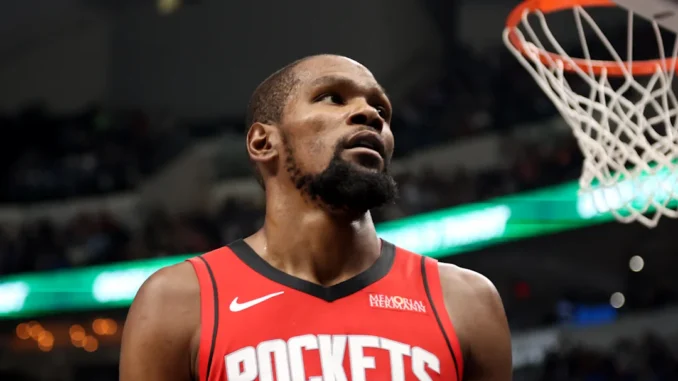
Must-Win Mentality: Why the Rockets-Nuggets Matchup is the Crucial Litmus Test for Houston’s Playoff Push
The Houston Rockets’ recent hard-fought, 128-125 overtime loss to the Denver Nuggets was far more than a single defeat; it was a high-stakes, high-intensity crucible that validated the Rockets’ transformation while simultaneously exposing the final frontier they must conquer to become true Western Conference contenders. For a team that has rapidly ascended to the upper echelon of the standings, matchups against the reigning champions carry an “absolutely crucial” weight, serving as the definitive measure of their progress and their readiness for the postseason.
The significance of these games, and particularly the narrow overtime loss, stems from three critical areas: the battle for Western Conference seeding and tiebreakers, the direct comparison between their star center and the league’s MVP, and the necessity of executing under true playoff pressure.
I. The Battle for Western Conference Supremacy and Tiebreakers
The Rockets entered this phase of the season fighting for a top-three seed in a fiercely competitive Western Conference. Every game against a direct competitor like the Nuggets (currently second in the West) is magnified tenfold, as the outcomes directly impact the crucial postseason race.
A. The Seeding and Tiebreaker Implications
With the Rockets boasting an impressive record and sitting right behind the Nuggets, winning these head-to-head contests is about more than just padding the win column; it’s about securing leverage for a potential playoff series.
-
Four-Game Series: The unusual number of regular-season matchups between the two teams (a consequence of the NBA Cup scheduling) makes the head-to-head record a potent tiebreaker. Losing a close contest, especially one that goes to overtime, puts added pressure on the remaining games. The Rockets understand that overcoming the Nuggets in the regular season is essential to securing a favorable seed—potentially even home-court advantage—should they face off in the playoffs.
-
The Psychological Edge: Beyond the math, these games are a psychological warfare. Proving they can defeat the reigning champions on their home floor would instill invaluable confidence in the young Rockets squad. The overtime loss, while heartbreaking, proved they belong in the conversation, but turning those close losses into decisive wins is the next evolutionary step.
B. Proving Elite Status
Despite their tremendous turnaround, the Rockets needed to prove they could defeat the league’s most dominant teams. Prior losses to other high-level teams indicated a gap that had to be closed. The performance against the Nuggets, particularly the resilience shown in the overtime period, demonstrated that the gap is now razor-thin.
The contest confirmed the Rockets’ identity: a relentless, defensive-minded, and physical team. Their ability to match the Nuggets’ scoring prowess—even outshooting them from three-point range at times—shows their offensive capability is real. However, the final result underlines the difference between being a “very good” team and a championship-caliber team: the ability to consistently execute and avoid critical mistakes in the final two minutes of a tied game.
II. The Dual of the Centers: Alperen Sengun vs. Nikola Jokic
The most compelling narrative and the most crucial test for the Rockets centers around the direct confrontation between their franchise centerpiece, Alperen Sengun, and the three-time MVP, Nikola Jokic. This is the ultimate measuring stick for Sengun’s development.
A. Matching the MVP’s Brilliance
Sengun’s triple-double performance (33 points, 10 rebounds, 10 assists) was a statement. He went toe-to-toe with Jokic (39 points, 15 rebounds, 10 assists), matching the Serbian’s statistical output and his influence on the game’s flow.
-
A Unique Challenge: Sengun is often compared to Jokic due to his passing vision and unconventional offensive approach. These matchups are crucial for him because they force him to elevate his game against the one player who truly understands the complexity of his own style. The duel is an accelerated learning curve, teaching Sengun where he needs to improve defensively, and how he can utilize his passing more effectively against elite, championship-level defenses.
-
Offensive Nucleus Validation: The Rockets have fully committed to running their offense through Sengun. His success in this crucial matchup validates that strategic choice. He has proven he can handle the pressure, scoring with craft and facilitating under duress, cementing his status as one of the best young centers in the game.
B. The Defensive Imperative
While Sengun’s offense was spectacular, the cruciality of the matchup also lies on the defensive end. The Rockets must find a way to make Jokic’s life difficult without completely sacrificing their defensive scheme elsewhere. The challenge for the Rockets is not just how well Sengun scores, but how effective he is at disrupting Jokic’s rhythm—a task only the league’s best can attempt. The Rockets’ ability to contest Jokic’s shots and disrupt the Nuggets’ two-man game will be the key to their long-term playoff success.
III. The Necessity of Clutch Execution and Composure
Ultimately, the reason this matchup is so crucial is that it provides the purest simulation of a playoff environment, forcing the Rockets to focus on the high-leverage details that separate winners from contenders.
A. The Weight of the Fourth Quarter
The dramatic ending, which included a controversial call against Amen Thompson that sent the game to overtime, highlighted the crucial, unforgiving nature of a close game against an elite team.
-
Avoiding Self-Inflicted Wounds: Despite the debate over the officiating, the Rockets had opportunities to secure the win. The fact that the Nuggets won the turnover battle and capitalized on offensive mistakes proved fatal. In a playoff environment, possessions are priceless. The Rockets’ ability to clean up those late-game execution errors—like turnovers and poor shot selection—is the final piece of the championship puzzle they need to solve.
-
Enduring Adversity: Coach Ime Udoka has emphasized building a team with toughness and accountability. The way the Rockets fought back in overtime, cutting a seven-point deficit to three, shows that toughness is ingrained. However, the next step is not just fighting back, but preventing the initial deficit through flawless execution in the clutch.
B. Depth and Reliability of the Supporting Cast
The Nuggets’ win was secured by unexpected contributions from depth players (like Spencer Jones hitting two crucial threes). For the Rockets, these games are crucial in identifying which of their own role players—particularly the younger wings and guards—can be trusted when the pressure is at its peak.
-
Who Steps Up? The overtime environment demands that players outside of Sengun and Kevin Durant maintain their composure and contribute. The Rockets need consistency from players like Jalen Green, Jabari Smith Jr., and Reed Sheppard in these high-stakes moments. Their reliability in a close game against a team like Denver is the non-negotiable factor in their playoff rotation planning.
for the Houston Rockets, playing the Denver Nuggets is less about a single game result and more about a crucial identity check. It’s the ultimate measure of their ceiling in the Western Conference: can they overcome the league’s most dominant player, maintain championship-level execution in the clutch, and secure the invaluable tiebreakers needed to pave their path to a deep playoff run? The overtime loss provides both hard-earned lessons and powerful validation, confirming that the Rockets are now legitimate contenders whose success hinges on converting these narrow, high-stakes defeats into signature victories.
Leave a Reply