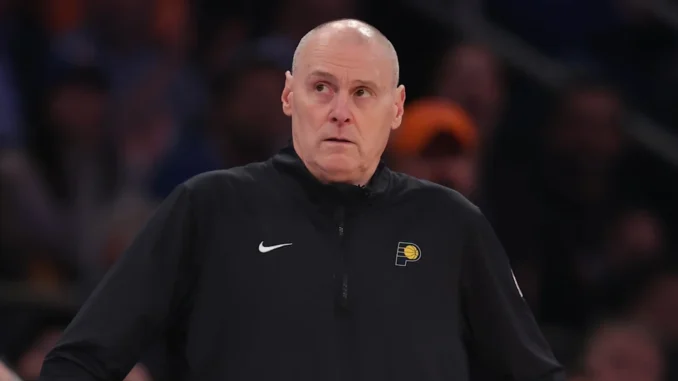
Pacers Must Come to Terms with Tough Reality Ahead of Trade Season
From Finals Glory to a Harsh Hangover
Less than six months ago, the Indiana Pacers were the darlings of the NBA, a high-octane Eastern Conference powerhouse that clawed its way to the 2025 NBA Finals. Led by the wizardry of Tyrese Haliburton and the rim-rattling presence of Myles Turner, Indiana pushed the Oklahoma City Thunder to a grueling seven-game series, falling just short of their first championship since the franchise’s inception in 1967. The Pacers’ run was a feel-good story: a young core blending seamlessly with savvy veterans, an offense that averaged 120 points per game, and a fanbase in Indianapolis rediscovering its passion for hoops after years in the wilderness.
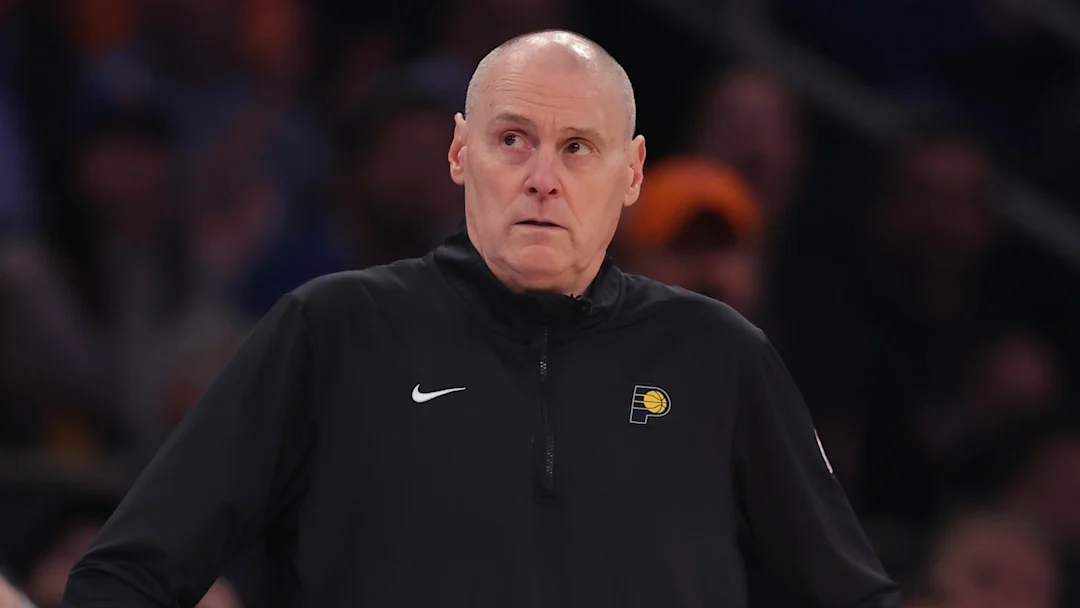
Fast forward to December 11, 2025, and the reality is a gut punch. The Pacers sit at 6-18, dead last in the Central Division and 14th in the Eastern Conference, with a net rating of -7.92—the worst in the league. Their offense, once a juggernaut, has sputtered to 111.3 points per game, and their three-point shooting is an abysmal 29.9%, the lowest mark since the infamously inept 2011-12 Charlotte Bobcats (7-59). Defensively, they’re allowing 118.8 points per contest, ranking 28th. The building blocks of that Finals team? Fractured. Haliburton is sidelined for the entire 2025-26 season with a torn Achilles suffered in Game 7 of the Finals, and Turner bolted in free agency to join Giannis Antetokounmpo in Milwaukee on a four-year, $120 million deal. Injuries have ravaged the roster, with key guards like Andrew Nembhard and Bennedict Mathurin missing chunks of time, and the frontcourt is a patchwork of unproven talent and journeymen.
This isn’t just a slow start—it’s a reckoning. As the NBA trade deadline looms on February 6, 2026, the Pacers front office, led by president Kevin Pritchard, must confront an uncomfortable truth: the blueprint that carried them to glory is obsolete. Haliburton’s absence exposes a lack of contingency depth, Turner’s departure leaves a gaping hole at center, and the salary cap is ballooning toward the luxury tax line at $189 million, with $185.3 million already committed for next season. Trade season isn’t just an opportunity; it’s a lifeline. Indiana needs to retool aggressively, balancing immediate survival with a sustainable future around a returning Haliburton. The decisions made in the coming months could define the franchise for the next half-decade—will they double down on contention, or pivot toward a calculated reset? The clock is ticking, and the Eastern Conference isn’t waiting around.
The Fall: Dissecting a Disastrous Start
To understand the Pacers’ peril, rewind to the offseason. The Finals loss was bittersweet—Indiana’s youth and upside promised more—but the injury to Haliburton, confirmed by Pritchard in July as a full-year absence, cast a long shadow. The 25-year-old point guard, fresh off a five-year, $202 million extension, was the engine: 20.7 points, 10.9 assists, and a league-leading 5.1 assist-to-turnover ratio last season. Without him, the Pacers entered 2025-26 with cautious optimism, banking on continuity. They re-signed Pascal Siakam to a three-year, $146 million deal, extended Aaron Nesmith for three years at $33 million, and added depth with veterans like Thomas Bryant and Tony Bradley. The projected rotation featured Nembhard at point, Mathurin at shooting guard, Nesmith at small forward, Siakam at power forward, and Isaiah Jackson at center—a group with potential, but untested without Haliburton’s gravity.
The wheels came off immediately. Indiana opened 0-5, the first such start since the 1988-89 Reggie Miller-led team that won just 41 games. Losses piled up: a 141-135 double-overtime heartbreaker to OKC on opening night, a 31-point drubbing by Golden State (114-83), and a humiliating 152-110 shellacking by Utah on November 12, where they surrendered the most points in any game this season. Aaron Nesmith summed it up post-Utah: “We got too comfortable thinking the cavalry had arrived,” alluding to a brief stretch of health that masked deeper issues.
Injuries exacerbated everything. By mid-November, the Pacers had the second-most players sidelined in the league, per Spotrac, losing $22 million in cumulative salary to absences. Nembhard (ankle) missed 10 games, Mathurin (shoulder) sat eight, Nesmith (hamstring) four, and Obi Toppin (calf) three. Guards T.J. McConnell and Ben Sheppard, along with rookies Johnny Furphy and Quenton Jackson, cycled through the trainer’s room. The result? A roster in constant flux, with nine players missing for the Golden State blowout alone. Hardship signings became the norm: Mac McClung, Cody Martin, Monte Morris, Jeremiah Robinson-Earl, and Garrison Mathews all inked deals to stem the bleeding. These moves kept the ship afloat but highlighted the lack of internal options.
Statistically, it’s grim. The Pacers rank 24th in offensive rating (109.5), a 10-point drop from last year’s elite mark. Their three-point volume remains high (35.4 attempts per game, third in the NBA), but the conversion rate is league-worst at 29.9%. Siakam, the $45.5 million anchor, is averaging 24.5 points on efficient 50.4% shooting, but his usage has spiked to 28.2%, leading to fatigue. Mathurin (21.5 PPG) and Nembhard (17.9 PPG, 6.6 APG) have shouldered the load admirably, but the frontcourt is a disaster. Jackson, a 23-year-old athletic freak on a $7.6 million deal, posts 15.5 PPG and 4.5 RPG in 11 starts, but his defense is porous (1.1 blocks per game but allowing 60% shooting at the rim). Jay Huff, a 7-1 stretch big, is a revelation off the bench (14.0 PPG on 27.3 MPG in limited action), but he’s no starter.
Defensively, the absence of Turner’s rim protection (2.1 blocks per game last year) is glaring. Indiana allows 56.8% shooting in the paint, worst in the East, and opponents score 17.2 second-chance points per game (28th). The 4-18 stretch through early December included moral victories—a 116-105 win over Sacramento where Nembhard erupted for 28 points and 12 assists—but mostly pain, like a 135-120 loss to Denver where Jamal Murray dropped 52. Head coach Rick Carlisle, in his second stint with the franchise, has tinkered endlessly, starting lineups featuring everything from Jarace Walker at the four to Ethan Thompson at point. Yet, as Dustin Dopirak of The Indianapolis Star noted, “The Pacers have been a far cry from the NBA finalists that ran toe to toe with Oklahoma City last year.”
Fan frustration boils over on X, with posts lamenting the “pitiful effort” and calls for Pritchard’s head. Attendance at Gainbridge Fieldhouse is dipping—216,199 through 13 home games, down 5% from last year—and the vibe has shifted from euphoria to exasperation. This isn’t the Pacers’ story anymore; it’s a cautionary tale of overreliance on one star and inadequate contingency planning.
The Void: Turner’s Exit and the Center Catastrophe
No single loss stings like Myles Turner’s. The 29-year-old, drafted 11th overall in 2015, was the franchise’s longest-tenured player and defensive cornerstone. Over nine seasons, he evolved from a raw blocker (career 2.2 BPG) to a floor-spacer (38.3% from three last year), anchoring Indiana’s top-10 defenses in 2023-24 and 2024-25. In the Finals, Turner averaged 18.2 points and 9.1 rebounds, swatting 2.8 shots per game against OKC’s Chet Holmgren. His $19.9 million salary was a steal, but when Pritchard offered a three-year, $75 million extension in June, Turner declined, citing a desire for a title shot elsewhere. By July 1, he was a Buck, signing four years at $30 million annually to pair with Giannis.
The ripple effects? Catastrophic. Without Turner, Indiana’s interior defense collapsed. Jackson, the heir apparent, is raw—his 0.3 BPG and tendency to gamble (leading to 1.5 fouls per game) leave the paint exposed. Bryant, signed to a one-year minimum, provides veteran steadiness (6.9 PPG, 3.9 RPG in 14 games) but lacks Turner’s mobility. Huff, undrafted out of Virginia, has flashed (career-high 21 points vs. Detroit), but at 27, he’s a bench piece, not a solution. The Pacers rank 30th in rebounding percentage (48.2%) and dead last in offensive rebounding (9.8 per game), turning misses into transition daggers for opponents.
Offensively, the void is equally glaring. Turner’s pick-and-roll synergy with Haliburton generated 1.2 points per possession last season, per Synergy Sports. Now, Siakam logs heavy minutes at the five in small-ball lineups, but his 34.2 MPG is unsustainable for a 31-year-old coming off knee surgery. Toppin, on a four-year, $58 million deal, thrives as a stretch four (14.0 PPG off the bench) but struggles guarding bigger centers. Walker, the 2023 lottery pick, has shown flashes (21 points on 8-of-10 shooting vs. Detroit), but his 30.7% shooting through 16 games screamed inconsistency.
Pritchard’s offseason calculus—prioritizing cap flexibility over a Turner re-sign—backfired. With $168 million committed pre-free agency, Indiana had $13.6 million in cap space but chose modest additions over splashy signings. Now, as ESPN’s Shams Charania reported on December 9, “The Pacers are in active trade talks around the league to find a center of the future after losing Myles Turner in free agency.” It’s an admission: the post-Turner era demands reinvention, and trade season is the arena.
Haliburton’s Shadow: The Core Under Siege
Tyrese Haliburton’s injury isn’t just a roster hit; it’s an existential crisis. The Pacers built around his vision—quick decisions, elite passing, and pull-up threes (42.2% last year)—and without him, the identity evaporated. Nembhard, a steady $18.1 million starter, has risen to the occasion (17.9 PPG, 6.6 APG), but his slower pace (94.2 possessions per 48 minutes vs. Haliburton’s 102.1) bogs down the attack. McConnell, the $10.2 million sparkplug, provides grit (career 6.1 APG) but lacks Haliburton’s scoring punch.
The wings are the silver lining. Mathurin, extension-eligible at $9.2 million, is blossoming into a star (21.5 PPG on 32.8 MPG), his pull-up game echoing Haliburton’s flair. Nesmith, the 40% three-point sniper on $11 million, is a two-way stud (defensive rating of 108.2), but trade whispers swirl—Portland covets him for his shooting. Siakam remains elite, but at $45.5 million, his age-31 season raises questions: Can he carry a contender sans Haliburton?
The bench is a mixed bag. Toppin’s athleticism pops, but his defense lags. Walker, buried early (30.7% FG), is heating up, prompting Star reporter Dustin Dopirak to call his 21-point outburst a potential “breakthrough.” Rookies like Furphy (ankle) and 2025 draftee Asa Newell (23rd pick) add intrigue, but depth is thin. Recent signings—Robinson-Earl’s rest-of-season deal, Mathews’ second 10-day—plug holes but erode flexibility, pushing Indiana closer to the tax.
On X, the discourse is raw: Fans debate trading Mathurin for a center (@bluegoldbuzz: “Who would you rather receive?”), while insiders like Brett Siegel note Indiana’s Zubac inquiries. The core’s under siege, forcing Pritchard to weigh youth for vets.
Trade Targets: Charting the Path Forward
The deadline buzz is electric. Charania links Indiana to Dallas’ Daniel Gafford, a lob-finishing rim protector (12.3 PPG, 7.8 RPG) who’d thrive in pick-and-rolls with Haliburton next year. Jake Fischer of The Stein Line echoes this, noting Gafford’s fit post-Achilles recovery. Utah’s Walker Kessler, sidelined but RFA-eligible in 2026, is a repeated target—KSL’s Ben Anderson reports “long-time” inquiries dating to summer. The 23-year-old (11.1 BPG career) could be had for Jarace Walker and picks, per fan mocks.
L.A.’s Ivica Zubac tops the list: 15.9 PPG, 11.6 RPG on 60% FG, per ClutchPoints’ Siegel. Multiple suitors call, but Indiana’s package—Nembhard ($18.1M matching Zubac’s $18.1M), Jackson, and a 2026 second—could work. Other names: Knicks’ Mitchell Robinson (injury-prone but elite shot-blocker), Hornets’ Mark Williams (young upside), or free agents like Isaiah Hartenstein next summer.
Assets abound: Obi Toppin ($14M), Mathurin ($9.2M), and picks (own 2026 first, projected lottery). But risks loom—trading Nembhard guts the backcourt. Pritchard’s philosophy: “Continuity with tweaks.” Yet, as Zach Lowe opined on The Ringer, this season’s tank could yield a top-five 2026 pick (Cooper Flagg?), extending the window.
X is ablaze: @APH00PS floats Zubac packages; @TheDunkCentral amplifies interest. A Gafford deal might cost Toppin and a first; Kessler, Walker and a second. The math: Add a center, preserve Mathurin/Nembhard, and aim for play-in relevance.
The Big Picture: Rebuilding Around Hope
The tough reality? Contention without Haliburton is a mirage; trades must prioritize 2026-27. Pritchard’s track record—flipping for Siakam, drafting Mathurin—buys time, but missteps could alienate a loyal base. A Zubac acquisition stabilizes now, sets up Haliburton duets later. Draft lottery odds (13 GB of 15th seed) offer a safety net.
As trade season heats, Indiana confronts its mortality. The Finals glow fades, but resilience defines champions. Pull off a coup, and the Pacers rebound. Fumble, and it’s rebuild o’clock. Either way, the East awaits—no mercy.
Leave a Reply