
Mavericks Could Repeat Trade Deadline Disasterclass by Sending Out Anthony Davis: Please, No
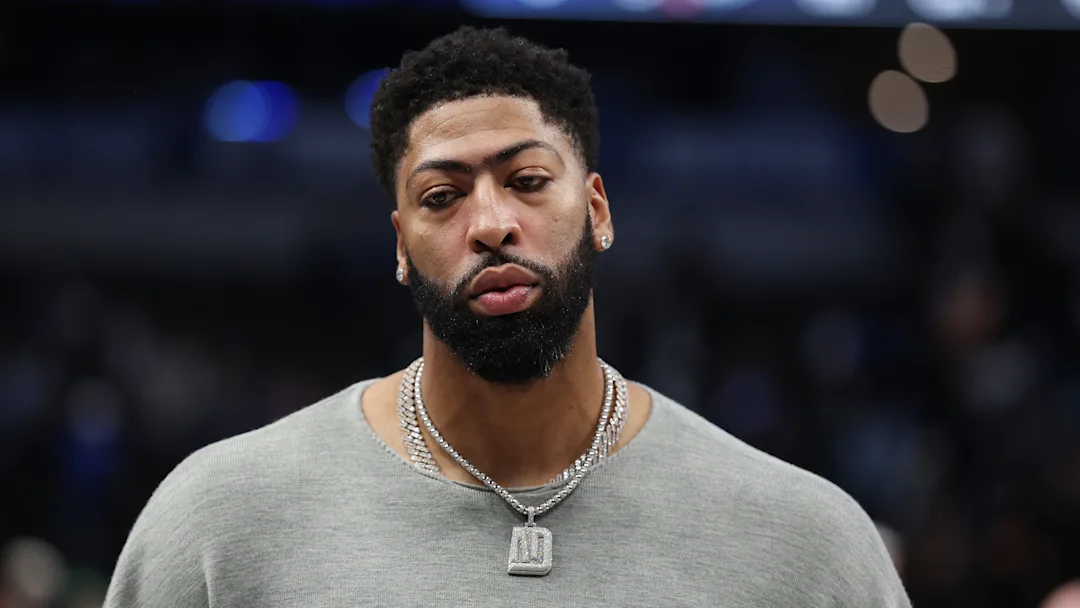
In the high-stakes world of NBA front-office maneuvering, few decisions haunt a franchise like a botched trade deadline deal. For the Dallas Mavericks, the ghosts of past missteps still linger, and with the February 6, 2026, trade deadline looming, the rumor mill is churning with speculation that could drag them back into that nightmare. Reports from ESPN’s Shams Charania indicate the Mavericks are “open to exploring the trade markets” for star forward/center Anthony Davis, alongside veterans like Klay Thompson, Daniel Gafford, and D’Angelo Russell. This isn’t just idle chatter; it’s a signal that Dallas, sitting at a dismal 9-16 through mid-December 2025, might be pivoting toward a rebuild centered on rookie sensation Cooper Flagg. But trading Davis? That’s not just a move—it’s a potential sequel to the franchise’s infamous “disasterclass” from two years prior, a cascade of errors that nearly torpedoed their contention window. Please, no. The Mavericks can’t afford to compound their woes by dumping a proven All-NBA talent for scraps, especially when the pieces in play scream short-term desperation over long-term viability. This essay unpacks the peril, drawing on the scars of 2023, the allure and pitfalls of a Davis deal, and why holding firm might be the only sane path forward.
To grasp why a Davis trade reeks of déjà vu, we must rewind to February 9, 2023—the day the Mavericks’ trade deadline became synonymous with overreach and underdelivery. Coming off a Western Conference Finals appearance in 2022, Dallas was desperate to bolster a roster built around Luka Dončić’s supernova scoring. General manager Nico Harrison, under pressure to keep pace with juggernauts like the Suns and Grizzlies, swung for the fences. The centerpiece? Acquiring Kyrie Irving from the Brooklyn Nets in a four-team blockbuster that sent Spencer Dinwiddie, Dorian Finney-Smith, a 2029 first-round pick, and multiple seconds to Brooklyn. On paper, it was seductive: Irving’s elite shot-creation alongside Dončić promised a dynamic backcourt duo, freeing Luka from primary ball-handling duties and unlocking off-ball wizardry. Irving averaged 27.1 points on 49/38/91 shooting in 20 regular-season games for Dallas, injecting instant offense. The Mavericks surged to the No. 4 seed in the West, and for a fleeting moment, it felt like genius.
But the cracks appeared almost immediately. Irving’s injury history—missing 27 games that season—exposed Dallas’ lack of depth. The trade gutted their perimeter defense (Finney-Smith was a 3-and-D cornerstone) and draft capital, leaving them asset-poor for future fixes. Off the court, Irving’s vaccine mandate drama and eccentric persona created locker-room turbulence, culminating in a first-round playoff exit to the Clippers in six games. Dončić carried the load heroically (32.4 points, 8.6 rebounds, 5.6 assists in the series), but without reliable support, Dallas folded under pressure. The 2023 deadline wasn’t a lone blunder; it was the opening act in a trilogy of folly. Fast-forward to 2024, and Harrison doubled down, flipping assets for Daniel Gafford and P.J. Washington from Washington and Charlotte, respectively—solid role players, but at the cost of a 2024 first-rounder and more picks. These moves patched holes but accelerated the bleed of future flexibility, pushing Dallas into luxury-tax hell while yielding just a Western Conference Finals berth.
The true apocalypse arrived last season, in a move so reviled it’s now etched in NBA infamy: trading Dončić to the Lakers for Anthony Davis at the 2025 deadline. In a desperate bid to salvage contention amid injuries and chemistry issues, Harrison packaged Luka—a 25-year-old MVP candidate averaging 33.9 points, 9.2 assists, and 8.6 rebounds—with role players like Maxi Kleber and a 2027 first-rounder for the 32-year-old Davis, fresh off another injury-plagued Lakers stint. It was billed as a “win-now” masterstroke: Davis’ rim protection (2.1 blocks per game career average) and pick-and-roll synergy with Kyrie Irving would anchor a defense that ranked 22nd in the league pre-trade. Yet, the fallout was cataclysmic. Dončić’s departure gutted the offense; without his gravity, Dallas’ spacing collapsed, and scoring dipped to 108.2 points per 100 possessions post-deadline—a bottom-10 mark. Davis, for all his gifts, has been a fragility incarnate: limited to just 10 games this season due to a calf strain and abdominal issues, averaging a respectable but diminished 19.6 points and 10.2 rebounds on 53% shooting. The Mavericks plummeted to 3-8 early, prompting Harrison’s firing on November 11, 2025, and a full roster autopsy. This wasn’t evolution; it was self-sabotage, trading a generational engine for a high-mileage luxury car that breaks down on the highway.
Now, with interim co-GMs Michael Finley and Matt Riccardi at the helm, Dallas faces a crossroads that mirrors those past blunders: temptation disguised as prudence. The 9-16 record isn’t just ugly—it’s a clarion call for change, especially with Dončić thriving in L.A. (nearly a 40-point triple-double average) while Flagg, the No. 1 pick, emerges as a two-way force (14.2 points, 7.8 rebounds, elite switchability). Trading Davis could net young talent and picks, restocking a war chest depleted by prior deals (Dallas controls only their 2026 first-rounder outright until 2031). Suitors are lining up: the Pistons, fresh off a No. 1 East seed, could dangle Jaden Ivey, Tobias Harris’ expiring $26.6 million deal, and picks; the Raptors might counter with RJ Barrett and Jakob Poeltl for salary match, pairing Davis with Scottie Barnes and Brandon Ingram; the Hawks eye him as a defensive anchor next to Trae Young, potentially via Kristaps Porziņģis and Onyeka Okongwu. Mock trades abound on X, from a Pistons package headlined by Ivey and Caris LeVert (plus two firsts) to a Clippers blockbuster sending John Collins, Bogdan Bogdanović, and picks for Davis and D’Angelo Russell. The allure is clear: financial relief (Davis’ $43.2 million salary balloons to $62.8 million next year), youth infusion, and draft ammo to build around Flagg.
Yet, this is where history’s echo chamber amplifies the alarm bells. The 2023 Irving trade promised star power but delivered volatility; 2024’s acquisitions added grit without genius; and the 2025 Dončić heist? A franchise-eraser that swapped sustainable dominance for injury roulette. Trading Davis now would echo that pattern: a knee-jerk reaction to a slow start, sacrificing a top-10 player (career 24.1 points, 10.7 rebounds, 2.3 blocks) for unproven upside. Consider the injury risk baked in—Davis has played fewer than 60 games in four of the last six seasons, including just 14 of 44 since arriving in Dallas. Buyers know this, so the return won’t be Luka-level treasure. Ivey (20.5 points, but inefficient) is intriguing but unproven as a lead guard; Barrett’s a solid wing, but Toronto’s picks might convey late in a lottery-protected East. Harris? An expiring contract that’s salary filler, not savior. As Bill Simmons argued on his podcast, “I’m not trading Anthony Davis right now. I’m keeping him… Flagg and Davis together, I need to see this more.” Simmons nails it: At 32 and extension-eligible this offseason, Davis isn’t washed—his per-36 efficiency (26.8 points, 55% FG) rivals his peak. Dumping him for a “grab bag,” as one X user lamented, risks repeating the 2023 asset hemorrhage without the upside.
The deeper folly lies in Dallas’ structural handcuffs. The new CBA’s second apron looms large; with a projected $90 million repeater tax next season, trading Davis could provide cap relief, but it also cedes control of their timeline. Flagg, at 19, needs a co-star to accelerate his growth—Davis’ veteran savvy (10 All-Star nods, 2020 championship) could mentor him on both ends, much like Tim Duncan’s tutelage of Kawhi Leonard in San Antonio. Recent wins (four of five, including upsets over Miami, Houston, and Denver) suggest chemistry budding: Flagg’s off-ball cuts mesh with Davis’ high-post passing, boosting Dallas to 112.4 points per 100 in those games. Kyrie Irving’s ACL recovery adds intrigue—pair him with Davis and Flagg for a versatile core that contends in a wide-open West, weakened by Denver’s slide and the Clippers’ cap crunch.
Moreover, the market for Davis isn’t a fire sale waiting to happen. Rich Paul, his agent, has already met with Finley and Riccardi, demanding clarity on extension vs. trade. If Dallas blinks, suitors like Detroit (needing size beyond Jalen Duren) or Toronto (vaulting to East finals contention) will lowball with protected picks and role players. X chatter reflects this skepticism: One mock from @SleeperMaverick proposes Ivey, Ausar Thompson, and picks to Detroit, but even fans cry “Who says no?” with Dallas hanging up. Another user quips, “Mavericks getting fleeced again if this happens. Dallas organization has Luka PTSD.” PTSD is right—the Dončić trade’s scar tissue makes any deal feel like regression. Governor Patrick Dumont’s “patient approach” since Harrison’s ouster signals restraint; a GM search looms in the offseason, so why mortgage now?
| Potential Davis Trade Packages | Pros for Dallas | Cons/Risks |
|---|---|---|
| Pistons: Jaden Ivey, Tobias Harris, Caris LeVert, 2026/2028 1sts (top-5 prot.) | Youth (Ivey’s speed), expiring salary relief, picks to rebuild. | Ivey’s turnover-prone (3.2 per game); no proven star. Detroit’s interest is “evaluating,” not aggressive. Echoes 2023’s unvetted Irving gamble. |
| Raptors: RJ Barrett, Jakob Poeltl, Gradey Dick, multiple 1sts | Defensive upside (Poeltl’s 1.1 blocks), wing scoring (Barrett’s 21.6 PPG). | Salary match strains cap; Dick’s raw. Toronto’s East rise means late picks. Mirrors 2024’s depth-for-picks imbalance. |
| Hawks: Kristaps Porziņģis, Onyeka Okongwu, 2027 1st & swap | Frontcourt versatility (Porziņģis’ stretch-five). | Injury overlap (Porziņģis missed 50+ games last year); no backcourt help. Repeats 2025’s “win-now” mirage without offense. |
| Clippers: John Collins, Bogdan Bogdanović, Derrick Jones Jr., Brook Lopez, picks | Depth infusion, shooting (Bogdanović’s 39% 3PT). | Aging vets (Lopez 37); bloated contracts. Clippers’ West focus means overpay, but Dallas gets “four players” for two—quantity over quality, à la 2023. |
This table underscores the trap: Every package prioritizes quantity (picks, role players) over quality (a Dončić-caliber anchor), dooming Dallas to mediocrity. The 2023 deadline’s “disasterclass” wasn’t the trades themselves but the philosophy—chasing stars without sustainable support. Trading Davis flips the script but preserves the error: reactive, asset-light, and blind to Flagg’s need for vets.
So, why plead “no”? Because the alternative—patience—is Dallas’ redemption arc. Davis’ agent has clarity demands, but reports suggest the Mavericks “want to see how the team performs over the next few weeks.” Use that window: Integrate Dereck Lively II (if his foot heals) with Davis for twin-tower terror, lean on Flagg’s defense (1.2 steals per game), and let Irving’s return spark offense. The West isn’t invincible—Phoenix’s age, Minnesota’s chemistry woes—leaving room for a play-in surge. Extension talks could lock Davis long-term, blending youth and experience. As one X post memes, “Dallas Mavericks Prepare for Anthony Davis Trade By Wrapping Him in Bubble Wrap”—but why ship him when fortifying works?
In the end, the Mavericks’ trade deadline ledger is a cautionary tale of ambition unchecked. 2023’s Irving splash drowned in drama; 2024’s patches frayed; 2025’s Dončić debacle defined disaster. A Davis trade would be Act IV: trading proven pedigree for probabilistic promise, dooming Flagg to the isolation chamber Harrison built. Please, no. Hold the line, build the bridge from Luka’s shadow to Flagg’s dawn—with Davis as the keystone. The fans deserve better than another sequel; Dallas needs a plot twist toward stability, not self-immolation.
Leave a Reply