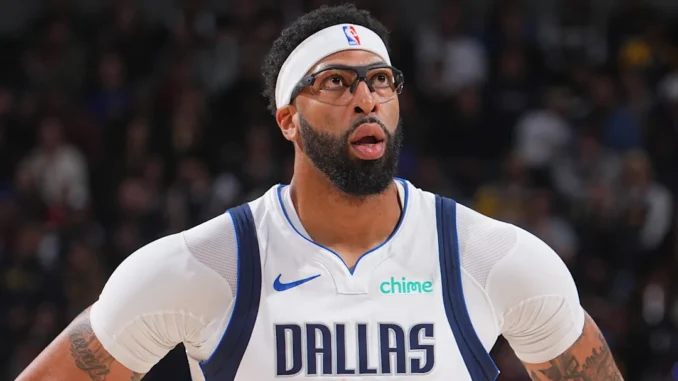
Mavericks’ Road to Trading Anthony Davis Just Hit an Unmovable Roadblock
The Dallas Mavericks’ 2025-26 season has been a rollercoaster of heartbreak, hope, and high-stakes drama, but few moments have felt as gut-wrenching as the announcement on December 10, 2025. Dereck Lively II, the 21-year-old center once hailed as the cornerstone of Dallas’s future frontcourt, will undergo season-ending surgery on his right foot. It’s a blow that doesn’t just sideline a promising talent; it throws a wrench into the franchise’s already precarious trade strategy surrounding superstar Anthony Davis. What was once a calculated path to restock draft picks and young talent now feels like navigating a minefield with one leg tied behind the Mavericks’ back. Lively’s absence creates an immediate crisis at center, forcing the team to lean harder on Davis—a player they’ve been openly shopping—while complicating any potential deal that might involve packaging him for assets. In a Western Conference where contenders lurk and the Mavericks sit at 9-16, this injury isn’t just bad luck; it’s a seismic shift that could redefine Dallas’s trajectory for years to come.
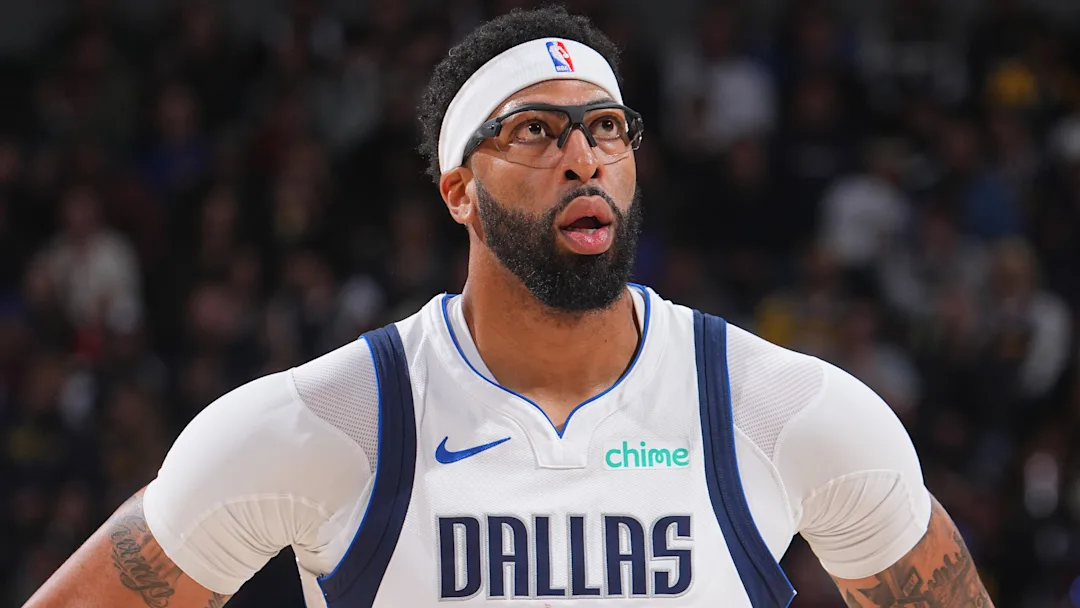
To understand the depth of this complication, we have to rewind to the chaotic summer of 2025. The Mavericks, fresh off a heartbreaking NBA Finals loss to the Boston Celtics in June 2024, entered the offseason with sky-high expectations. Luka Dončić, the Slovenian sensation who’d carried Dallas to within two wins of a championship, was the unquestioned face of the franchise. But whispers of discontent—fueled by reports of backchannel frustrations over roster construction—turned into a thunderclap on draft night. In a move that stunned the league and ignited endless debate, then-general manager Nico Harrison orchestrated a blockbuster trade: Dončić to the Los Angeles Lakers in exchange for Anthony Davis, a 2025 first-round pick (which became Duke phenom Cooper Flagg at No. 1 overall), and a handful of role players. Harrison, a close ally of Lakers president Rob Pelinka, framed it as a “win-now” pivot, betting that Davis’s elite two-way dominance paired with Kyrie Irving’s playmaking would vault Dallas back to title contention.
The fanbase’s reaction was visceral. Social media erupted with memes of Harrison in a Lakers jersey, and “FireNico” trended for weeks. “Trading Luka for AD? That’s like swapping a Ferrari for a tank—powerful, but good luck turning corners,” one viral X post quipped. On paper, it made some sense: Davis, at 32, was still an All-NBA force, averaging 25.9 points, 12.6 rebounds, and 2.3 blocks per game in his final Lakers season. Irving, locked in through 2026, provided the guard play Dončić’s absence left vacant. And Flagg, the 6’9″ freshman sensation with guard-like skills and a 7’2″ wingspan, represented a foundational piece for the post-Davis era. But the trade’s true cost emerged slowly: Dallas surrendered not just Dončić but future first-rounders in 2027, 2028, 2029, and 2030—assets shipped to L.A. in the deal. Overnight, the Mavericks’ draft cupboard was bare, leaving them reliant on free agency, trades, and the development of unproven youth.
Fast-forward to training camp, and the optimism was palpable. Davis arrived in Dallas looking leaner and motivated, vowing to “embrace the challenge” of leading a new superteam. Irving, recovering from offseason knee maintenance, teased pick-and-roll chemistry with the big man that could rival the league’s best. Flagg dazzled in scrimmages, his fluid athleticism drawing comparisons to a young Kawhi Leonard. The frontcourt depth was a luxury: Lively, entering his third year, had blossomed into a rim-protecting beast during the 2024 playoffs, averaging 7.9 points and 7.4 rebounds on 67.4% shooting in 21 games. Beside him sat Daniel Gafford, a rugged backup signed to a three-year extension, and veteran Dwight Powell for emergency minutes. It was a unit built to dominate the glass and switch defensively—perfect for Jason Kidd’s versatile schemes.
But cracks appeared early. Irving’s knee flared up in October, sidelining him indefinitely and thrusting second-year guard Jaden Hardy into the starting lineup. Davis, who reported to camp carrying extra weight (later attributed to “intentional bulking” by his camp), suffered a left calf strain in the preseason opener against the Suns, missing the first 15 games. Without their two biggest stars, Dallas stumbled out of the gate, dropping eight of their first 10 amid a grueling road-heavy schedule. Flagg, the teenage prodigy, showed flashes—14 points and eight rebounds in a win over the Spurs—but his rawness was exposed against veteran bigs like Chet Holmgren and Rudy Gobert. The Mavericks’ defense, a playoff strength under Dončić, cratered to 118.2 points allowed per 100 possessions, league-worst.
Then came November 11: Harrison was fired. The move, orchestrated by new owner Patrick Dumont (who acquired majority stake from Mark Cuban in a $3.5 billion deal), was the death knell for the Dončić trade’s architect. Harrison’s tenure, marked by splashy but uneven moves like signing Klay Thompson to a two-year, $50 million pact and trading for D’Angelo Russell, had yielded a Finals berth but little else. His ouster installed interim co-GMs Michael Finley and Matt Riccardi, both respected voices but untested in full rebuild mode. “This is a reset,” Dumont said in a statement, hinting at a youth movement around Flagg. Suddenly, the whispers about trading Davis—once dismissed as post-Harrison pipe dreams—became deafening.
Davis’s agent, Klutch Sports CEO Rich Paul, wasted no time. On November 20, he met with Finley and Riccardi, demanding clarity: extension or trade? Eligible for a four-year, $275 million max extension starting August 2026, Davis could opt out of his $62.8 million player option for 2027, hitting free agency at 34. Paul, ever the strategist, emphasized Davis’s desire to win now but openness to a sign-and-trade if Dallas pivoted to contention elsewhere. The Mavericks, per ESPN’s Shams Charania, “have not ruled out an extension” but are “open to exploring the trade market” for Davis, Gafford, Thompson, and Russell. It’s a pragmatic stance: Davis, despite his elite per-minute impact (19.8 points, 10.2 rebounds in 19 games last season), carries baggage—13 seasons of nagging injuries, a $43.2 million salary this year escalating to $52.2 million by 2027, and questions about his fit in a small-ball era.
The trade market for Davis heated up quickly. Eastern Conference contenders, eyeing the wide-open playoff race, emerged as frontrunners. The Detroit Pistons, shockingly perched at No. 1 in the East with a 18-7 record behind Cade Cunningham’s MVP-caliber play, see Davis as the missing piece for a Finals push. Detroit’s package could headline Jaden Ivey (a 22-year-old combo guard averaging 18.2 points), Tobias Harris’s expiring $26.6 million deal for salary match, and multiple first-round picks—vital for Dallas’s barren war chest. “Ivey’s burst and Harris’s shooting would give Flagg the spacing he needs,” one Eastern exec told The Athletic. The Toronto Raptors (15-10, fourth in East) have inquired, potentially offering RJ Barrett and Jakob Poeltl alongside picks, envisioning a Barnes-Ingram-Davis triad. Atlanta Hawks, desperate to pair Trae Young with a rim protector, floated Dejounte Murray and Clint Capela in early talks. Even wilder rumors linked Davis to the Knicks (for Julius Randle and picks) or a Miami reunion with Jimmy Butler, though the Heat’s tax concerns make it unlikely.
For Dallas, the calculus was simple pre-Lively: Move Davis for youth and picks, install Flagg at the four, slide Gafford to starter at center, and let Irving (expected back in January) orchestrate a bridge to contention. Lively, on his rookie-scale deal through 2026-27 ($5.3 million this year), was the luxury—depth that allowed experimentation with Davis at power forward in small lineups. “DLII’s switchability lets us hide AD on guards,” Kidd noted in October. Trading Davis would net assets without gutting the rotation, positioning Dallas for a lottery push in a loaded 2026 draft.
Enter the roadblock: Lively’s foot. What began as “swelling and soreness” in training camp escalated into a nightmare. The 7’1″ Duke product, limited to seven games (averaging 4.3 points, 5.3 rebounds, 1.6 blocks in 16.4 minutes), had been shut down since November 21. Initial reports cited a knee sprain in October, but deeper issues surfaced—a recurrence of the stress fracture that cost him 36 games last season, compounded by bone spurs removed in offseason surgery. By early December, Lively was seeking second and third opinions from specialists in London and New York. “For a 21-year-old, it’s tough. He wants to play,” Kidd said post-Thunder loss on December 5. Fans, already raw from the Dončić saga, spiraled on X: “Nico’s inept staff costing that man time and money,” one post lamented, tagging the fired GM. Another: “We need transparency—how bad is this? #MFFL.”
The surgery, performed by Dr. James Calder at London’s Fortius Clinic, addresses “lingering discomfort” but ends Lively’s season. He’s expected back for 2026-27 training camp—a full recovery, per the team—but the damage is done. In three NBA seasons, Lively has played just 98 of 189 possible regular-season games, his body betraying the athletic gifts that made him the No. 12 pick in 2023. Co-interim GM Riccardi praised his “professionalism and resilience,” but the subtext is grim: another procedure in a litany of leg woes, raising whispers about his long-term durability.
For the Mavericks’ trade machinations, Lively’s exit is an unmovable boulder. Without him, the center rotation thins to peril: Gafford, a serviceable but limited starter (8.9 points, 6.4 rebounds this year), has his own ankle issues, questionable for the December 12 Nets game. Powell, 34 and on a veteran minimum, is a liability against athletic bigs. Two-way contract Moussa Cissè, a 6’11” raw prospect from Memphis, logged G League minutes but averages under 4 points in spot NBA duty. Davis, nominally a forward-center, has manned the five admirably in spurts—his 10.2 rebounds and 1.9 blocks per game last season speak to that versatility—but at 253 pounds and with a history of calf, groin, and adductor strains, over-relying on him risks burnout or re-injury. “AD at center full-time? That’s a 40-game season, tops,” a Western Conference scout told CBS Sports.
This vulnerability ripples through trade talks. Suitors like Detroit or Toronto, aware of Dallas’s desperation, can lowball—why overpay when the Mavericks might need a center in return? Early packages floated Ivey and picks, but now Dallas might demand a big like Isaiah Stewart or Poeltl to stabilize the present. “Lively’s injury flips the script,” Charania reported. “Teams know Dallas can’t gut the frontcourt without a safety net.” The medical hardship exception, which could add a 14th player if injuries exceed eight games from the top-10 salary earners, is tantalizingly close—Lively, Irving (ACL recovery), and Dante Exum (knee surgery) qualify—but not yet triggered. Exum, ironically, is the second Maverick with season-ending knee work, following his offseason procedure.
Kidd’s adjustments underscore the scramble. In Lively’s seven starts, Dallas outscored opponents by 11 points per 100 possessions with him on the floor, his length deterring 1.6 blocks per game. Without that anchor, lineups have featured Flagg at the four with Davis at five, but the rookie’s slight frame (205 pounds) gets bullied—evident in a 22-point loss to OKC on December 5, where Chet Holmgren feasted for 28 points. P.J. Washington, versatile but undersized at 6’7″, has slid to power forward, but his ankle sprain leaves gaps. Offensively, the spacing collapses; Thompson’s 38.7% three-point shooting helps, but without Irving’s creation, possessions bog down into isolation for Davis or Flagg drives.
Fan sentiment, already fractured, has turned toxic. X threads dissect every misstep: “Trade AD now before he sees the light and demands out,” one user posted, garnering 5K likes. Another: “Lively down, AD next—Dumont’s turning us into the Wizards 2.0.” Cuban, now a minority owner, has stayed mum, but his podcast quips about “learning from mistakes” feel pointed. Yet pockets of optimism persist. Bill Simmons of The Ringer argued against trading Davis: “They’re winning four of five—keep the vets, let Flagg grow.” Wins over Miami, Houston, and Denver (Davis’s 29-point gem in a 122-109 rout of the Rockets on December 6) suggest chemistry budding.
Zooming out, Lively’s injury exposes systemic flaws in Dallas’s rebuild. The Dončić trade, once a gamble on immediacy, now looks like a house of cards. Without picks until 2031 (barring trades), the Mavericks can’t afford another injury-riddled season. Trading Davis remains logical—his $275 million extension is a luxury tax nightmare, and at 33, his peak may be waning—but Lively’s void demands creativity. A sign-and-trade with protections? A multi-team deal netting a young center like Evan Mobley (if Cleveland bites)? Or, boldly, holding pat until Irving returns, betting on Flagg’s January surge?
The ripple effects extend beyond the court. Dumont’s vision—infuse analytics, cap discipline, and youth—clashes with the roster’s veteran tilt. Riccardi and Finley, navigating their first deadline as leads, face pressure to deliver. “We’re confident in DLII’s future,” Riccardi said post-surgery announcement, but the words ring hollow amid 9-16 reality. Lively’s resilience, echoed in team statements, is admirable, but for a franchise that’s lost its supernova in Dončić and now its rising star to the trainer’s table, resilience feels like a consolation prize.
As the February 6 deadline looms, Dallas’s path bifurcates: Trade Davis for futures, embracing a tank around Flagg and Ivey (or whoever), or double down, patching the center hole via buyout (veterans like Bismack Biyombo?) and praying for health. Lively’s roadblock isn’t insurmountable—full recovery by October 2026 offers hope—but it infinitely complicates the calculus. The Mavericks, once championship architects, now teeter on reinvention’s edge. In a league where big men like Davis are unicorns and injuries like Lively’s are kryptonite, Dallas’s next move isn’t just a trade; it’s a statement of survival. Will they pivot masterfully, or stumble into irrelevance? The clock ticks, the West waits, and Dereck Lively heals—from London, with the weight of a franchise on his surgically repaired foot.
Leave a Reply