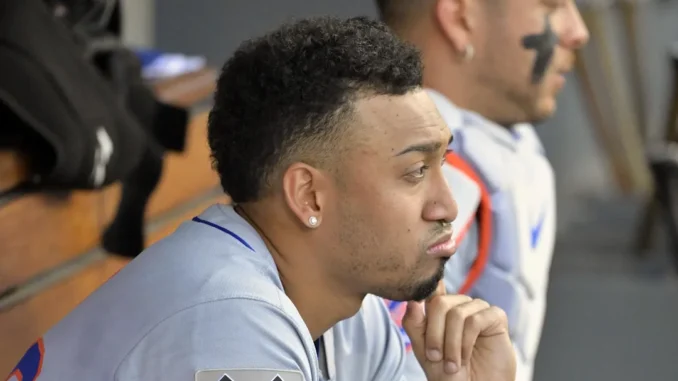
The Unheeded Signals: Two Mets Decisions That Pushed Edwin Díaz to the Dodgers
The New York Mets were “blindsided” by superstar closer Edwin Díaz opting out of the final two years of his contract and signing a three-year, $69 million deal with the rival Los Angeles Dodgers. While the money was close—the Mets reportedly offered three years and $66 million—the final decision came down to two key internal moves made by the Mets’ front office that reportedly left Díaz feeling unsettled and disrespected.
The reigning World Series champions didn’t just outbid the Mets by $3 million in real-world money; they presented a more stable, championship-ready organizational environment. The Mets, meanwhile, made two decisions that signaled to Díaz a lack of communication and an alarming lack of continuity on the pitching staff, directly influencing his choice to seek greener pastures.
Decision 1: The Firing of Pitching Coach Jeremy Hefner
The most significant non-financial factor influencing Díaz’s departure was the Mets’ decision to part ways with pitching coach Jeremy Hefner in the aftermath of the team’s stunning 2025 collapse.
The Relationship
-
Díaz’s Anchor: Hefner had been the Mets’ pitching coach since 2020 and had worked closely with Díaz through both his lowest point (the disappointing 2019 season) and his highest point (the two-time National League Reliever of the Year seasons in 2022 and 2025).
-
Trust and Continuity: It was under Hefner’s guidance that Díaz refined his legendary slider and rediscovered the dominant form that made him the game’s best closer. For a player who thrives on routine and trust, losing the coach who was instrumental in his success was a jarring move.
-
The Unhappiness: According to reports, Díaz was “less than thrilled” that the Mets jettisoned a coach who was highly respected within the clubhouse and who played a direct role in Díaz’s personal success. The move signaled a lack of stability and a willingness to break up a successful unit, even if the Mets felt a coaching shake-up was necessary after a disappointing season.
By removing Hefner, the Mets created uncertainty about the philosophical direction of the pitching staff, removing one of the most compelling reasons for Díaz to remain in Queens.
Decision 2: The Silent Signing of Devin Williams
The second critical misstep by the Mets’ front office, led by President of Baseball Operations David Stearns, was an unforgivable breakdown in communication: signing free-agent closer Devin Williams without giving Edwin Díaz a direct heads-up.
The Context
-
The Intent: The Mets, looking to bolster their bullpen and potentially create an overwhelming late-inning tandem, signed former Yankees closer Devin Williams to a three-year, $51 million contract earlier in the offseason. The move was analytically sound, aiming to acquire a dominant arm whose underlying metrics suggested a strong bounce-back season.
-
The Slap in the Face: Díaz was still in active negotiations with the Mets when the Williams signing became public. According to ESPN MLB insider Jeff Passan, Díaz was “not happy” that he “did not get a call giving him a heads up” about the signing of a fellow elite closer.
The Implication
The Williams signing could have been framed as a positive—a statement that the Mets were building the best bullpen in baseball around Díaz. Instead, the lack of communication was interpreted in a few negative ways:
-
Disrespect: Díaz felt slighted that the organization prioritized transactional secrecy over professional courtesy for a player who had just opted out of $38 million and was the face of the bullpen.
-
Lack of Priority: It suggested to Díaz that he was no longer the undisputed, primary target, or that the Mets viewed Williams as an insurance policy or even a replacement, rather than a complement.
This feeling of being blindsided by the signing of an internal rival may have led Díaz to conclude that the front office did not fully prioritize his relationship or his place in the organization.
The Winning Pitch: The Dodgers’ Advantage
While the two Mets decisions created an opening, the Los Angeles Dodgers capitalized by offering an environment that addressed all of Díaz’s underlying concerns:
-
Financial Advantage: The $69 million contract was a clear statement that the Dodgers would pay the highest AAV for a reliever in history, leaving no doubt about Díaz’s value.
-
Organizational Infrastructure: Díaz’s younger brother, Alexis Díaz (who was with the Dodgers organization last season), reportedly spoke “glowingly” of the Dodgers’ staff and “infrastructure.” This message countered the instability created by the Mets’ firing of Hefner.
-
Championship Guarantee: The Dodgers were just coming off their second straight World Series title. For a star focused on cementing his legacy with a ring, the Dodgers offered the highest probability of immediate championship success.
The loss of Edwin Díaz was a catastrophic blow for the New York Mets, and the post-mortem suggests it wasn’t just about the final dollar amount. It was about stability, trust, and a breakdown in communication that provided Díaz with all the rationale he needed to choose the bright lights of Los Angeles.
Leave a Reply