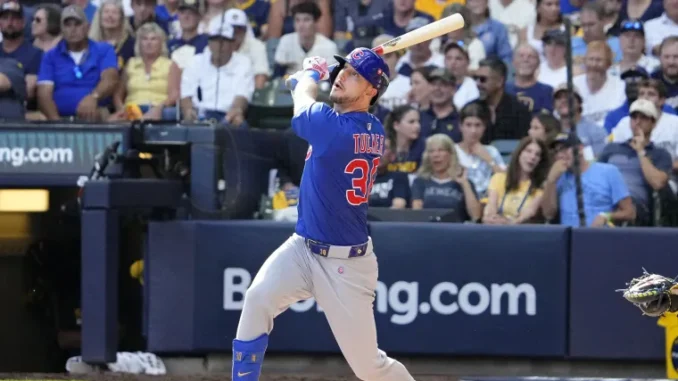
The Short-Term King: Kyle Tucker’s Path to the Dodgers Hinges on Rejecting the Mega-Deal
The Los Angeles Dodgers are reportedly one of the top three finalists for the biggest free agent prize of the 2026 offseason, four-time All-Star outfielder Kyle Tucker.1 For a team that just secured closer Edwin Díaz, adding a middle-of-the-order left-handed bat and Gold Glove defense in the outfield would complete another stunning offseason and solidify their dynasty.
However, the path to a Tucker contract in Los Angeles is fraught with peril, not because of a lack of money, but because of a fundamental and institutional divergence in contract philosophy. The Dodgers are unwilling to give Kyle Tucker the nine- or ten-year, $350-$400 million mega-deal he is projected to command from other suitors like the New York Yankees or Toronto Blue Jays.2
A deal can happen, but only if Kyle Tucker decides to prioritize the Dodgers’ unique “Short-Term King” approach—a high-Average Annual Value (AAV) contract with limited years—over the generational, long-term security offered elsewhere.
The Dodgers’ Non-Negotiable Contract Philosophy
The Dodgers’ front office, led by Andrew Friedman, has established a clear, almost rigid, pattern for their non-Shohei Ohtani free-agent signings: prioritize short-term flexibility at the expense of long-term commitment.3
This strategy, which is designed to manage the ever-escalating Competitive Balance Tax (CBT) and maintain roster agility, is the central roadblock in the Tucker negotiations:
| The Dodgers’ Offer (Projected) | The Market’s Offer (Projected) | The Conflict |
| Years: 3 to 4 years | Years: 8 to 10 years | Tucker seeking long-term security vs. Dodgers demanding short-term flexibility. |
| AAV: $35 million+ | AAV: $38 to $42 million | Dodgers must offer a massive AAV premium to offset the lost years. |
| Opt-Outs: Historically resisted, but may be tested. | Opt-Outs: Often included to provide player control. | The Dodgers refuse to introduce unnecessary uncertainty into their future payroll. |
| The Precedent: Edwin Díaz (3 years, $69M); Alex Bregman (3 years, $120M opt-out with Boston). | The Precedent: Vladimir Guerrero Jr. (14 years, $500M extension); Juan Soto (10 years, $765M extension). | The Dodgers are asking Tucker to take a “bet on myself” deal, not a legacy contract. |
Friedman’s message is clear: “We will pay a premium for your peak performance, but we will not pay for your age-35 and age-36 seasons.”
Why Tucker Might Accept the Shorter Deal
For an elite player like Kyle Tucker, turning down $\$400$ million is an almost unimaginable proposition. However, the appeal of the Dodgers’ approach lies in the confluence of three non-financial factors:
1. The Championship Guarantee
The Dodgers are the defending World Series champions, and the roster construction (Ohtani, Yamamoto, Díaz) guarantees they will be annual contenders. Tucker, who has four All-Star selections and a World Series ring from his time with the Astros, might view the short-term contract as a calculated risk for guaranteed championship contention. Signing the short deal maximizes his chances of winning multiple titles in his prime years.
2. The L.A. Market and Endorsement Upside
A shorter deal in the Los Angeles market offers unprecedented endorsement and media opportunities that a contract in Toronto or New York might not match. The Dodgers know the value of the L.A. spotlight, and Tucker may be willing to sacrifice some guaranteed salary for the massive exposure and off-field revenue that comes with being the star outfielder on baseball’s most glamorous team.
3. The Second Bite at the Apple
The most compelling argument for Tucker is the “double payday” strategy. If he signs a four-year deal with the Dodgers:
-
He earns a massive AAV in his prime.
-
He hits free agency again at age 32, which is still young enough to secure one final, highly lucrative three- or four-year deal.
This allows him to maximize his earnings by hitting free agency while still in his prime years, rather than having his value diluted by the later, expensive years of a nine-year contract.
The Trade-Off: Who Sacrifices What?
| Stakeholder | Best-Case Scenario (Tucker Signs Short) | Worst-Case Scenario (Tucker Signs Long Elsewhere) |
| Kyle Tucker | Wins 2+ World Series; Earns $35M+ AAV; Hits FA again at 32 for second massive payday. | Secures generational wealth (8+ years, $350M+); Risks spending later prime years on a non-contender (Blue Jays). |
| Dodgers | Get the perfect left-handed bat and defense without sacrificing long-term flexibility or the 2030 payroll. | Must settle for a lower-tier outfielder (Lars Nootbaar/Steven Kwan trade targets) and endure the pressure of another team gaining a superstar. |
| Rival Suitors (Yankees/Blue Jays) | They avoid overpaying on a nine-year deal, allowing them to pivot to cheaper options like Alex Bregman. | They are forced to bid up the contract past the $\$400M$ threshold to land the prize, potentially crippling their long-term payroll flexibility. |
Ultimately, the Dodgers have laid out their terms, and they are not likely to budge on the years. A contract for Kyle Tucker to join the Dodgers can happen, but only if he makes the career-defining decision to bet on his own continued performance and reject the security of a contract that would buy out his entire prime. He has to choose the risk and glory of the Short-Term King.
Leave a Reply