The Free Agent Freeze: How $88 Million in Blockbuster Moves Left the Braves Scrambling for Pitching
The Atlanta Braves entered the 2026 offseason with clear, pressing needs: securing an elite, high-leverage reliever and exploring the trade market for a dominant starting pitcher. The franchise, guided by the fiscally prudent but often frustrating philosophy of General Manager Alex Anthopoulos, was expected to make a calculated, high-impact move to keep pace with the hyper-spending Los Angeles Dodgers and the aggressively retooling NL East.
Instead, the two most impactful pitching moves of the early offseason—totaling over $88 million in committed value—have gone to the competition, leaving the Braves on the outside looking in.
The two deals that have reshaped the pitching landscape and exposed the limits of Atlanta’s strategy are:
-
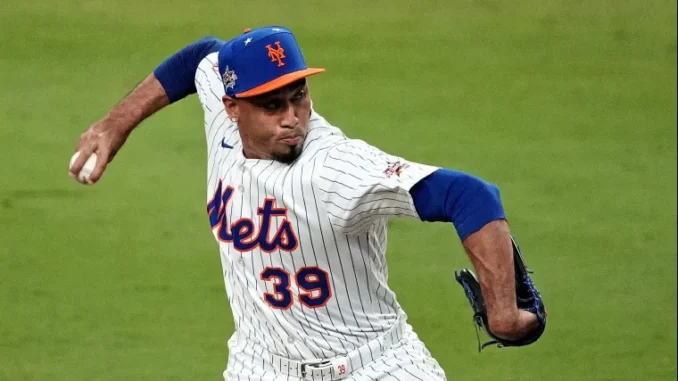
Edwin Díaz to the Dodgers: The three-year, $69 million contract, securing the game’s best closer for their direct World Series rival.
-
The Looming Tarik Skubal Trade: The nearly certain trade of the Detroit Tigers ace, valued at roughly $19 million in remaining arbitration salary for 2026, which is heavily rumored to land him with the Dodgers.
While the Braves were reportedly interested in Díaz, and Tarik Skubal was acknowledged as their top trade target, the team’s long-standing reluctance to break the bank for free agents or dismantle their prospect core for rentals proved too great a hurdle.
The Closer Catastrophe: Díaz to Los Angeles
The loss of Edwin Díaz to the Dodgers is a direct, two-pronged blow to the Braves’ title aspirations.
1. The Bullpen Void Deepens
The Braves’ bullpen has been a source of anxiety for the last three seasons. The problem was compounded this offseason by declining the club options on veteran relievers Pierce Johnson ($7M) and Tyler Kinley ($5.5M), and allowing former closer Raisel Iglesias to hit free agency (though he was later re-signed for a hefty one-year, $16M deal).
The initial strategy was clear: replace the lost bullpen depth with an undisputed, elite free agent like Díaz.
-
The Sticker Shock: Díaz’s $23 million Average Annual Value (AAV), a record for a reliever, was a price the Braves were likely unwilling to match or exceed. The Dodgers, with their deep pockets and commitment to winning now, simply outbid the market for the certainty Díaz provides.
-
The Missed Opportunity: Díaz would have perfectly solidified the Braves’ ninth inning, allowing re-signed Iglesias to move to a high-leverage setup role. Now, the burden for the final three outs rests solely on Iglesias (who is 35 and coming off an injury-plagued season) and Joe Jiménez. The lack of a true, dominant second option creates immediate volatility.
2. Arming the Arch-Rival
The most frustrating element is that the $69 million commitment ensures the Dodgers have a fully stabilized bullpen for the next three seasons, solving a weakness that plagued them in 2025. The Braves now face a team with a rotation featuring Ohtani, Yamamoto, and possibly Skubal, and a ninth inning locked down by Díaz. This is a level of resource consolidation that Atlanta’s budget-conscious approach cannot easily counter.
The Trade Trauma: Skubal to the Dodgers (The $400M Reluctance)
On the trade front, the rumors surrounding Tarik Skubal have dominated the Winter Meetings, and insiders have pointed to the Braves as having strong initial interest. Skubal, the two-time Cy Young winner, represented a generational opportunity to upgrade the rotation behind Spencer Strider and Chris Sale.
-
The Cost Barrier: The Tigers’ asking price for Skubal—who is a Scott Boras client and destined for a record-breaking $\$400$ million extension—is astronomical. It demands not just a package of elite prospects (like AJ Smith-Shawver and Hurston Waldrep), but a commitment to the nine-figure contract extension the Tigers are unwilling to pay.
-
The Prospect Paralysis: The Braves’ philosophy, established by Anthopoulos, is to avoid sacrificing their organizational depth. Trading multiple high-end, controllable pitching prospects for a player who will demand the largest pitching contract in history goes against every core tenet of the Braves’ financial model. As a result, the Braves appear to be fading from the Skubal sweepstakes, unwilling to meet the price.
-
The Dodgers’ Edge: The Dodgers are reportedly willing to meet both demands: the prospect haul (likely centering on pitchers like Glasnow and Sheehan) and the commitment to a $\$400$ million extension. If the Dodgers pull this off, the gap between the two teams’ rotations becomes a chasm, ensuring the NL runs through Los Angeles for the remainder of the decade.
The Roster Ramifications: Searching in the Second Tier
Having missed the two premium pitching targets, the Braves are now forced to pivot to the second tier of the market to meet their pitching needs.
-
Starting Pitching: With Skubal off the table, the Braves will likely turn their attention to mid-tier free-agent starters or exploring trade options for pitchers with lower acquisition costs, such as Lucas Giolito or Tyler Mahle. The urgency for a trade has diminished slightly due to the expected return of the Sale/Strider core, but they still need to solidify the back end of the rotation.
-
Bullpen Targets: The loss of Díaz makes bullpen help a desperate need. After re-signing Iglesias, the Braves will have to seek out Ryan Helsley (who signed a team-friendly deal with the Orioles) or Phil Maton (signed with the Cubs) or pursue a trade for a controllable setup man. The market for high-leverage arms has evaporated quickly, making Anthopoulos’s job exponentially harder.
The $\$88$ million in committed pitching resources by the Dodgers and the Tigers’ likely trade partner have served as a wake-up call for the Braves. The club’s desire to maintain a top-five payroll—while admirable—does not equate to a willingness to outspend the market for elite talent. Unless Anthopoulos changes course and executes an uncharacteristic, high-risk trade for a player like Bo Bichette or Kyle Tucker to bolster the offense, the Braves risk falling further behind their chief National League rival.
Leave a Reply