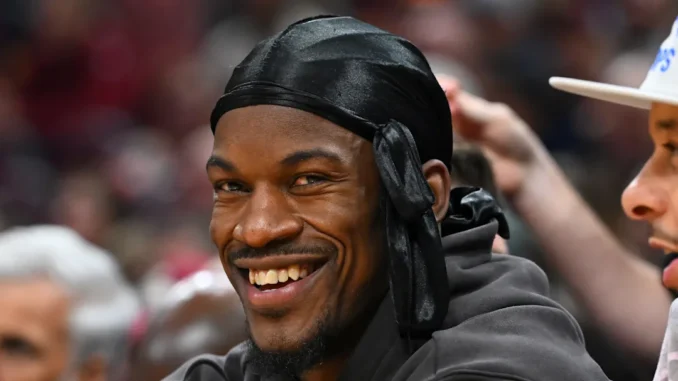
Jimmy Butler Continues to Haunt Heat Culture Amid Ja Morant Interest
The Miami Heat have long prided themselves on an identity forged in fire—relentless work ethic, unyielding accountability, and a collective grit that turns good teams into great ones. Dubbed “Heat Culture,” this ethos has been the franchise’s North Star since Pat Riley took the reins in 1995, transforming a perennial also-ran into a three-time NBA champion. It’s a system that demands sacrifice from its stars, rewarding those who buy in with deep playoff runs and eternal respect, while punishing those who don’t with unceremonious exits. Dwyane Wade, the franchise’s eternal icon, embodied it by deferring to LeBron James in 2010 and accepting a lesser role upon his return. Chris Bosh adapted his game to fit the blueprint, even at the cost of his prime. But Jimmy Butler? He arrived in 2019 as the perfect avatar for this culture—a gritty, playoff-elevating force who dragged Miami to two NBA Finals and an Eastern Conference Finals appearance. For years, he was the beating heart of Heat Culture. Yet, by February 2025, that heart had turned toxic, culminating in a blockbuster trade that sent Butler to the Golden State Warriors and left Miami grappling with a void deeper than any roster gap. Now, as whispers of interest in Memphis Grizzlies star Ja Morant swirl in the 2025-26 season, Butler’s ghost looms large. The Heat’s pursuit of another “disgruntled sort-of star,” as insiders call him, isn’t just about talent—it’s a referendum on whether Heat Culture can survive another high-risk gamble on a supernova with baggage.
The Rise: Butler as Heat Culture Incarnate
When Jimmy Butler landed in Miami via a sign-and-trade with the Philadelphia 76ers in July 2019, he wasn’t the finished product of a superteam blueprint. At 29, he was a journeyman with a chip on his shoulder, fresh off forcing his way out of Philly after a disappointing playoff showing. Pat Riley, Miami’s president and the architect of Heat Culture, saw in Butler a kindred spirit: a defender who could guard 1-through-5, a scorer who thrived in chaos, and a leader who demanded more from his teammates than anyone else. “Jimmy is the ultimate competitor,” Riley said at the time, echoing the franchise’s mantra of “toughness over talent.” Butler wasn’t a splashy free-agent signing like LeBron James in 2010; he was a calculated risk, acquired for Josh Richardson and a first-round pick, signaling Miami’s intent to build through grit rather than glamour.
The partnership ignited immediately. In his debut season (2019-20), Butler averaged 20.3 points, 6.3 rebounds, and 6.4 assists, anchoring a Heat team that finished 44-29 in a pandemic-shortened year and stormed to the NBA Finals. His iconic 40-point triple-double in Game 6 against the Milwaukee Bucks—a 17-point comeback in the second half—crystallized his “Playoff Jimmy” persona. Miami fell to LeBron’s Lakers in six games, but Butler’s refusal to fold earned him universal acclaim. “He showed us what it means to fight,” said Erik Spoelstra, Miami’s head coach and Riley’s handpicked successor. Over the next three seasons, Butler’s impact deepened. In 2021-22, he led the Heat to a franchise-record 53 wins and the East’s No. 1 seed, averaging 21.5 points while embodying the culture’s defensive ferocity—holding opponents to under 100 points in 20 games.
But it was the playoffs where Butler truly haunted opponents and immortalized himself in Heat lore. In the 2022 Eastern Conference semifinals, he dropped 35.4 points per game against the Bucks, including a 42-point masterclass in Game 4. The next year, en route to the 2023 Finals, he unleashed a 56-point eruption in Game 4 against Milwaukee, followed by 30-plus in four of five games versus the Knicks. Miami, an eighth seed, became the first play-in team to reach the championship round, falling to the Denver Nuggets in five. Butler’s stats soared: 30.3 points, 6.3 rebounds, and 5.3 assists on 49.9% shooting. “Heat Culture is about doing whatever it takes,” Butler said post-Finals. “We punched above our weight because we believed.” Off the court, he mentored Bam Adebayo, Miami’s homegrown big man, instilling the same fire that defined his own rise from a junior college walk-on to NBA All-Star. Udonis Haslem, the grizzled enforcer of Heat lore, called Butler “the closest thing to D-Wade we’ve had since.” In six seasons, Butler amassed 21.0 points, 6.0 rebounds, and 5.7 assists per game, earning three All-NBA nods, two All-Defensive selections, and a 2023 ECF MVP. He wasn’t just a player; he was the culture’s high priest.
Yet, cracks formed early. Butler’s brash style—publicly calling out teammates, skipping practices, and feuding with media—clashed with Heat Culture’s emphasis on humility and harmony. In 2021, he skipped a practice to attend a WNBA game, drawing Riley’s ire. “We don’t do that here,” Riley snapped. Butler apologized, but the pattern persisted. His off-court pursuits—launching a coffee line, starring in country music videos—drew eye-rolls from a front office that prized singular focus. Still, results masked the tension. Miami reached the ECF three times in four years, proving Butler’s edge sharpened the blade. As one Heat source told ESPN in 2023, “Jimmy colors outside the lines, but he wins. That’s why we let it slide.”
The Fall: From Savior to Saboteur
The unraveling began in earnest during the 2023-24 season. Miami started 24-18, but Butler’s load management—sitting out 18 games for “rest”—frustrated a fanbase and front office weaned on Wade’s ironman ethos. “Heat Culture doesn’t sit,” Haslem once quipped about Wade’s 79-game average. Butler countered that his absences preserved his playoff peak, but whispers grew: Was he preserving his body for a max extension? In December 2023, he dropped a bombshell podcast rant, accusing teammates of lacking accountability and hinting at trade desires if not addressed. Riley, ever the stoic, responded with a veiled warning: “Our culture is not for sale.” Tensions simmered through a first-round playoff exit to Boston, where Butler’s knee injury sidelined him after Game 2.
The 2024 offseason amplified the divide. Butler, entering the final year of his $48.8 million player option, sought a two-year, $113 million extension—the richest ever for a player his age (35). Riley balked, citing Butler’s injury history (missing 40 games over two seasons) and Miami’s cap constraints. “We build through development, not desperation,” Riley said, invoking the Heat’s post-LeBron rebuild that yielded 48 wins in 2016 without a superstar. Butler, feeling undervalued, declined his option in June 2024, becoming a free agent but re-signing on a one-year deal with a player option for 2025-26—essentially a prove-it contract. “I’m here to win,” Butler posted on Instagram, but insiders knew the trust was fractured.
The 2024-25 season was a powder keg. Miami slumped to 15-20 by January, with Butler’s scoring dipping to 19.2 points amid visible frustration. In a January 7 loss to Indiana, he clashed with Haslem during a timeout, nearly coming to blows as cameras captured the chaos. Suspended for “conduct detrimental to the team,” Butler fired back in a press conference: “I’ve lost my joy. This isn’t about winning anymore—it’s agendas.” The quote echoed his Philly exit, where he’d lamented a “lack of joy” after forcing a trade. Riley, in a rare emotional address, called it “a betrayal of our culture.” Sources revealed Butler had demanded a trade multiple times since October, targeting Houston or Golden State. Spoelstra, caught in the crossfire, benched Butler for three games in mid-January, citing “leadership issues.” The Heat went 4-2 without him, fueling speculation that Miami was better off sans the drama.
The breaking point came January 28, 2025. Butler skipped a team flight to Milwaukee, citing “personal reasons,” prompting a seven-game suspension—the longest in franchise history for a star. Owner Micky Arison intervened, summoning Butler and agent Bernie Lee for a sit-down. “This ends now,” Arison reportedly said. But Butler doubled down, leaking texts to media accusing Riley of “cheapness” and Spoelstra of favoritism toward Tyler Herro. The feud spilled public: Butler shaded Heat Culture as “overhyped” in a February 1 Athletic interview, saying, “Work is great, but it’s not everything. Foundation matters, but so does joy.” Riley fired back: “We’ve sacrificed for stars before. Not anymore.” On February 5, the deal was done—a five-team blockbuster sending Butler, a 2026 first-round pick, and Jaime Jaquez Jr. to Golden State for Andrew Wiggins, Jonathan Kuminga, Davion Mitchell, and two seconds. Miami shed $42 million in salary, gaining flexibility but losing its soul.
The trade’s immediate aftermath was brutal. Butler thrived in the Bay, averaging 22.1 points and 6.8 assists on a Warriors squad that surged to the West’s No. 3 seed, reaching the ECF before falling to Oklahoma City. “All that noise paid off,” Butler told the San Francisco Chronicle in October 2025. “I’m lucky to be here.” Miami? A 1-6 skid post-trade ballooned into a 6-17 stretch by March, with their defense—once a hallmark at 108.4 rating—plummeting to 112.7. Offensively, they ranked 23rd at 110.9 points per 100 possessions, lacking Butler’s clutch creation. “We’re missing that go-to guy,” Adebayo admitted. Fans chanted “Fire Spo!” during a 10-game losing streak, and Riley faced rare criticism for “mishandling” a franchise cornerstone. Yet, Heat Culture’s resilience shone: Youngsters like Kel’el Ware and Pelle Larsson stepped up, and a late April rally clinched the East’s No. 9 seed. They bowed out in the play-in to Atlanta, but the vibes shifted. “We’re happier now,” Windhorst noted in November 2025. “Last year was hell.”
Heat Culture Unmasked: A Double-Edged Sword
Jimmy Butler’s saga exposed Heat Culture’s dual nature: a forge that tempers diamonds or breaks the brittle. Born from Riley’s 1995 trade for Alonzo Mourning—a defensive savant who embodied sacrifice—the culture prioritizes “the team over me.” Wade’s 2014 free-agent exit? He took a pay cut to return in 2014. LeBron’s “Decision”? Miami responded with 27 straight wins. But it’s unforgiving. Shaquille O’Neal chafed at the structure, leaving after one title. Chris Bosh’s blood clots ended his career, but he never complained. Butler fit initially because his fire aligned with the ethos—until his demands clashed with it.
Post-Butler, Miami’s 2025-26 start (7-5 through December) belies deeper scars. At sixth in the East, they’re competitive but ceiling-capped without a star. Tyler Herro, now the alpha, averages 22.4 points but lacks Butler’s defense. Adebayo (18.7 points, 10.2 rebounds) anchors, but the offense stalls in crunch time. “We’re punching with one hand tied,” Spoelstra said after a November loss to Detroit. Defensively, they’re middling (12th at 110.2 rating), a far cry from Butler’s on-ball menace. Roster-wise, Wiggins has been serviceable (14.2 points), but Kuminga (traded midseason for cap relief) and Mitchell provide depth, not dynamism. The real haunt? Morale. Butler’s exit validated critics who called Heat Culture a “cult of personality” around Riley’s frugality. “We don’t overpay,” Riley reiterated in September 2025, pointing to extensions for Adebayo ($193 million) and Herro ($120 million) as proof. But stars notice: No max for Butler echoed no ring for Penny Hardaway in 1996.
Fan reaction has been polarized. On Reddit’s r/heat, threads lament “trading our soul for scraps,” while others hail the “fresh start.” X (formerly Twitter) buzzed with memes: “Heat Culture: Where stars go to die happy… or not at all.” Butler’s Warriors success—24 points in a November 2025 win over New Orleans—stings, evoking his 56-point ghost. Yet, positives emerge. Miami’s development pipeline hums: Ware, a 2024 first-rounder, averages 10.1 points off the bench. Spoelstra’s adaptability shines in a motion offense ranking top-10 in assists. And culturally? The “joy” Butler decried has returned. “Vibes are night-and-day,” ESPN’s Tim Bontemps said in November. Lowry, re-signed as a veteran minimum, mentors with Haslem-like zeal. It’s Heat Culture distilled: Survive, adapt, endure.
The Morant Mirage: Repeating History or Rewriting It?
Enter Ja Morant: the electrifying guard whose Memphis malaise mirrors Butler’s Miami mutiny. A two-time All-Star and 2022 dunk contest king, Morant has regressed since his 2021-22 breakout (27.4 points, 6.7 assists). Suspensions for off-court antics (gun flashing in 2023), injuries (missing 64 games over two years), and a “lost joy” admission after a November 2025 Pistons loss have tanked his value. The Grizzlies, 11-13 and ninth in the West, suspended him one game for “detrimental conduct” on November 1, echoing Butler’s path. “It’s starting to feel like Jimmy in Miami,” one X user posted, capturing league sentiment.
Miami’s interest surfaced in May 2025, amid Butler trade talks. “Check on Ja Morant and Miami,” Vincent Goodwill reported, citing sources who floated him as a Butler contingency. By November, Jake Fischer confirmed “internal discussions” about Morant, with Miami eyeing how their “infrastructure” could rehab him. Proposals abound: Herro and a trade exception for Morant; or Wiggins, Ware, and a 2031 first. “Ja fits: Dynamic point guard next to Bam,” Bleacher Report’s Eric Pincus wrote. At 25, Morant (23.2 points in 2024-25) offers youth Butler lacked, potentially pairing with Adebayo for a 1-5 switch nightmare. His explosiveness—off-the-backboard finishes, no-look dimes—could inject the “joy” Miami craves.
But the parallels scream caution. Like Butler, Morant is “disgruntled,” per Ethan Skolnick: High talent, higher drama. Butler forced trades in Chicago and Minnesota; Morant clashed with Grizzlies brass over coaching. Heat Culture fixed Butler initially but broke him when demands arose. “If Riley wouldn’t bend for Jimmy, why Ja?” Chandler Parsons asked on FanDuel TV in June 2025. Fans echo: “Ja’s too wild for Miami,” one X post read. Reddit’s r/nba thread on the rumor devolved into “Butler 2.0” warnings: Iso-heavy, poor shooter (30.3% from three), injury-prone. Morant’s $39.4 million salary matches Herro’s, but his negative trade value (per Fischer) might net Miami a steal—if he buys in.
Pros outweigh cons on paper. Morant’s playmaking (7.3 assists) elevates Herro as a shooter, and Spoelstra’s system tamed Dragic once. Miami’s medical staff, lauded for Adebayo’s quad rehab, could stabilize him. “Heat Culture maximizes peaks,” Skolnick noted. A Morant-Adebayo duo might rival Boston’s Tatum-White, pushing Miami past the Knicks and into contender status. Yet, the risk? Another saga. Butler’s exit cost chemistry; Morant’s immaturity (Instagram emotes mid-slump) could fracture it. “We fix players, not personalities,” a Heat source told SI.com. With Giannis Antetokounmpo rumors swirling (Miami as a dark horse), Morant feels like a fallback—a “sort-of star” for a culture still healing.
Legacy’s Long Shadow: Can Heat Culture Evolve?
Jimmy Butler’s haunt isn’t just statistical—it’s existential. He leaves as Miami’s third-greatest player (behind Wade, Mourning), with 56-point immortality and Finals tears. But his 2025 Warriors rebirth—averaging 23.1 points in a 12-4 November—underscores the tragedy: A marriage made in contender heaven ended in divorce court. “I came levelheaded,” Butler said upon his March 2025 Miami return, where a tribute video drew polite applause but a 112-98 Heat rout. No catharsis, just closure.
For Heat Culture, the lesson is stark: Stars amplify it, but egos erode it. Riley’s refusal to max Butler reaffirmed frugality—Wade got $110 million in 2014, not supermax—but alienated a loyalist. Post-trade, Miami’s cap sheet breathes: $60 million expiring in 2026, picks to dangle. Yet, without a whale, they’re play-in fodder. Morant could be salvation or sequel, a test of whether Culture bends for brilliance or breaks under it.
As December 2025 unfolds, Miami eyes the horizon. A Morant deal by deadline? Possible, if Memphis rebuilds around Jaren Jackson Jr. Success? It hinges on buy-in. “Culture isn’t everything,” Butler reflected in March. “But without joy, it’s nothing.” The Heat, ever resilient, chase both—haunted, but unbroken.
Leave a Reply