Four Defining Takeaways from the CFB Early Signing Period Day 1
The first day of the College Football Early Signing Period for the 2026 recruiting class was a frantic, chaotic, and revealing window into the state of the sport. Placed squarely in the middle of bowl preparation, College Football Playoff discussions, and an unusually aggressive coaching carousel, the day’s events underscored the accelerating pace of modern recruiting.
While the dust settled, several key narratives emerged, differentiating the winners from the losers and highlighting the strategic shifts necessary for sustained success in the NIL era.
Here are the four biggest takeaways from Day 1 of the Early Signing Period:
1. ⚔️ The West Coast Ascendancy: USC and Oregon End the SEC’s Reign
The most significant storyline of the day was the powerful recruiting performance by the two newly minted Big Ten programs, USC and Oregon, signaling a genuine shift in the national power balance.
USC’s Historic Class
For the first time since 2006, USC is poised to finish with the nation’s No. 1 recruiting class, according to multiple industry rankings. This is a monumental achievement for Lincoln Riley, who had faced criticism for his recruiting struggles in previous seasons.
-
Ending the Streak: The Trojans ended the 18-year streak of the Southeastern Conference (SEC) claiming the nation’s top recruiting class, demonstrating the immediate impact of joining the Big Ten and a renewed commitment to local recruiting.
-
Targeting California: Riley made a major strategic adjustment, locking down 20 commitments from in-state prospects, a philosophy more aligned with the Pete Carroll era’s dominance. The class is headlined by five-star offensive tackle Keenyi Pepe (a massive win over Alabama) and gifted tight end Mark Bowman.
-
The Big Ten Ripple: USC’s success suggests the move to the Big Ten, coupled with enhanced NIL resources, has successfully raised the ceiling of West Coast recruiting, making the Trojans a legitimate national contender in the talent acquisition sphere once again.
Oregon’s Quality Over Quantity
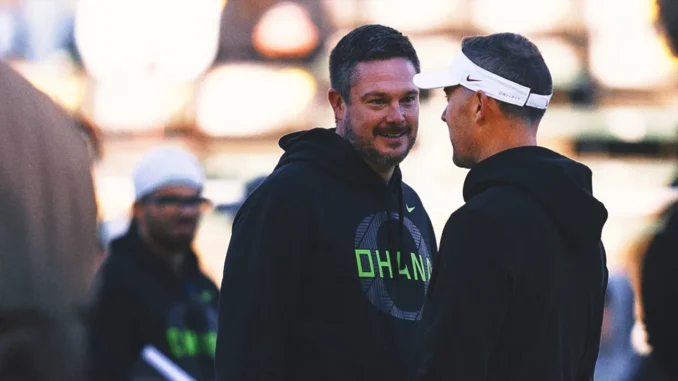
Dan Lanning also delivered a top-five class, prioritizing blue-chip talent with high marks for the average rating per recruit. Oregon’s notable moves included flipping five-star cornerback Na’eem Offord from Ohio State, a major head-to-head win that further cements Lanning’s reputation as one of the country’s elite closers.
Takeaway: The perception that the SEC owned the recruiting landscape is officially over. The Big Ten’s expansion and financial muscle have empowered USC and Oregon to contend for the absolute best talent nationwide, opening a new era of two-conference recruiting dominance.
2. 💸 The Power of NIL Flips: Vanderbilt Lands a Program-Defining QB
The Early Signing Period has become the national showcase for the accelerating influence of NIL (Name, Image, and Likeness) deals and the power of a successful collective. No program capitalized on this dynamic more dramatically than Vanderbilt.
Vanderbilt’s Five-Star Heist
The biggest shock of the day was Vanderbilt flipping five-star quarterback Jared Curtis (the No. 1 overall prospect nationally in some rankings) from powerhouse Georgia.
-
Historic Significance: Curtis is the first five-star recruit in Vanderbilt football history. Landing a top-ranked quarterback is a sign that coach Clark Lea has successfully built momentum—aided by a surprising offensive season and the recent signing of his own six-year contract extension.
-
The NIL Leverage: While not explicitly stated, recruiting analysts unanimously agreed that the ability of Vanderbilt’s collective to compete with SEC titans on NIL compensation was the decisive factor in securing Curtis. This demonstrated that a smaller program, in need of a foundational star, can leverage competitive financial packages to bypass traditional recruiting barriers, particularly at the most critical position.
The Houston and Maryland Surprises
The trend extended to other non-traditional powers:
-
Houston successfully held onto the commitment of five-star quarterback Keisean Henderson.
-
Maryland secured the commitment of five-star edge rusher Zion Elee.
Takeaway: The days of blue-chip prospects exclusively signing with only the traditional top-five programs are gone. NIL compensation is now an equalizer, allowing strategically aggressive programs like Vanderbilt and Maryland to target and sign elite, program-changing players. The early signing period confirmed that recruiting has become as much about resource allocation as it is about relationships.
3. Coaching Carousel Fallout: The Brutal Cost of Instability
The chaotic nature of the current college football calendar—with the early signing period landing in the middle of the most active coaching carousel in history—created massive upheaval for several programs.
Virginia Tech’s Heist and Penn State’s Nightmare
The most direct and brutal evidence of the coaching carousel’s impact was the situation involving former Penn State coach James Franklin, who recently took the job at Virginia Tech.
-
The Raid: Franklin executed an immediate and devastating raid on his former program, flipping 11 former Penn State commits to Virginia Tech, including four-star linebacker Terry Wiggins. This single move vaulted Virginia Tech’s 2026 class into the national top 25 and severely crippled Penn State’s class just as they began their own coaching search.
-
The Domino Effect: Programs like LSU, Auburn, Florida, and Kentucky, all navigating recent coaching changes, faced a frantic battle to retain commitments amidst uncertainty. The Florida Gators, for example, are being lauded for maintaining momentum and securing 16 signees under new coach Jon Sumrall despite weeks of turbulence, demonstrating that coaching stability—or the lack thereof—is the single biggest vulnerability during the early signing period.
High School Athletes Caught in the Middle
The compressed timeline puts immense pressure on 17 and 18-year-old athletes. They are forced to sign binding letters of intent with coaches and staffs they may have only met days or weeks ago, often before the head coach has even finalized his offensive or defensive coordinator hires.
Takeaway: The early signing period’s current timing punishes programs undergoing coaching transitions more severely than ever before. The ability of a new staff to hire quickly and retain key recruiters immediately following an exit is now the difference between maintaining a top-10 class and watching it dissolve overnight. The system prioritizes coaching stability over player clarity.
4. Position of Power: The Quarterback Market Remains Red Hot
As expected, the quarterback position dominated the headlines, solidifying the idea that the high-school market for elite signal-callers is not just competitive—it is saturated with five-star talent and premium compensation.
The New QB Landscape
Beyond Curtis’s flip to Vanderbilt, the signing period highlighted the incredible depth at the position:
-
Michigan secured the commitment of Bryce Underwood (consensus No. 1 overall prospect in the 2025 class), a sign of strength for the post-Harbaugh era.
-
Alabama successfully held onto five-star QB Keelon Russell.
-
Tennessee landed five-star Faizon Brandon to fuel Josh Heupel’s system.
Recruiting QBs Every Year
The quarterback carousel in the transfer portal has also created an urgent realization for college coaches: you must now recruit a high-level quarterback every single year.
As one coach noted, building an offensive line takes the longest to develop, but the quarterback position requires continuous identification and recruitment. This realization is driven by the reality that if a young QB doesn’t win the starting job by their second or third year, the transfer portal is now the guaranteed next step.
Leave a Reply