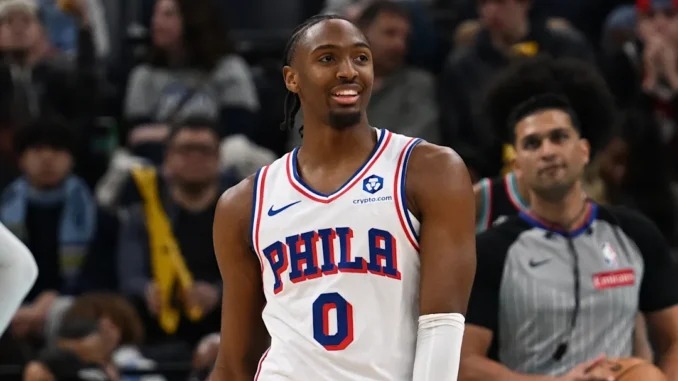
76ers Embrace Their Boldest Strengths in Win Against Mavericks
In a league defined by constant adjustment, the most convincing victories are often the ones rooted in clarity. When teams know exactly who they are—and, just as importantly, who they are not—the game simplifies. Against the Dallas Mavericks, the Philadelphia 76ers delivered a performance that felt less like a reaction to an opponent and more like a declaration of identity. This was not a win built on novelty or surprise. It was a win forged by leaning unapologetically into their boldest strengths.
From the opening possessions to the closing minutes, the 76ers played with intention. Their approach was not subtle, nor was it meant to be. They trusted their core principles: physical dominance, disciplined defense, and a patient but punishing offensive structure. Against a Mavericks team known for creativity and perimeter brilliance, Philadelphia chose force, structure, and cohesion. The result was a victory that said as much about philosophy as it did about execution.
Setting the Tone Early
The opening minutes revealed Philadelphia’s mindset. Rather than easing into the game or feeling out Dallas’ rhythm, the 76ers imposed themselves immediately. Offensively, they prioritized touches in areas of advantage, forcing the Mavericks to collapse their defense early. Defensively, they communicated loudly and rotated decisively, signaling that space would be contested and comfort would be fleeting.
This early assertiveness mattered. Dallas thrives when it can dictate pace, stretching the floor and drawing defenders into impossible choices. By setting a physical tone from the outset, Philadelphia disrupted that rhythm. The Mavericks were compelled to react instead of create, and that subtle shift in control framed the rest of the night.
The 76ers did not chase the Mavericks’ strengths. They challenged them. And in doing so, they established the psychological edge that often determines high-level games.
Owning the Interior
At the heart of Philadelphia’s identity lies its interior presence. Against Dallas, the 76ers treated the paint as sovereign territory. On offense, they attacked mismatches deliberately, using size and strength to generate high-quality looks. On defense, they closed driving lanes and contested shots with verticality and discipline.
This commitment to the interior game served multiple purposes. It slowed the pace, limited Dallas’ transition opportunities, and placed continuous pressure on the Mavericks’ defensive rotations. Each possession became a test of endurance as much as execution. Over time, those tests accumulate.
Importantly, the 76ers did not confuse interior dominance with recklessness. Their post entries were measured, their spacing purposeful. When help arrived, the ball moved. When it didn’t, they punished the coverage. This balance between aggression and awareness exemplified a team comfortable in its skin.
Defensive Discipline as a Statement
Defense is often described as effort-based, but the best defensive performances are as much about intellect as intensity. Philadelphia’s defense against Dallas was a clinic in discipline. They resisted the temptation to overhelp, trusted their rotations, and stayed connected through switches and screens.
Against a Mavericks offense predicated on reading defenders and exploiting hesitation, the 76ers offered neither. Their closeouts were controlled, their hands active, and their communication constant. Rather than gambling for steals or highlight blocks, they prioritized positioning. The message was clear: easy points would not come without sustained effort.
This approach frustrated Dallas. Possessions stretched longer, options narrowed, and shots came later in the clock. Even when the Mavericks scored, it felt earned rather than gifted. That cumulative resistance wore down their offensive fluidity, turning creativity into calculation.
Embracing Physicality Without Losing Control
Physicality can be a double-edged sword. When wielded recklessly, it leads to fouls, breakdowns, and momentum swings. Philadelphia avoided that trap by channeling physicality through structure. Their contact was purposeful, their contests vertical, their screens firm but legal.
This balance reflected a mature understanding of playoff-style basketball, even within the regular-season context. The 76ers did not seek chaos. They sought leverage. Each bump, each box-out, each contested rebound reinforced their presence without sacrificing composure.
Against a Mavericks team adept at drawing fouls and manipulating defensive aggression, this restraint proved crucial. Philadelphia forced Dallas to score through execution rather than officiating, a subtle but significant advantage over the course of the game.
Offensive Patience as a Weapon
While Philadelphia’s interior strength and defensive discipline drew attention, their offensive patience may have been the most underrated factor in the win. The 76ers resisted the urge to match Dallas shot-for-shot from the perimeter. Instead, they trusted the math of quality possessions.
Ball movement was deliberate rather than frantic. The extra pass was made when it improved the shot, not simply for appearance. When the Mavericks overcommitted defensively, Philadelphia capitalized. When they stayed home, the 76ers accepted contested but efficient looks from their most reliable options.
This patience drained the Mavericks’ defensive energy. Each extended possession forced rotations, communication, and effort. Over time, the cracks appeared—not through dramatic breakdowns, but through half-steps and delayed recoveries that Philadelphia exploited.
The Value of Role Clarity
One of the defining features of the 76ers’ performance was role clarity. Every player seemed to understand precisely what was asked of them. There was no confusion about shot hierarchy, defensive assignments, or situational responsibilities.
This clarity breeds confidence. Players make quicker decisions when they are not second-guessing their place within the system. Against Dallas, Philadelphia’s decisiveness was evident. Catch-and-shoot opportunities were taken without hesitation. Defensive switches were executed without debate. Help rotations arrived on time because everyone knew where they were supposed to be.
In contrast, moments of hesitation crept into Dallas’ play as the game wore on. When confidence erodes, even slightly, execution follows. Philadelphia’s commitment to defined roles ensured that erosion never took hold on their side.
Winning the Margins
Basketball games between talented teams are often decided in the margins: rebounding battles, loose balls, transition defense, and second-chance points. Against the Mavericks, the 76ers consistently won these quieter contests.
They boxed out with purpose, limiting Dallas’ opportunities to extend possessions. They sprinted back on defense, prioritizing floor balance over offensive rebounding gambles. They contested passes as aggressively as shots, disrupting timing and spacing.
These efforts rarely headline highlight reels, but they compound over time. Each extra possession denied, each transition opportunity halted, subtly tilted the game further in Philadelphia’s favor. By the fourth quarter, the cumulative effect was unmistakable.
Responding to Momentum Swings
No NBA game unfolds without momentum shifts. Dallas, with its offensive firepower, inevitably found moments of rhythm. What distinguished Philadelphia’s performance was its response. Rather than panicking or overcorrecting, the 76ers leaned deeper into their identity.
When shots didn’t fall, they doubled down defensively. When Dallas sped up, Philadelphia slowed the game through execution rather than stalling. Timeouts were used to reinforce principles, not reinvent strategies.
This steadiness under pressure reflected a team comfortable with adversity. The 76ers did not need to outdo the Mavericks’ flair; they needed to outlast it. By remaining anchored to their strengths, they absorbed runs without surrendering control.
Coaching and Preparation on Display
Behind every coherent performance lies preparation. Philadelphia’s game plan was evident in the details: where help came from, how screens were defended, when double-teams were deployed, and when they were avoided.
Adjustments were subtle rather than sweeping. Instead of radical changes, the 76ers made incremental tweaks—slightly different angles, quicker rotations, more deliberate spacing. These refinements signaled confidence in the original plan rather than uncertainty.
Such preparation fosters trust between players and coaching staff. When players believe in the plan, execution follows. Against Dallas, that trust was visible in the 76ers’ body language and decision-making throughout the game.
The Broader Meaning of the Win
Beyond the immediate result, this victory carried symbolic weight. It reinforced the idea that the 76ers’ path to success lies not in imitation but in authenticity. In a league increasingly obsessed with pace-and-space extremes, Philadelphia demonstrated the enduring value of balance.
Their win against Dallas was not an argument against modern basketball, but a reminder that modern basketball allows for multiple expressions of excellence. Physicality and finesse need not be mutually exclusive. Structure and creativity can coexist. The 76ers showed that leaning into who you are can be just as effective as chasing trends.
Confidence Without Complacency
Perhaps the most encouraging aspect of the performance was the absence of complacency. Even as control became apparent, Philadelphia continued to execute with focus. Defensive rotations remained sharp. Offensive spacing stayed disciplined. There was no visible assumption that the game would simply end in their favor.
This mindset matters. The NBA season is long, and consistency is built on habits, not isolated efforts. By treating each possession with respect, the 76ers reinforced habits that translate beyond a single matchup.
Strength in Identity
The 76ers’ win against the Mavericks was, at its core, a triumph of self-awareness. Philadelphia did not attempt to out-Maverick the Mavericks. They did not abandon their principles in search of stylistic novelty. Instead, they trusted their boldest strengths and executed them with conviction.
In doing so, they delivered a performance that felt sustainable, repeatable, and deeply intentional. It was a reminder that the most powerful strategy in basketball is often the simplest: know who you are, commit to it fully, and make your opponent adjust.
Against Dallas, the 76ers did exactly that—and the result was a win that resonated far beyond the final buzzer.
Leave a Reply